
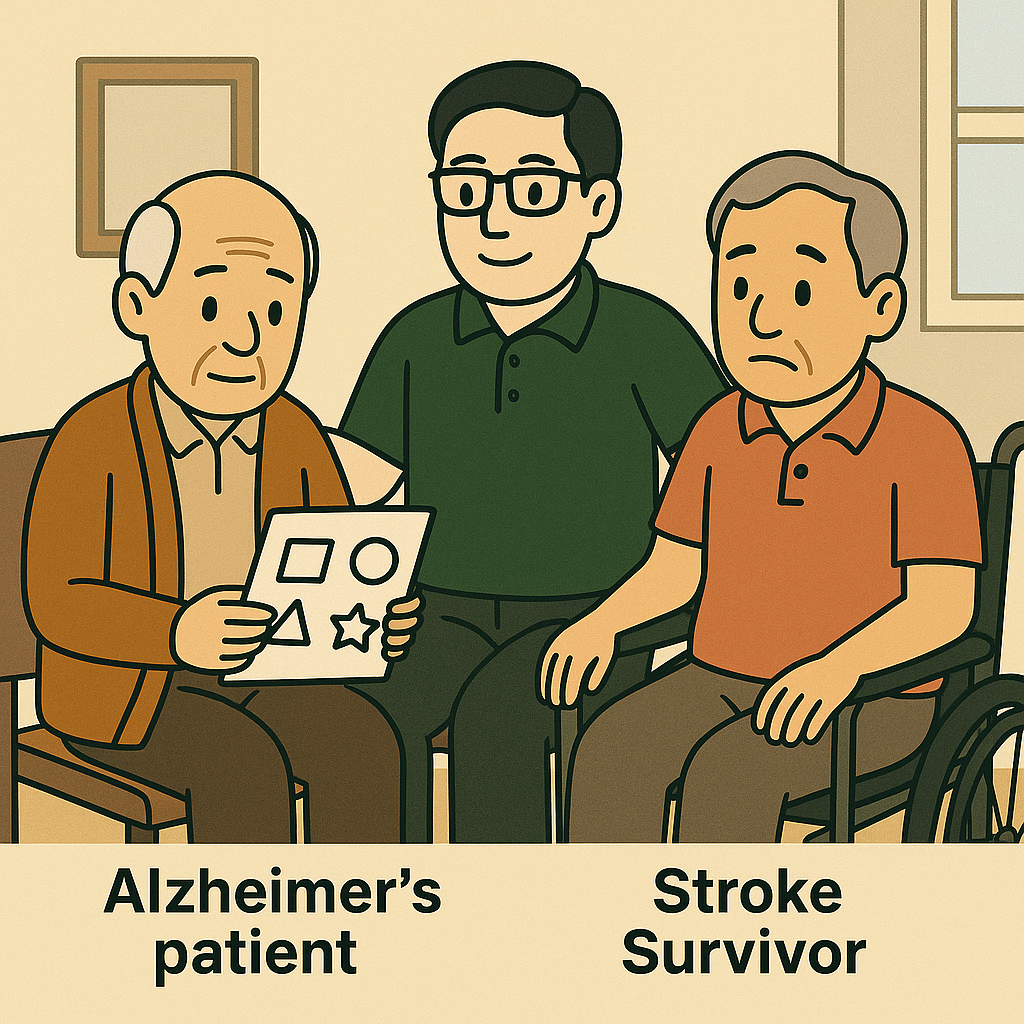
When Words Slip Away: How Therapists Bridge the Gap
Imagine sitting across from a loved one and watching them struggle to say your name—or not remember it at all. Whether the cause is aphasia or Alzheimer’s, communication breakdowns can feel heartbreaking, frustrating, and isolating. But here’s the good news: rehab therapists are trained to help rebuild those bridges—even when words are lost or memory fades.
As an occupational therapy assistant who has worked with both types of clients, I’ve seen firsthand how different the root of the communication breakdown can be—and how vital tailored therapy is. In this blog, we’ll break down the differences between aphasia and Alzheimer’s, explore how speech-language pathologists (SLPs) and occupational therapists (OTs) support communication, and share tools and tips that caregivers and professionals can use starting today.
Want quick tools for working with clients facing language or memory challenges?
[Download your Free Quick Reference Sheets]
Includes strategies for OT, ST, and PT — plus affiliate links to therapy must-haves!
📌 Affiliate Link Disclosure:
Some links in this post are affiliate links, meaning I may earn a small commission (at no extra cost to you) if you choose to purchase through them. I only recommend tools I’ve used or trust in clinical settings.
🧠 What’s the Difference Between Aphasia and Alzheimer’s?

At first glance, both conditions can look similar: someone has difficulty speaking, understanding, or remembering words. But the cause and treatment approach differ significantly.
✅ Aphasia
- Cause: Brain damage, often from stroke, traumatic brain injury, or brain tumor
- Main issue: Language – understanding, speaking, reading, or writing
- Memory usually intact
✅ Alzheimer’s
- Cause: Progressive neurodegenerative disease
- Main issue: Memory – gradual loss of cognitive function
- Language issues develop later
Source: National Aphasia Association
Source: Alzheimer’s Association
👩⚕️ How Speech Therapists Support Aphasia vs Alzheimer’s

Speech-language pathologists (SLPs) are communication specialists trained to assess, diagnose, and treat both aphasia and cognitive-communication deficits related to dementia.
🗣️ SLPs and Aphasia:
- Rebuild expressive and receptive language through repetition and cueing
- Use AAC tools like low-tech flip books, dry-erase communication boards, and speech therapy apps with stylus pens or tablet stands
🦳 SLPs and Alzheimer’s:
- Shift focus to functional communication: gestures, simplified questions, familiar routines
- Collaborate closely with caregivers to reduce frustration and preserve dignity
Recommended Tools for SLPs:
- Super Duper Articulation Card Deck
- ARK Z-Vibe Oral Motor Tool
- TalkTools Honey Bear Straw
- Tongue Exerciser Kit
- Speech Recovery Workbook
🧹 How Occupational Therapists Address Communication Challenges

Occupational therapists (OTs) help patients maintain independence and function through adaptive communication and daily routines.
🧠 OTs and Aphasia:
- Create accessible home environments with AAC tools
- Reinforce functional use of therapy cards and boards during tasks
🧠 OTs and Alzheimer’s:
- Support compensatory memory strategies using large digital clocks
- Simplify tasks and routines using tools like picture phones and activity books for seniors
🛠️ Therapy & Caregiver Tools That Actually Help

Whether you’re a clinician or family member, small tools can make a big difference.
📅 Memory & Routine Aids:
💥 Calming & Communication Support:
- Textured Blankets
- Fidget Lap Pads
- Fidget Sleeves
- MP3 Players and Dementia Radios
- Weighted Blanket for Adults
✍️ Therapist & Caregiver Add-ons:
💬 Communication Isn’t Just Verbal
When words fail, therapists help find alternatives. SLPs teach gestures and picture systems. OTs adapt tasks and environments. Even a simple cue card or familiar object can prompt a smile, a word, a moment of recognition.
And that moment? That’s connection. That’s therapy.
💕 Final Thoughts: Different Diagnoses, Shared Goals

Whether you’re working with someone recovering from a stroke or living with Alzheimer’s, the goal is the same: preserve dignity, support independence, and restore communication in any form.
Let’s keep learning, sharing, and empowering patients—and each other.
✅ Get Free Therapist Tools

Stay prepared wherever you are—clinic, home health, or SNF.
📌 [Download Your Free Quick Reference Sheets for OT, PT, and ST]
Tools, cheat sheets, and go-to strategies you’ll actually use.
📚 OT Pocket Guide is now available
📘 ST Pocket Guide releases soon
📗 PT Pocket Guide coming in October
💬 Let’s Hear From You!
Have you worked with someone with aphasia or Alzheimer’s?
What communication strategy made the biggest difference?
👇 Share your story in the comments—we learn best when we learn together.
Originally posted 2025-06-10 12:19:16.