Tag: Speech Therapy

  • Life Without Speech Therapy: Why SLPs Matter More Than Ever

    Life Without Speech Therapy: Why SLPs Matter More Than Ever

    Most people don’t think about communication until communication becomes difficult.

    We don’t usually stop to consider how much of life depends on being able to express needs, ask for help, connect with loved ones, advocate for ourselves, learn, work, joke around, or simply say, “I’m okay.”

    But for many patients, those everyday moments are not simple at all.

    Imagine knowing exactly what you want to say — but not being able to get the words out after a stroke.

    Imagine a child becoming frustrated because they cannot communicate their wants or needs clearly.

    Imagine struggling to swallow food safely after an injury, illness, or neurological condition.

    Imagine losing confidence in social situations because your voice no longer sounds the same.

    This is why speech therapy matters.

    And during Speech Month, it’s important to recognize that speech-language pathologists (SLPs) do far more than most people realize.

    They help people reconnect with the world around them.

    TL;DR: Life without speech therapy would impact far more than communication alone. This blog explores how speech therapy is about more than speech, why communication shapes everyday life, the life-changing work speech therapists do every day, and why speech therapists deserve more recognition for the incredible impact they have on patients and families.


    Speech Therapy Is About More Than Speech

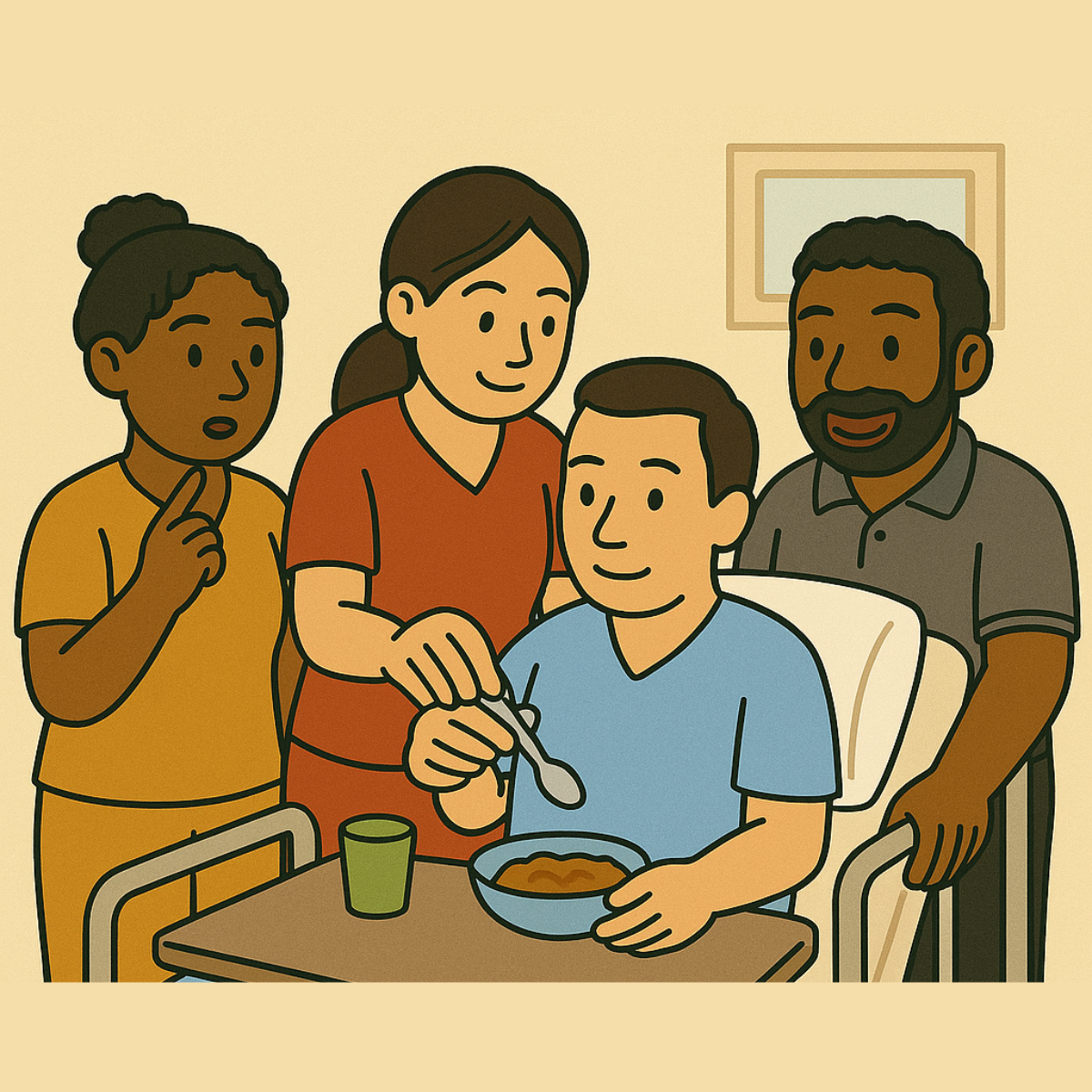
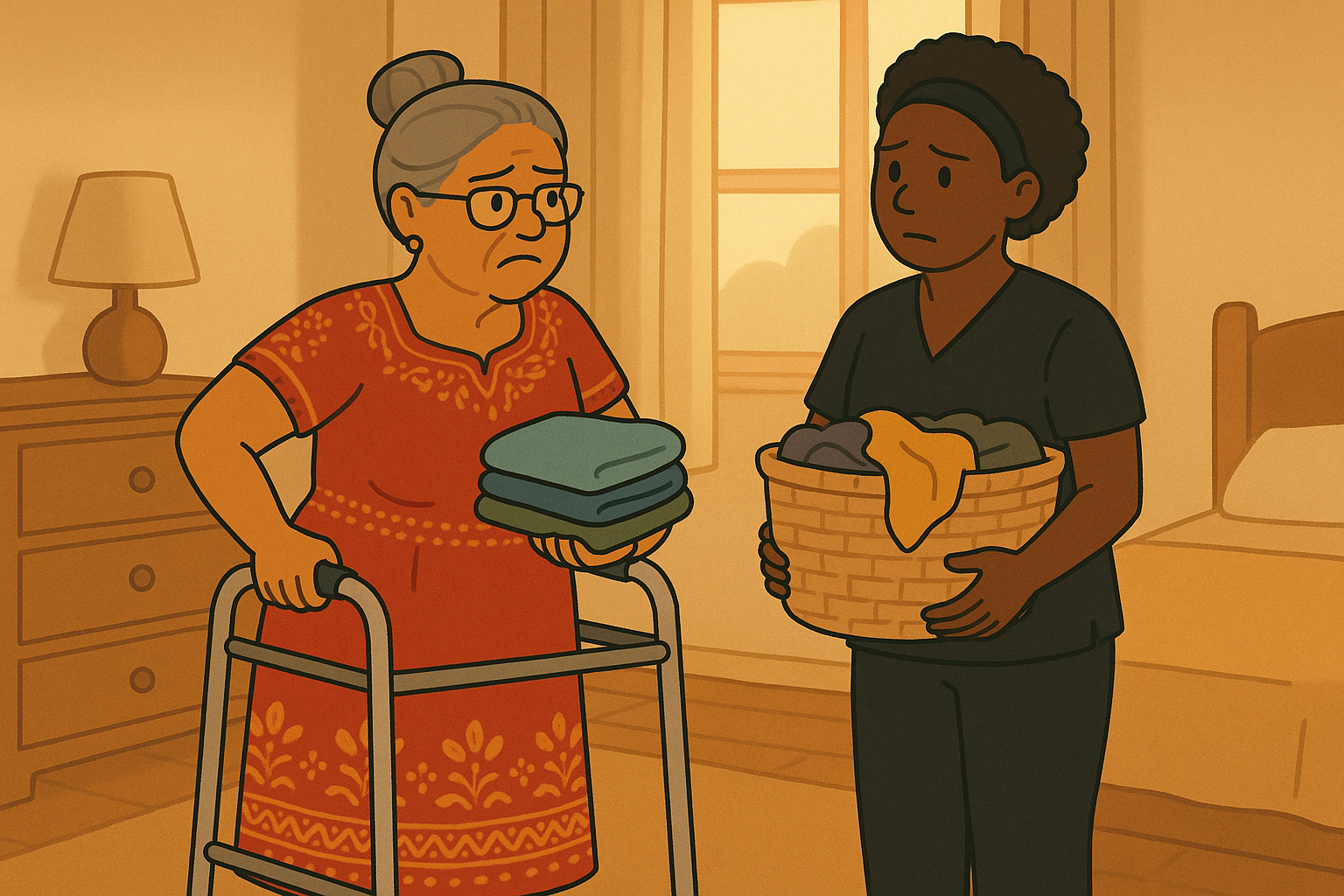
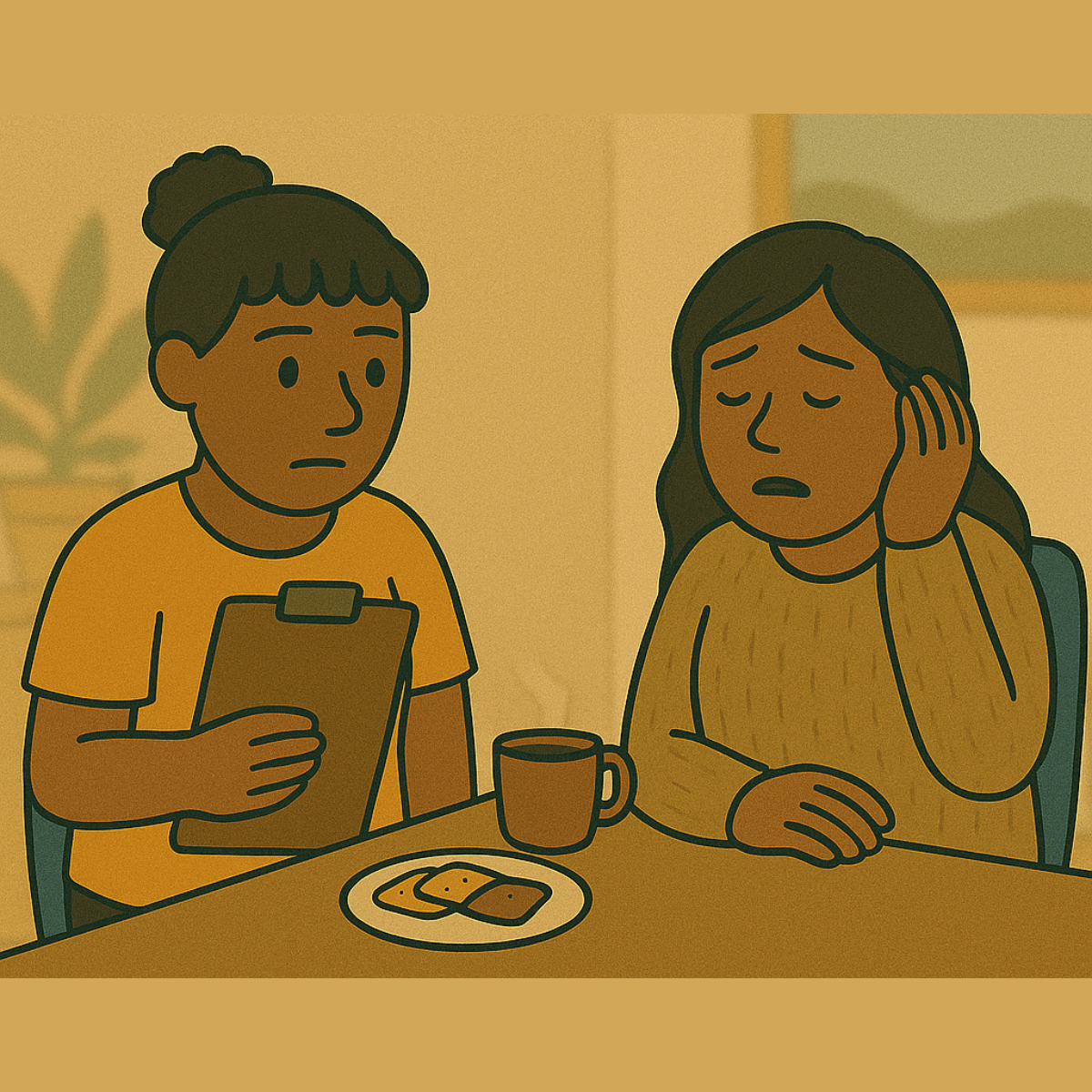
    Life without speech therapy after stroke affecting communication and expression
    A stroke survivor works through communication challenges with support from a loved one and speech therapist during an emotional adult speech therapy session.

    One of the biggest misconceptions about speech therapy is that it only focuses on pronunciation or helping children say sounds correctly.

    In reality, speech therapists work with communication, cognition, swallowing, voice, language, social interaction, and overall quality of life.

    SLPs work with:

    • children with speech and language delays
    • autistic individuals using AAC communication systems
    • stroke survivors relearning communication skills
    • patients with traumatic brain injuries
    • individuals with swallowing disorders (dysphagia)
    • people with voice disorders
    • patients with cognitive communication deficits
    • adults experiencing neurological decline

    Speech therapy touches nearly every stage of life.

    From helping a child communicate for the first time… to helping an adult regain speech after a life-changing medical event.

    And in many cases, therapy is not about “perfect speech.”

    It’s about connection.

    It’s about helping someone participate in everyday life again.

    According to the American Speech-Language-Hearing Association, communication disorders can impact academic success, relationships, independence, emotional well-being, and safety. ASHA


    📘 Why I Created the Speech Therapy Pocket Guide

    I created the Speech Therapy Pocket Guide after spending countless hours listening to the real frustrations rehab clinicians face every day — productivity pressure, documentation overload, constantly switching between patients, and trying to remember “just one more thing” during already exhausting therapy days.

    What makes this guide especially meaningful to me is that I didn’t build it alone.

    I collaborated with SLPs and SLPAs throughout the process to help shape it into something that feels practical, easy to use, and genuinely helpful in real clinical settings. Instead of creating another overwhelming textbook-style resource, the goal was to create something clinicians could realistically keep nearby during busy workdays for quick support, reminders, and workflow help.

    Inside, you’ll find practical references covering areas like:

    • speech and language interventions
    • cognition and communication
    • documentation support
    • dysphagia and swallowing considerations
    • AAC-related topics
    • pediatric and adult therapy concepts
    • everyday clinical workflow support

    Whether you’re a student, new grad, or experienced clinician, my hope is that this becomes one of those resources you actually reach for during the week — not something that just sits on a shelf.

    And honestly? I’d truly love feedback from fellow SLPs and SLPAs. The rehab community helped inspire this project, and hearing what clinicians find helpful (or what they’d love improved in future editions) genuinely means a lot to me.

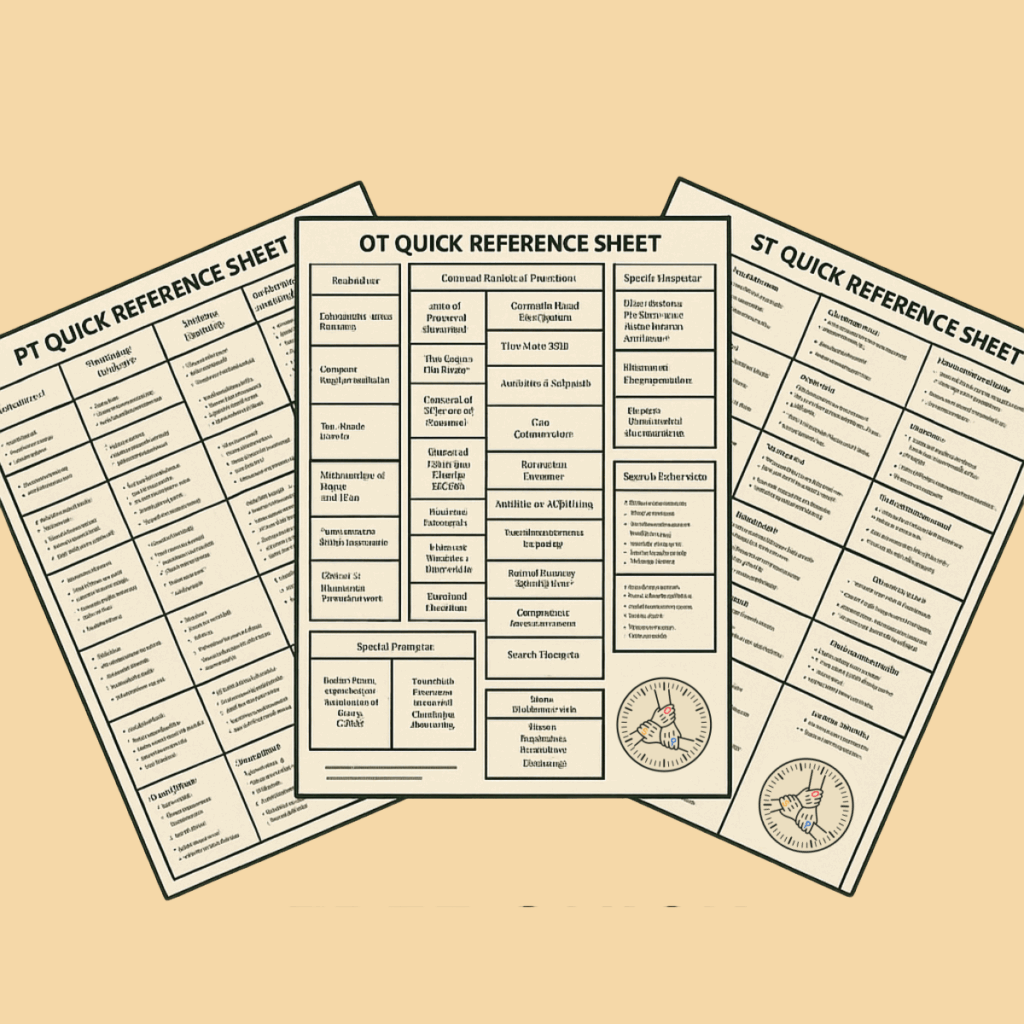
    If you’d like additional free resources, you can also download the OT/PT/ST Quick Reference Sheets — but the Speech Therapy Pocket Guide was designed to be the more complete, in-depth resource for clinicians looking for something practical to keep close throughout demanding therapy days.


    Why Communication Shapes Everyday Life
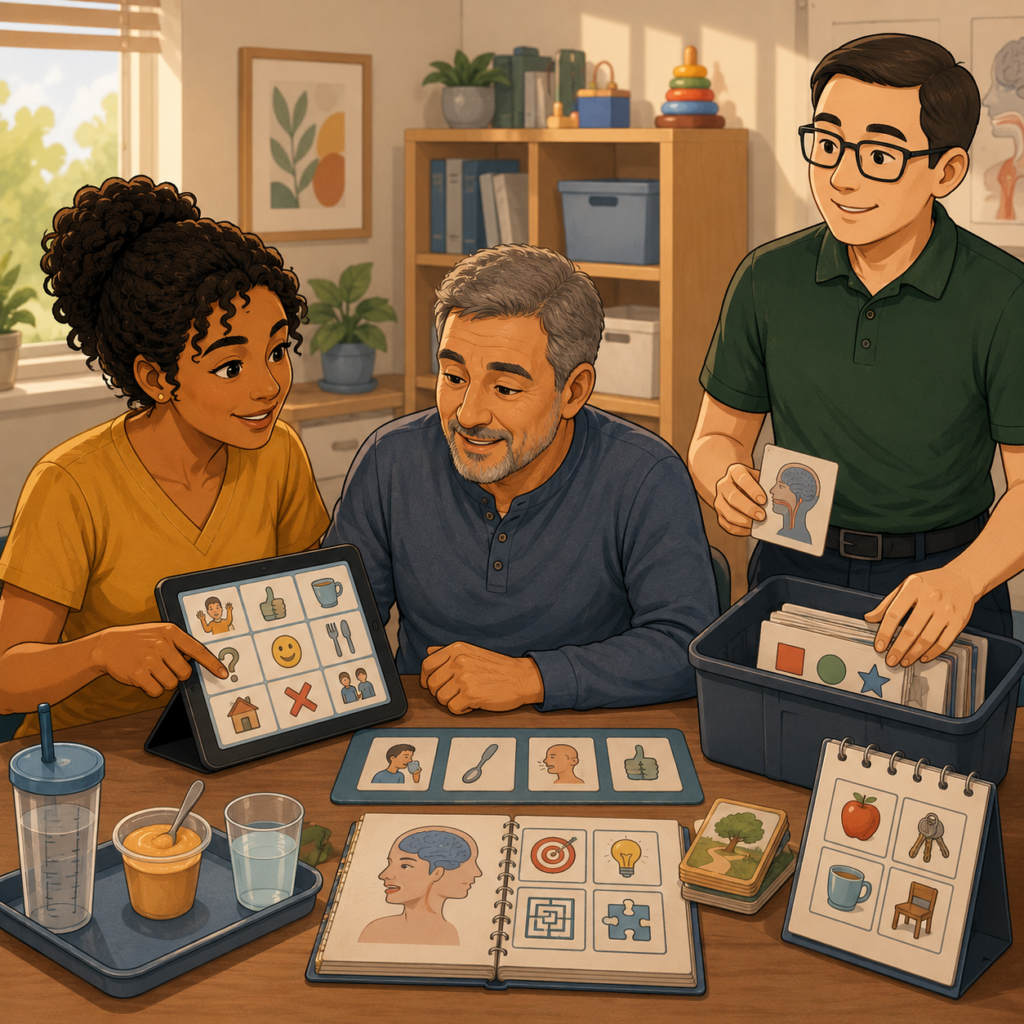
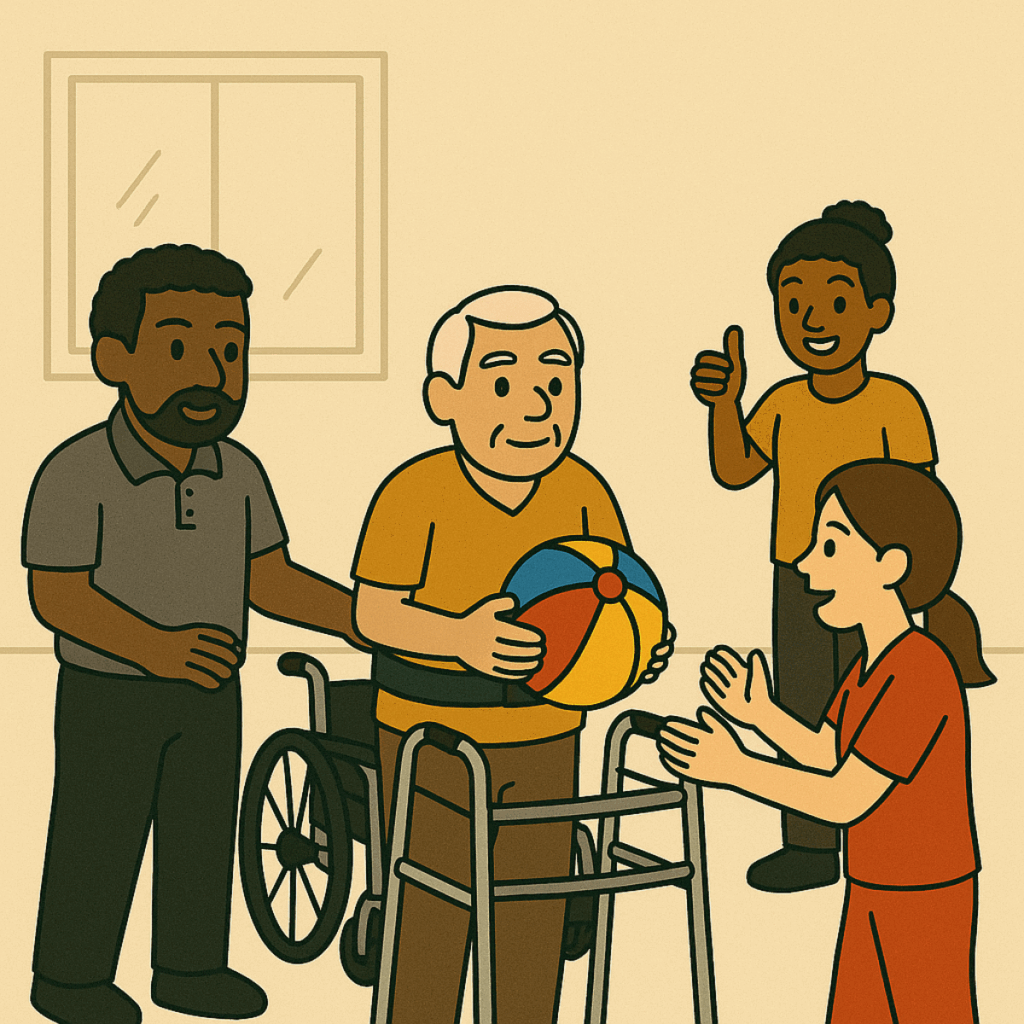
    Speech therapy supporting AAC communication, swallowing, and cognitive therapy
    A speech therapist and SLPA work together during a collaborative speech therapy session focused on communication, cognition, and swallowing support.

    Communication affects almost everything we do.

    It affects:

    • relationships
    • education
    • employment
    • emotional regulation
    • medical safety
    • self-advocacy
    • independence

    When communication becomes difficult, even small daily tasks can become overwhelming.

    For children, communication challenges can affect confidence, social development, classroom participation, and emotional expression.

    For adults, speech and cognitive changes after stroke, Parkinson’s disease, brain injury, or illness can completely change how someone navigates daily life.

    And for families, not being able to fully communicate with a loved one can be heartbreaking.

    This is why speech therapy is so important.

    SLPs help bridge that gap between frustration and connection.

    Sometimes the progress looks huge:

    • a patient speaking again after stroke
    • a child using AAC to independently request something for the first time
    • safer swallowing during meals

    And sometimes the victories are incredibly small to outsiders — but life-changing to patients and families.

    A clearer sentence.
    A safer meal.
    A successful conversation.
    A moment of confidence.

    Those moments matter.


    The Life-Changing Work Speech Therapists Do Every Day

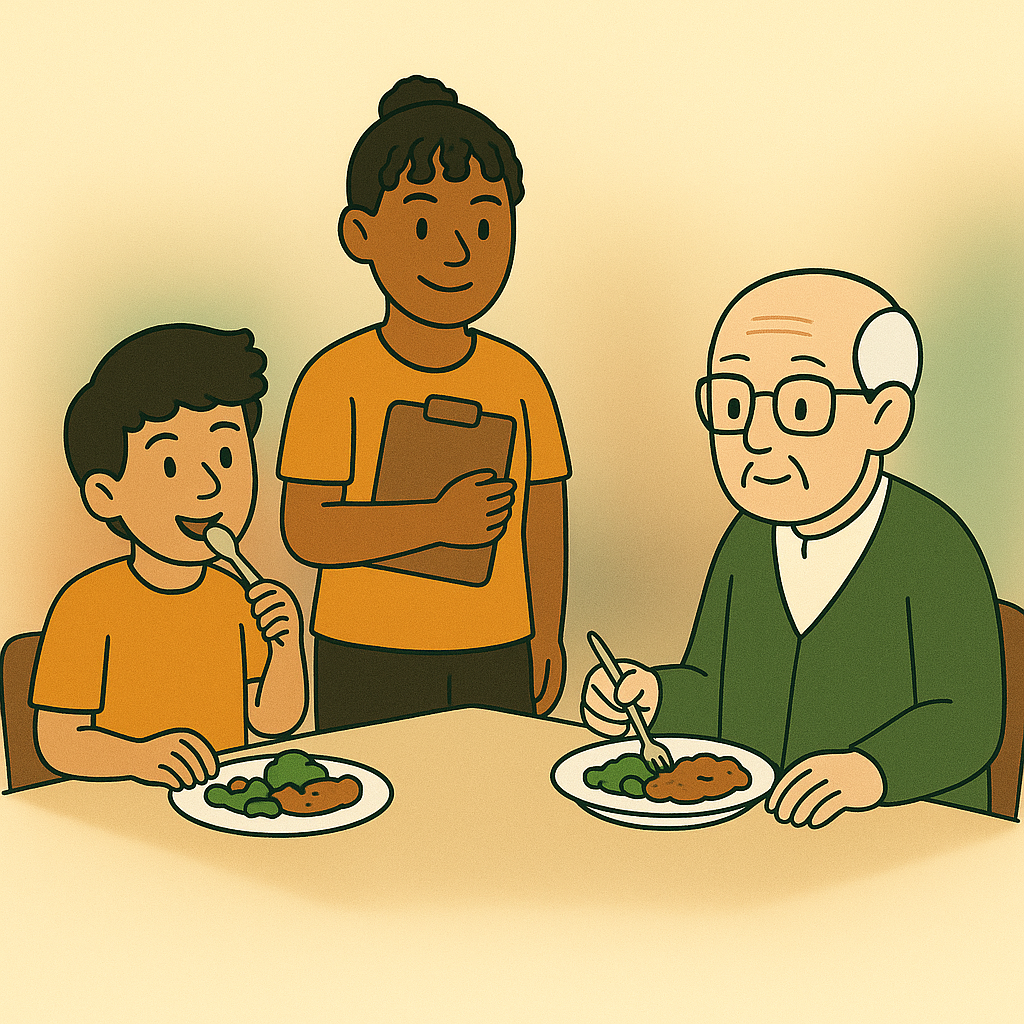
    Why communication shapes everyday life for children and adults in speech therapy
    An SLPA helps a child practice everyday communication skills using visual supports and interactive speech therapy activities during a pediatric therapy session.

    Speech therapists work in so many different environments:

    • schools
    • hospitals
    • inpatient rehab
    • skilled nursing facilities
    • outpatient clinics
    • home health
    • early intervention programs

    And regardless of setting, the work is rarely easy.

    SLPs are constantly balancing:

    • evaluations
    • documentation
    • treatment planning
    • caregiver education
    • collaboration with rehab teams
    • productivity expectations
    • emotionally demanding caseloads

    A lot of the work they do happens quietly behind the scenes.

    The prep work.
    The problem-solving.
    The emotional energy.
    The constant adapting.

    Many therapists are switching between pediatric and adult caseloads, complex cognitive sessions, feeding therapy, AAC programming, and documentation — all in the same day.

    And despite how mentally demanding the profession can be, SLPs are often overlooked when people talk about rehabilitation healthcare.

    That deserves to change.


    💡 Quick Tip

    Speech therapist using iPad for speech therapy documentation and workflow organization
    A speech therapist completes documentation on an iPad while an SLPA organizes therapy materials and patient resources during an evening workflow session.

    One thing that can make documentation feel less overwhelming during busy therapy days is having a simple system for keeping evaluation notes, quick-reference materials, and session outlines organized in one place.

    A lot of clinicians find that using an iPad for documentation alongside an Apple Pencil or stylus pen helps speed up note-taking between sessions, especially when moving quickly between patients or treatment settings.

    For therapists juggling multiple evaluations, productivity standards, and back-to-back treatments, even small workflow adjustments can make the day feel more manageable.


    Small Wins in Speech Therapy Are Often the Biggest Victories

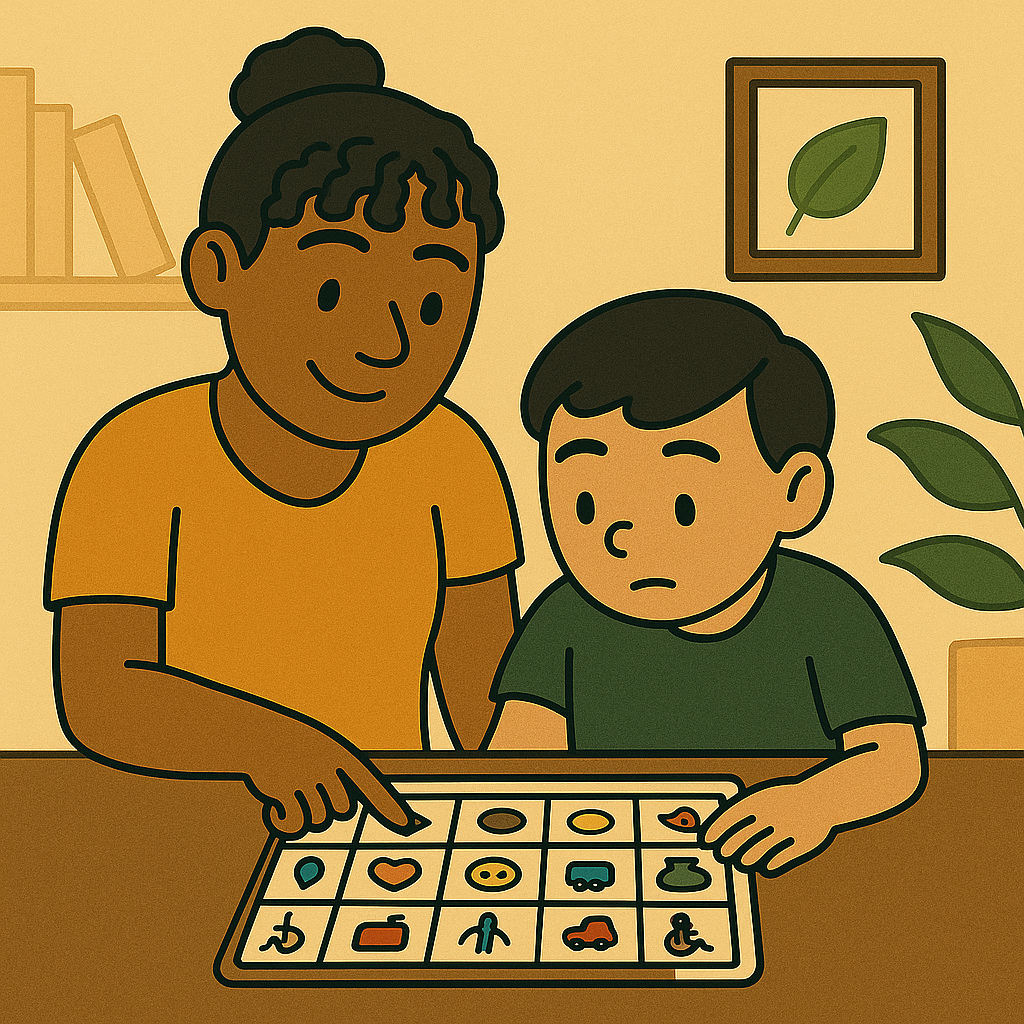
    Small victories during speech therapy improving confidence and communication
    A child proudly shares a communication breakthrough with family while a stroke survivor celebrates speech progress with a loved one during meaningful therapy moments observed by the rehab team.

    One of the most beautiful parts of speech therapy is that progress does not always come in giant milestones.

    Sometimes it comes quietly.

    A patient saying their spouse’s name again.

    A child communicating a need independently for the first time.

    A safer swallow reducing aspiration risk.

    A previously frustrated patient finally feeling understood.

    These moments may last seconds.

    But for patients and families, they can mean everything.

    And for therapists, those moments are often what keep them going through the difficult days.

    Because speech therapy is not just about words.

    It’s about dignity.

    Connection.

    Confidence.

    Participation.

    Quality of life.


    💡 Quick Tip
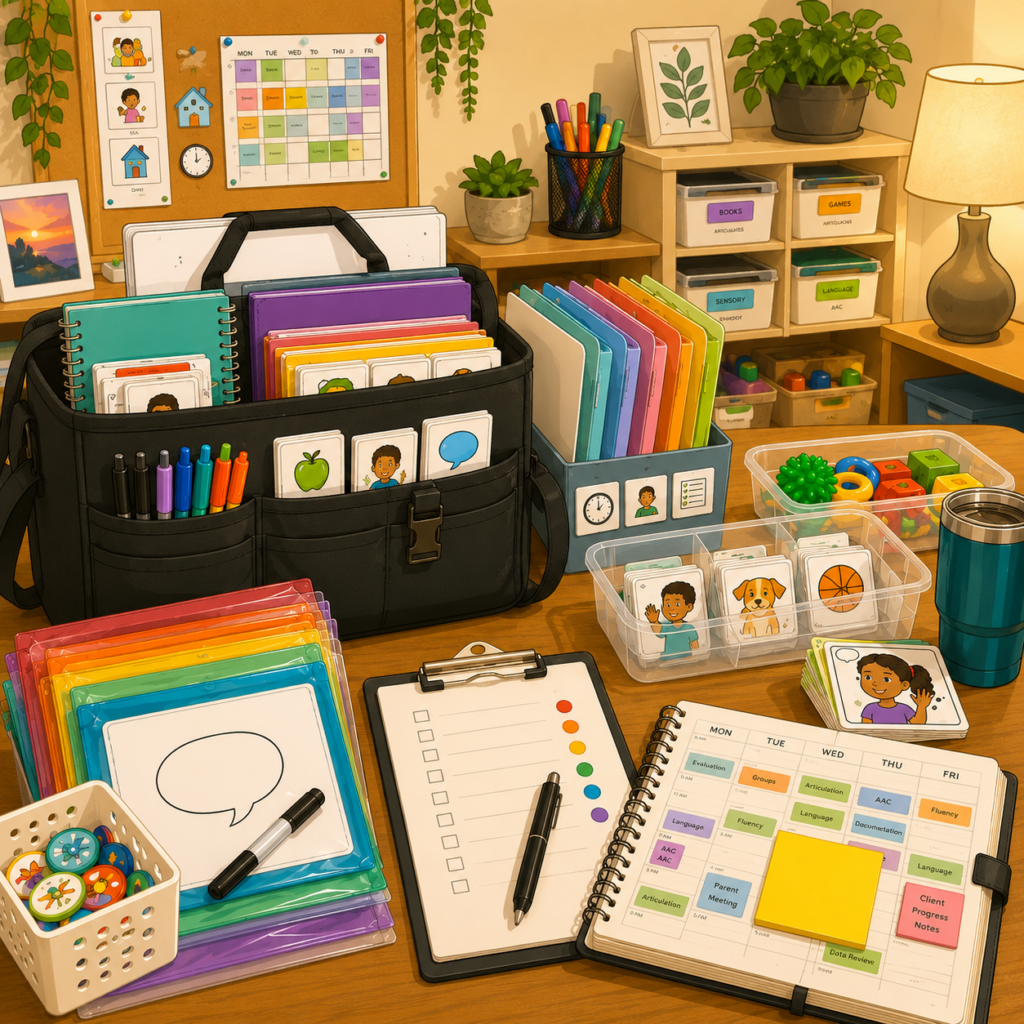
    Organized speech therapy materials and therapy tote bag for productivity
    An organized speech therapy workstation featuring color-coded folders, AAC communication cards, dry erase pocket sleeves, and portable therapy materials prepared for a productive therapy week.

    For therapists balancing high caseloads and productivity pressure, having go-to therapy materials and portable organizational tools ready ahead of time can help reduce end-of-day burnout.

    Simple things like an organized therapy tote bag, color-coded folders, or dry erase pocket sleeves can make transitioning between patients, schools, or facilities much less chaotic throughout the week.

    Sometimes the smallest workflow systems make the biggest difference in protecting your mental energy.


    Speech Therapists Deserve More Recognition

    Speech therapists discussing therapy progress and completing evening documentation after speech therapy sessions
    A speech therapist and SLPA reflect on their therapy day while completing documentation and discussing patient progress during a quiet evening work session.

    Speech therapists advocate for patients constantly.

    They help patients communicate pain, emotions, preferences, fears, needs, and goals.

    They help patients eat safely.

    They help families reconnect.

    They help people participate in school, work, relationships, and everyday conversations again.

    And yet, many people still do not fully understand what speech therapy actually involves.

    That’s part of why Speech Month matters.

    Not just to celebrate the profession —
    but to recognize the life-changing impact SLPs have every single day.

    Because life without communication can feel isolating.

    And life without speech therapy would leave many patients without the support needed to reconnect with the world around them.


    💡 Quick Tip
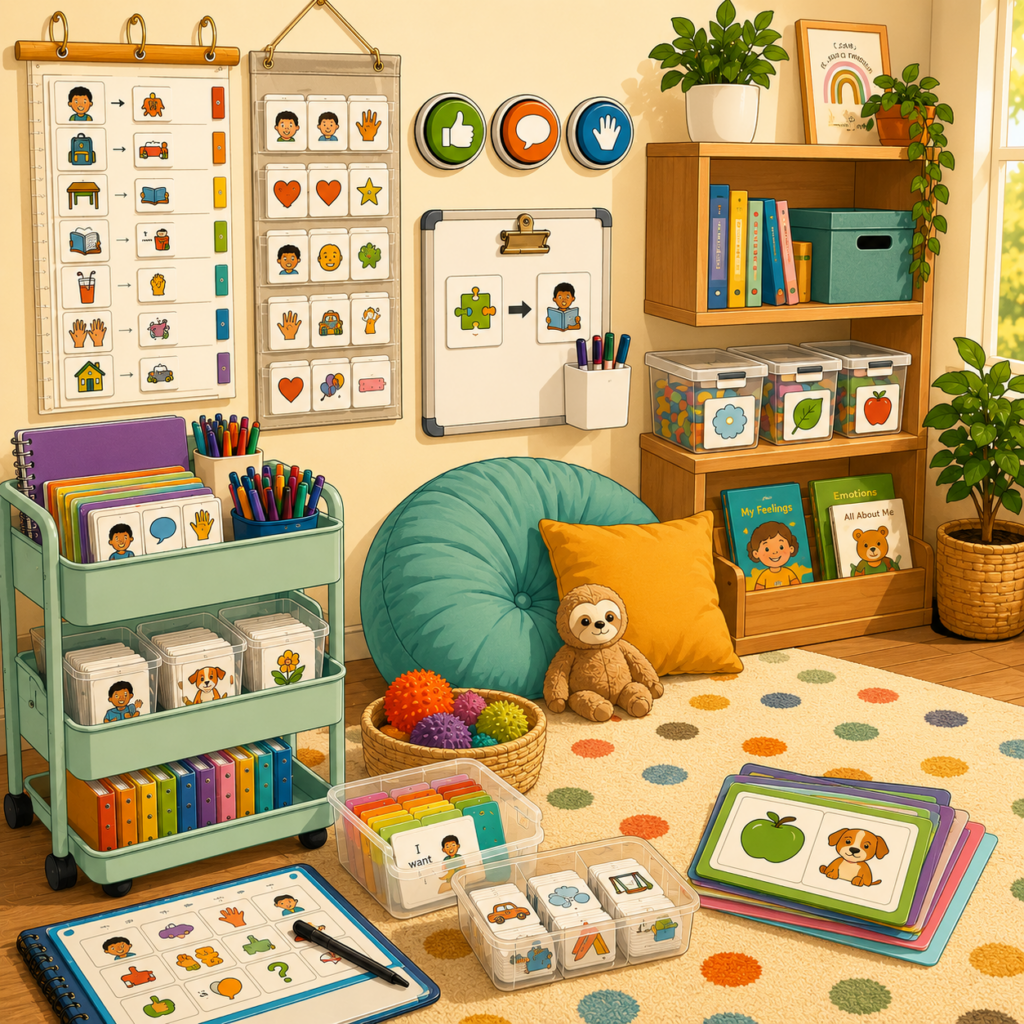
    AAC communication tools and visual schedule cards used in pediatric speech therapy
    A pediatric speech therapy communication station featuring AAC communication buttons, visual schedule cards, therapy flashcards, and organized language support materials prepared for therapy sessions.

    For pediatric therapists especially, having engaging communication materials readily available can help sessions run more smoothly while supporting participation and attention.

    Many SLPs keep tools like AAC communication buttonsvisual schedule cards, and language activity flashcards nearby to help support communication across different patient needs and therapy environments.


    To Every Speech Therapist: Thank You

    Speech therapy patients and families thanking speech therapists and SLPAs for life-changing rehabilitation support
    A stroke survivor and family thank a speech therapist while a child celebrates therapy success with an SLPA during two heartfelt moments of appreciation and connection.

    To the SLPs working through impossible schedules, long documentation days, emotionally heavy sessions, and productivity pressure:

    Thank you.

    Thank you for the patience you bring into difficult moments.

    Thank you for celebrating progress that others may not even notice.

    Thank you for helping patients feel heard, understood, safer, and more confident.

    And thank you for doing work that changes lives in ways most people never fully see.

    Speech therapy matters.

    And so do the people providing it.


    💡 What I Actually Recommend

    Therapy days can get overwhelming fast, especially when you’re balancing documentation, productivity expectations, treatment planning, and emotionally demanding sessions.

    I’m a big believer that small systems and practical tools can make daily workflow feel more manageable without overcomplicating things.

    Whether it’s using an iPad for faster documentation, keeping materials organized with a portable therapy tote bag, or relying on quick-reference therapy resources throughout the day, having reliable systems in place can make a real difference over time.


    🛒 Tools Mentioned in This Post

    Looking for additional rehab resources?
    Explore the Speech Therapy Pocket Guide and download the free OT/PT/ST Quick Reference Sheets on PRT Blog.


    Affiliate Disclaimer

    This post may contain affiliate links, meaning I may earn a small commission at no extra cost to you. I only share tools and resources I’d genuinely recommend to fellow clinicians.


    Medical Disclaimer

    This content is intended for educational and informational purposes only and should not replace individualized medical, therapeutic, or professional advice.


    💬 Let’s Talk
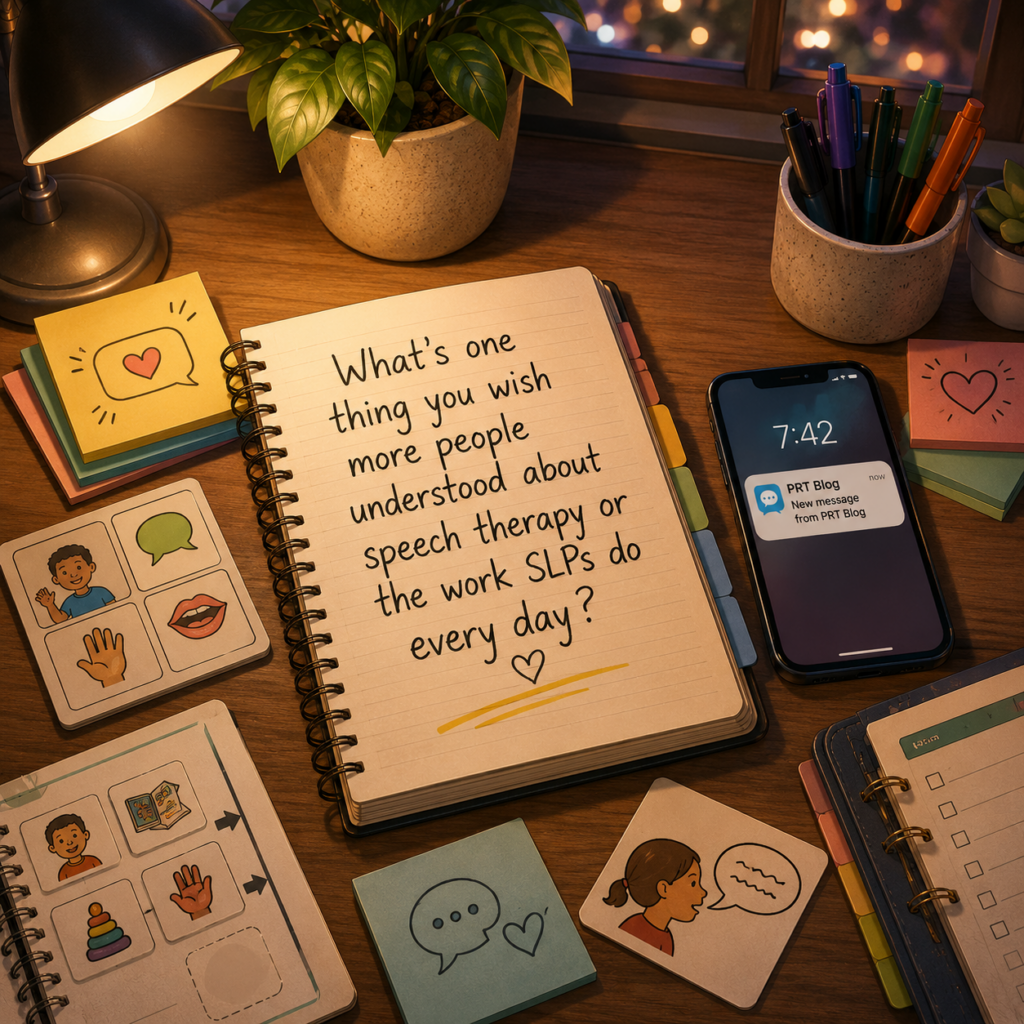
    Speech therapy discussion prompt with notebook, AAC communication cards, and PRT Blog message notification
    A reflective speech therapy workspace featuring a discussion question about the work SLPs do every day alongside communication tools and a message notification from PRT Blog.

    What’s one thing you wish more people understood about speech therapy or the work SLPs do every day?
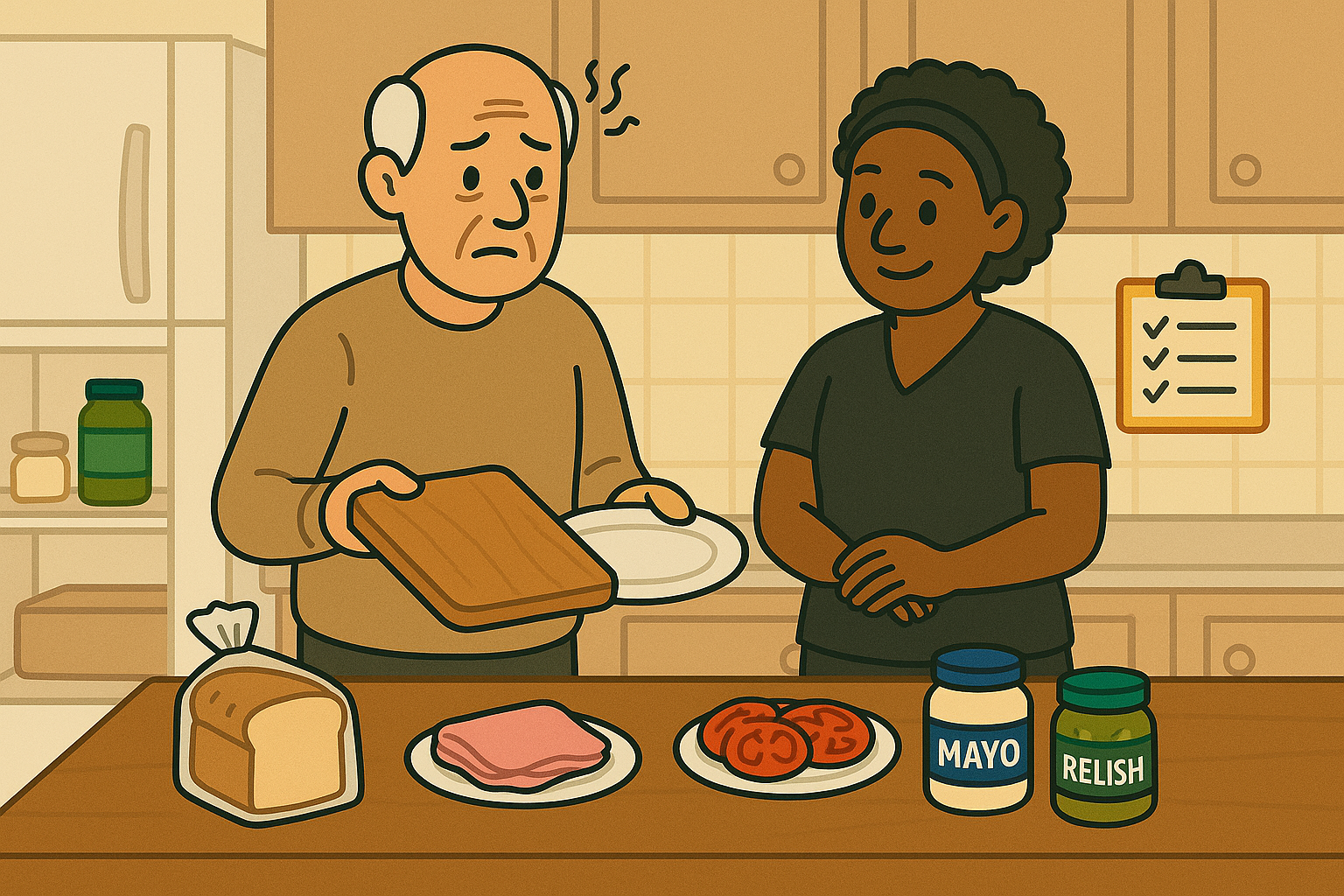
  • 15. From Brain Fog to Focus: Cognitive Rehab Strategies from the Therapy Team

    15. From Brain Fog to Focus: Cognitive Rehab Strategies from the Therapy Team

    Ever walk into a room and forget why you were there?

    Now imagine that—but constantly. For individuals recovering from a stroke, traumatic brain injury (TBI), or neurological illness, this isn’t just a moment of forgetfulness—it’s daily life. That’s where cognitive rehabilitation steps in, and rehab therapists play a leading role in making brain recovery possible.

    Whether it’s retraining memory, improving attention, or helping someone safely return to their routines, Occupational Therapists (OTs)Physical Therapists (PTs), and Speech-Language Pathologists (SLPs) form the backbone of interdisciplinary brain rehab. Let’s explore how they work together to restore cognitive health and independence.

    ⚠️ Affiliate Disclosure

    This post may contain affiliate links. If you click through and purchase, we may earn a small commission at no extra cost to you. All recommendations are based on real therapy use cases.


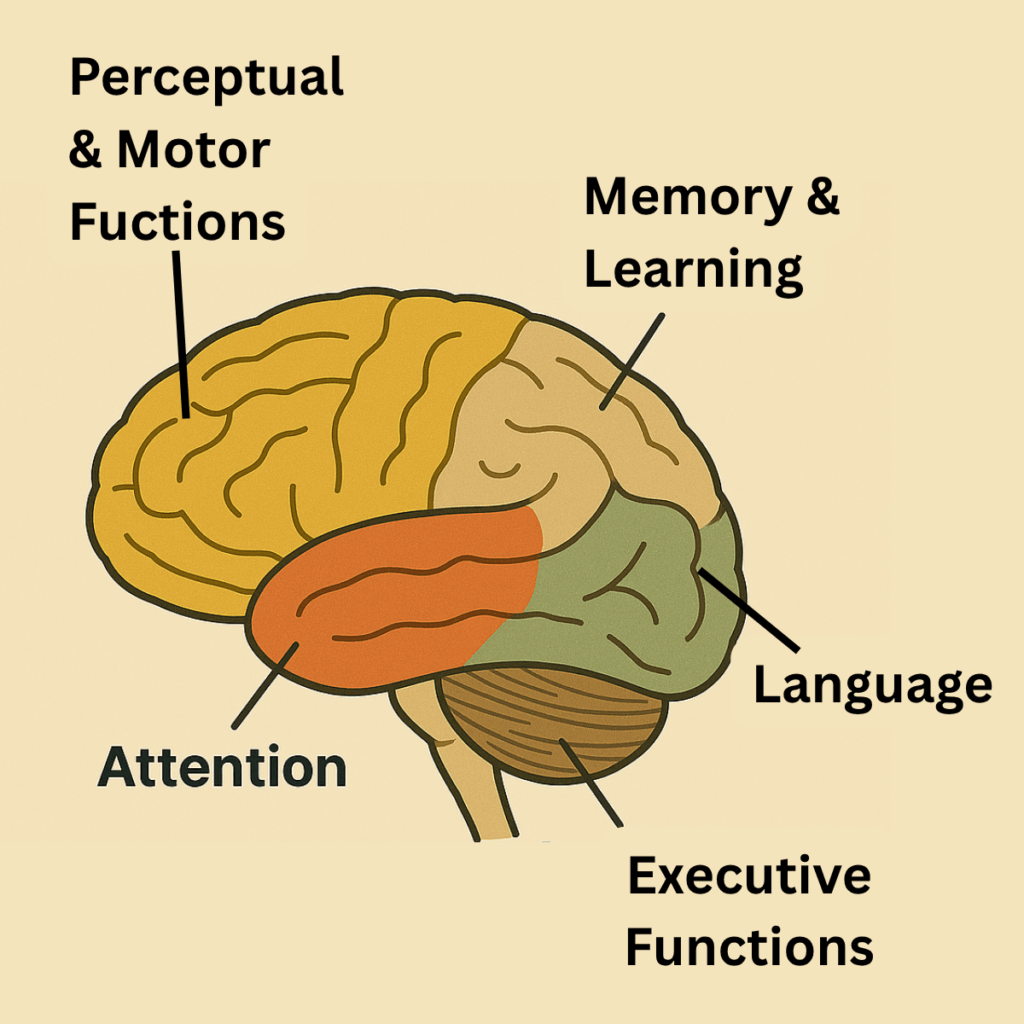
    🧠 What Is Cognitive Rehabilitation Therapy?

    Brain diagram highlighting cognitive functions affected by injury

    Cognitive rehabilitation therapy (CRT) is a structured approach to rebuilding skills like memory, attention, organization, and problem-solving that are often impaired after:

    • Stroke
    • Brain injuries
    • Neurological diseases (like Alzheimer’s or Parkinson’s)
    • Brain tumors
    • Encephalitis
    • Post-COVID “brain fog”

    CRT is goal-oriented, personalized, and often delivered by a team of therapists across multiple disciplines. The collaboration of OT, PT, and ST is essential in helping patients regain cognitive abilities and apply them functionally.


    🧩 Occupational Therapy for Memory, Sequencing & Executive Function

    OT showing patient how to use a daily planner and pill organizer

    Occupational Therapists help patients re-engage in daily tasks while addressing cognitive deficits such as memory loss, poor planning, and reduced attention. Interventions may include:

    OTs often focus on real-world application, building strategies patients can use at home or work.


    🏋️ Physical Therapy and Neuroplasticity in Motion

    PT guiding patient on treadmill while doing cognitive task (dual-task training with patient)

    Physical Therapists help restore physical function—but they also play a hidden cognitive role. Many PTs use dual-task training, combining movement with mental challenges to stimulate the brain.

    Examples include:

    • Balancing while answering questions
    • Walking while recalling word lists
    • Coordinating movement with attention-based tasks

    Helpful tools:

    This supports neuroplasticity—the brain’s ability to adapt and rewire—and is essential for post-injury recovery.


    🗣️ Speech Therapy for Cognitive-Communication Skills

    Speech therapist supporting cognitive-communication recovery

    Speech-Language Pathologists (SLPs) specialize in the cognitive-linguistic aspects of rehab, particularly for:

    • Memory and attention impairments
    • Problem-solving and organization
    • Verbal reasoning and communication clarity
    • Word-finding and comprehension

    They may use:

    STs create therapy plans that blend language rehab with mental organization—key for regaining independence.


    👥 Why Interdisciplinary Cognitive Rehab Works

    Interdisciplinary rehab team collaborating on care plan

    Research continues to show that collaborative therapy yields better results. According to a 2021 review in NeuroRehabilitation, patients engaged in interdisciplinary rehab programs experienced improved attention, memory, and quality of life outcomes.

    In practice, this means:

    • OTs support function
    • PTs build cognitive-motor connections
    • SLPs strengthen language and thought processing

    This wraparound approach ensures that gains are reinforced across disciplines.


    🛠️ Cognitive Tools That Support Recovery at Home

    Home-based tools for cognitive rehab

    Therapy doesn’t end after a session—it extends to the home. Here are therapist-recommended tools to enhance memory, focus, and safety in day-to-day life:


    🎁 Don’t Forget the Caregivers: Support Tools That Help

    Recovery is a team effort—and caregivers need support too. Helpful resources include:

    Equipping caregivers means better continuity of care, and less stress for everyone involved.


    💬 Final Thoughts: Cognitive Recovery Is a Group Effort

    Patient independently using cognitive therapy tools at home

    There’s no one-size-fits-all approach to cognitive rehab. But when OT, PT, and ST work together—while patients use the right tools at home—recovery becomes possible, practical, and empowering.

    🧾 Want to streamline therapy planning or care support?
    ✅ Download our Free Quick Reference Sheets
    📘 Grab the Occupational Therapy Pocket Guide (available now)


    📗 Speech Therapy Guide is coming soon
    📙 Physical Therapy Guide launches in October


    💭 What’s Worked for You?

    What’s one cognitive rehab tool or strategy that made a real difference in your sessions or recovery?
    👇 Share in the comments—we’re better together.

    Originally posted 2025-06-20 06:04:45.

  • 14. Men’s Health Month: Why Men Need Rehab Therapy Too (& How to Help Them Engage)

    14. Men’s Health Month: Why Men Need Rehab Therapy Too (& How to Help Them Engage)

    Breaking the Silence Around Men’s Health

    When we think of rehab therapy—whether physical, occupational, or speech—it’s easy to picture women, children, or older adults. But what about the men? This June, as we honor Men’s Health Month and Father’s Day, it’s time to talk about why men need rehab therapy too—and what we can do to get them engaged in the process.

    Whether it’s recovering from a stroke, managing chronic pain, regaining mobility after surgery, or addressing communication challenges, men often face these struggles quietly. Societal expectations, emotional barriers, and outdated norms around masculinity can prevent them from seeking the help they need.

    It’s time to change that.

    🛑 Affiliate Disclosure

    Some links in this post are affiliate links, which means I may earn a small commission at no extra cost to you if you choose to make a purchase. I only recommend products I believe are valuable and relevant to rehab professionals and caregivers.


    Why Men Avoid Rehab (And Why That Needs to Change)

    Despite the clear benefits of rehab therapy, men are less likely to seek care, stick with their plans, or openly talk about their recovery needs. Research shows that stigma, fear of appearing weak, and a tendency toward self-reliance are major obstacles.
    👉 According to the CDC, men are significantly less likely than women to visit a doctor regularly—and that includes rehab professionals.

    But here’s the reality: Rehab is strength-building, not weakness. And the sooner that message becomes part of how we care for men, the better outcomes we’ll see—in both physical and emotional health.


    Engaging Men in Physical Rehab: Tools That Appeal

    Fitness rehab tools for male therapy clients

    To make rehab approachable and motivating, many therapists use gear that reinforces strength, control, and progress—especially for men who value physical performance.

    Here are some tools that work well in male-centered therapy:

    By integrating familiar equipment and using progress-based tracking, men are more likely to engage, stay consistent, and feel ownership of their rehab journey.


    Addressing Men’s Mental Health: Therapy Isn’t Just Physical

    Promoting mental health and reflection for men

    Men are often expected to be emotionally stoic—but behind that mask, many struggle with anxiety, depression, and feelings of isolation, especially during recovery.

    Therapists can support mental wellness by recommending small, private tools that promote reflection and emotional regulation:


    Speech and Cognitive Therapy for Male Patients

    Speech and cognitive therapy tools for men

    Men recovering from stroke, TBI, or neurological conditions often require speech-language or cognitive therapy. Here’s how to tailor tools for greater impact:


    Father’s Day Ideas That Support Wellness

    Father’s Day wellness gifts for men’s rehab support

    Looking for a meaningful Father’s Day gift? Skip the tie—and consider wellness tools that show care and support for recovery:


    Adaptive Tools That Empower Independence

    Adaptive tools supporting men’s independence

    For men managing physical limitations, tools that support independence and dignity go a long way in building confidence:

    These items blend form and function—making them feel less “clinical” and more empowering.


    Supporting Male Clients (and Caregivers)

    Caregiver helping elderly man organize medication using a blue pill organizer, with pill bottles, a half-eaten meal, and a glass of water on the table in a warm, homey setting.

    Therapists and caregivers supporting male clients can benefit from practical tools for organization and consistency:

    These simple additions can ease routines, reduce caregiver stress, and increase therapy success.


    Final Thoughts: Helping Men Heal Stronger

    Rehab therapy isn’t just for injuries—it’s a gateway to strength, independence, and connection. This Men’s Health Month, let’s break the silence around men’s rehab needs and celebrate Father’s Day by encouraging the men in our lives to prioritize their health.

    💡 Whether you’re a therapist, caregiver, or loved one, you can make a difference.


    🎯 Want Rehab Support at Your Fingertips?

    Download your free Quick Reference Sheets for OT, PT, and ST—loaded with tools, treatment ideas, and client-centered strategies.

    📖 OT Pocket Guide available now 


    📘 ST Pocket Guide coming soon
    📙 PT Pocket Guide coming in October


    💬 We Want to Hear From You:

    Have you supported a male client in rehab?
    What tools or strategies helped engage him the most?

    👇 Drop your experiences or insights in the comments—we learn best when we learn together.

    Originally posted 2025-06-12 05:30:45.

  • 13. Understanding Aphasia and Alzheimer’s: Rehab Therapy for Communication Loss

    13. Understanding Aphasia and Alzheimer’s: Rehab Therapy for Communication Loss

    When Words Slip Away: How Therapists Bridge the Gap

    Imagine sitting across from a loved one and watching them struggle to say your name—or not remember it at all. Whether the cause is aphasia or Alzheimer’s, communication breakdowns can feel heartbreaking, frustrating, and isolating. But here’s the good news: rehab therapists are trained to help rebuild those bridges—even when words are lost or memory fades.

    As an occupational therapy assistant who has worked with both types of clients, I’ve seen firsthand how different the root of the communication breakdown can be—and how vital tailored therapy is. In this blog, we’ll break down the differences between aphasia and Alzheimer’s, explore how speech-language pathologists (SLPs) and occupational therapists (OTs) support communication, and share tools and tips that caregivers and professionals can use starting today.

    Want quick tools for working with clients facing language or memory challenges?
    [Download your Free Quick Reference Sheets]
    Includes strategies for OT, ST, and PT — plus affiliate links to therapy must-haves!

    📌 Affiliate Link Disclosure:

    Some links in this post are affiliate links, meaning I may earn a small commission (at no extra cost to you) if you choose to purchase through them. I only recommend tools I’ve used or trust in clinical settings.


    🧠 What’s the Difference Between Aphasia and Alzheimer’s?

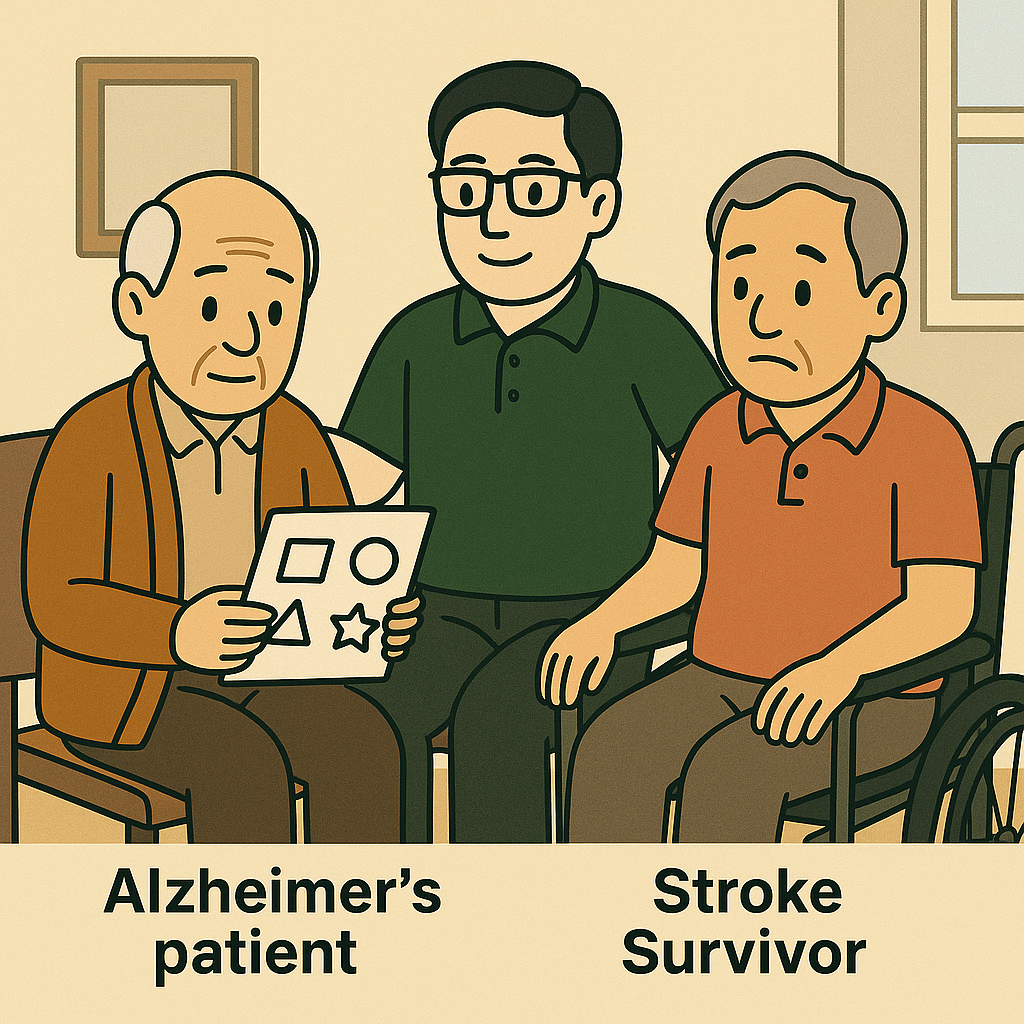
    Visual comparison of aphasia and Alzheimer’s symptoms

    At first glance, both conditions can look similar: someone has difficulty speaking, understanding, or remembering words. But the cause and treatment approach differ significantly.

    ✅ Aphasia

    • Cause: Brain damage, often from stroke, traumatic brain injury, or brain tumor
    • Main issue: Language – understanding, speaking, reading, or writing
    • Memory usually intact

    ✅ Alzheimer’s

    • Cause: Progressive neurodegenerative disease
    • Main issue: Memory – gradual loss of cognitive function
    • Language issues develop later

    Source: National Aphasia Association
    Source: Alzheimer’s Association


    👩‍⚕️ How Speech Therapists Support Aphasia vs Alzheimer’s

    Speech therapist using low-tech and digital AAC tools

    Speech-language pathologists (SLPs) are communication specialists trained to assess, diagnose, and treat both aphasia and cognitive-communication deficits related to dementia.

    🗣️ SLPs and Aphasia:

    🦳 SLPs and Alzheimer’s:

    • Shift focus to functional communication: gestures, simplified questions, familiar routines
    • Collaborate closely with caregivers to reduce frustration and preserve dignity

    Recommended Tools for SLPs:


    🧹 How Occupational Therapists Address Communication Challenges

    Occupational therapist setting up daily memory aids

    Occupational therapists (OTs) help patients maintain independence and function through adaptive communication and daily routines.

    🧠 OTs and Aphasia:

    • Create accessible home environments with AAC tools
    • Reinforce functional use of therapy cards and boards during tasks

    🧠 OTs and Alzheimer’s:


    🛠️ Therapy & Caregiver Tools That Actually Help

    Aphasia and Alzheimer’s therapy materials used by rehab therapists

    Whether you’re a clinician or family member, small tools can make a big difference.

    📅 Memory & Routine Aids:

    💥 Calming & Communication Support:

    ✍️ Therapist & Caregiver Add-ons:


    💬 Communication Isn’t Just Verbal

    When words fail, therapists help find alternatives. SLPs teach gestures and picture systems. OTs adapt tasks and environments. Even a simple cue card or familiar object can prompt a smile, a word, a moment of recognition.

    And that moment? That’s connection. That’s therapy.


    💕 Final Thoughts: Different Diagnoses, Shared Goals

    Successful communication using alternative methods

    Whether you’re working with someone recovering from a stroke or living with Alzheimer’s, the goal is the same: preserve dignity, support independence, and restore communication in any form.

    Let’s keep learning, sharing, and empowering patients—and each other.


    ✅ Get Free Therapist Tools

    Stay prepared wherever you are—clinic, home health, or SNF.

    📌 [Download Your Free Quick Reference Sheets for OT, PT, and ST]
    Tools, cheat sheets, and go-to strategies you’ll actually use.

    📚 OT Pocket Guide is now available

    📘 ST Pocket Guide releases soon
    📗 PT Pocket Guide coming in October


    💬 Let’s Hear From You!

    Have you worked with someone with aphasia or Alzheimer’s?
    What communication strategy made the biggest difference?

    👇 Share your story in the comments—we learn best when we learn together.


    Originally posted 2025-06-10 12:19:16.

  • 12. How SLP, OT, and PT Work Together: Interdisciplinary Rehab for Stronger Patient Recovery

    12. How SLP, OT, and PT Work Together: Interdisciplinary Rehab for Stronger Patient Recovery

    When my grandmother had her stroke, I remember seeing three different therapists walk into her room—one after the other. First came the speech therapist, then the occupational therapist, and finally the physical therapist. They were kind, knowledgeable, and patient. But what really amazed me was how they worked together like a well-oiled machine.

    That experience opened my eyes to something that too often goes unnoticed in healthcare: the power of collaboration in rehabilitation. Individually, each therapist brings essential expertise to the table—but when they unite, SLP, OT, and PT become a force for transformational recovery.

    Let’s take a deeper look into why interdisciplinary teamwork is not just ideal—but essential—for patient-centered care.

    💡 Affiliate Disclosure: This post may contain affiliate links. If you click and purchase, I may earn a small commission at no extra cost to you. As an Amazon Associate, I earn from qualifying purchases. I only recommend tools I trust and use.


    🧠 What Is Interdisciplinary Rehab—and Why Does It Matter?

    Visual explaining interdisciplinary rehab team mode

    In interdisciplinary rehab, therapists from different specialties—speech-language pathologists (SLPs), occupational therapists (OTs), and physical therapists (PTs)—collaborate with a shared treatment plan. Unlike a multidisciplinary approach, where each discipline works in parallel, interdisciplinary teams coordinate in real-time to improve patient outcomes, reduce therapy overlap, and enhance communication.

    This approach leads to:

    • More cohesive goal-setting
    • Fewer redundancies in care
    • Better progress tracking
    • Enhanced patient satisfaction

    📌 According to the World Health Organization, integrated rehab services improve function, reduce hospital stays, and support long-term independence.


    🤝 The Unique Role Each Therapist Plays

    Three therapists providing different forms of rehab

    Let’s break down what each professional brings to the table—and how they complement one another.

    🗣 Speech-Language Pathologist (SLP)

    Focus: Communication, cognition, swallowing

    • Assess and treat speech/language deficits
    • Manage swallowing disorders (dysphagia)
    • Support cognitive-linguistic therapy

    Helpful Tool:
    👉 Low-Tech AAC Flip Book – ideal for collaborative bedside communication
    👉 Speech Therapy Mirror – great for articulation work during co-treatment sessions

    ✋ Occupational Therapist (OT)

    Focus: Functional independence and daily living

    • Help with dressing, grooming, and adaptive techniques
    • Address sensory processing, fine motor skills
    • Facilitate postural alignment for communication and feeding

    Helpful Tool:
    👉 Therapy Putty for Hand Strengthening
    👉 Weighted Lap Pad for Sensory Regulation

    🦵 Physical Therapist (PT)

    Focus: Mobility, strength, balance

    • Assist in walking, transferring, and body mechanics
    • Build endurance and coordination
    • Promote safety with ADLs and mobility devices

    Helpful Tool:
    👉 Regular Gait Belt
    👉 Balance Pad for Rehabilitation


    🔄 How Interdisciplinary Teams Collaborate in Practice

    Interdisciplinary co-treatment with patient during mealtime

    Here’s how this looks in action:

    • During a co-treatment, an SLP might work on cognitive sequencing while the OT facilitates a grooming task.
    • PT could position the patient safely for feeding, while the SLP assesses swallowing.
    • All three may meet weekly to align their goals, adjust interventions, and celebrate progress as a team.

    Shared Tools for Coordination:
    👉 Whiteboard Clipboard – great for writing down goals during sessions
    👉 HIPAA-Compliant Therapy Notebooks – excellent for coordinated care notes
    👉 Rehabilitation Team Communication Board – visual support for patients and team


    💪 Why Teamwork Improves Patient Outcomes

    Therapists supporting patient success as a team

    When therapists collaborate, the patient:

    • Receives comprehensive care that treats the whole person, not just one issue
    • Feels more supported, seen, and empowered
    • Shows faster and more sustainable progress
    • Gains consistent reinforcement across therapies

    A 2018 review published in the Journal of Rehabilitation Medicine emphasized that interdisciplinary teamwork is essential in physical and rehabilitation medicine, improving not only functional outcomes but also communication, patient satisfaction, and long-term success. By sharing goals, coordinating strategies, and delivering cohesive care, SLPs, OTs, and PTs can dramatically enhance a patient’s quality of life—especially in complex rehab scenarios.


    📚 Resources for Continued Learning


    🧡 Conclusion: Together, We Heal Faster

    Recovery isn’t linear—and it’s certainly not solitary. When SLPs, OTs, and PTs work together, the road to healing becomes smoother, faster, and more empowering for everyone involved.

    Whether you’re a therapist, student, caregiver, or patient—recognize the value of collaboration in every step toward independence.


    📥 Want Free Therapy Tools at Your Fingertips?

    3 Quick sheets available: OT,PT & SLP

    Download your free quick reference sheets for OT, PT, and ST—perfect for therapists, students, or anyone in the field.

    📘 OT Pocket Guide available now


    📕 ST Pocket Guide releasing soon
    📗 PT Pocket Guide launching in October

    👉 Download Your Free Quick Sheets


    💬 We Want to Hear From You

    Therapists sharing feedback and goals together

    Have you ever seen a great therapy team in action? What made the difference?

    👇 Share your story in the comments—we learn best when we learn together.

    Originally posted 2025-05-29 05:39:05.

  • 11. #SwallowTok? How Dysphagia Awareness is Trending Online

    11. #SwallowTok? How Dysphagia Awareness is Trending Online

    7-minute read

    Ever heard of #SwallowTok?

    If not, you’re not alone—but you might be missing out on one of the most powerful healthcare awareness movements growing on social media today.

    Whether you’re an SLP, caregiver, or someone who’s struggled with swallowing, this TikTok trend is turning the spotlight onto dysphagia—a medical condition that affects how people swallow food and liquids. The videos are raw, informative, sometimes humorous, and often deeply moving. They’re changing the conversation around dysphagia care, therapy tools, and accessibility like never before.

    And let’s be honest—how often do swallowing disorders go viral?


    Affiliate Link Disclosure:

    This post may contain affiliate links. If you purchase something through the recommended links, I may earn a small commission at no extra cost to you. As an Amazon Associate, I earn from qualifying purchases. Thanks for your support—it helps me continue creating free resources for therapists and caregivers.


    What Is Dysphagia, Really?

    Dysphagia is the medical term for swallowing difficulties. It can impact people of all ages, but it’s especially common after strokeneurological conditions like ALS or Parkinson’s, or in individuals with head and neck cancer.

    Signs of dysphagia include:

    • Coughing or choking during meals
    • Food getting “stuck”
    • Wet or gurgly voice after eating
    • Unexplained weight loss
    • Frequent pneumonia or respiratory issues

    Left untreated, dysphagia can lead to aspiration, malnutrition, dehydration, and serious health risks. That’s why early identification and intervention by a speech-language pathologist (SLP) is critical.

    Learn more from ASHA


    The Rise of #SwallowTok: Awareness in Action

    “SLP creating TikTok content about dysphagia therapy tools”

    So, how did swallowing therapy end up trending online?

    Thanks to creators like @carrie_clark_slp, @dysphagiaduo, and @sprucestreetslp TikTok is now home to countless videos explaining swallowing strategies, signs of aspiration, oral motor exercises, and clinical tips. These professionals break down complex concepts into bite-sized, easy-to-digest formats (pun intended), making dysphagia education accessible to a broader audience.

    You’ll find:

    • Real-time demos of thickened liquids
    • Safe swallow techniques like the chin tuck
    • Behind-the-scenes looks at FEES and MBSS
    • Caregiver tips for pureed diet prep
    • Myth busting: “Dysphagia ≠ picky eater!”

    This content is humanizing and demystifying a condition that often goes unnoticed. It’s also empowering patients and caregivers to ask better questions and seek care earlier.


    Tools That Help: SLP-Approved Dysphagia Gear

    With visibility comes curiosity—and many people on #SwallowTok ask, “What tools are you using?”

    Here are some therapist-approved tools often seen in dysphagia therapy and evaluations:

    Each of these products plays a role in improving safety, independence, and dignity during meals—whether you’re working in a clinic or caring for someone at home.


    Who’s Most at Risk? Spotting Swallowing Disorders

    Elderly stroke patient receiving feeding support at home”

    SLPs on TikTok are helping the public recognize that dysphagia doesn’t just “look old.” Here’s who’s most commonly affected:

    • Stroke survivors
    • Individuals with neurological conditions (ALS, Parkinson’s, MS)
    • Children with developmental disabilities or feeding delays
    • People with head and neck cancer
    • Adults post-intubation or tracheostomy
    • Seniors with general muscle weakening or dementia

    By showing real patients, real stories, and real strategies, creators are changing the face of dysphagia from clinical mystery to shared experience.


    From Screen to Session: Swallowing Strategies Worth Knowing

    Some of the most viral #SwallowTok tips are simple yet impactful:

    • Chin tuck to prevent aspiration
    • Double swallow technique
    • Pacing with sips of water
    • Postural positioning during mealtime
    • Small bite sizes and slow rate

    Remember: these aren’t substitutes for personalized care. But they encourage awareness and open the door to professional support.

    If you’re a caregiver or professional, consider printing or saving visual cheat sheets and tips to reinforce safe feeding habits.

    Subscribe now to download free SLP Quick Reference Sheets →


    The Power of Going Viral—for Good

    “Social media post with trending dysphagia hashtags

    While not every trend leads to real change, #SwallowTok is different.

    It’s created:

    • An online community of caregivers, clinicians, and survivors
    • A platform to debunk misinformation
    • Easier access to professional tools and resources
    • More demand for dysphagia-trained SLPs

    And as therapists continue to build these bridges between care and content, we move one step closer to making swallowing safety universal—not just clinical.


    Conclusion: What We Swallow Matters—And So Does Awareness

    “SLP offering support to patient during meal”

    Dysphagia might not be glamorous, but it’s deeply human. Eating, drinking, and connecting over meals are essential to our wellbeing—and when those functions are threatened, it’s more than medical. It’s emotional.

    Thanks to #SwallowTok, people are finally talking about it.

    Want free therapy tools at your fingertips?
    Subscribe to download your SLP Quick Reference Sheets with feeding tools, therapy strategies, and more.

    OT Pocket Guide available now (ebook + paperback)


    ST Pocket Guide coming soon | PT Guide in October


    We Want to Hear From You:

    “Person reading TikTok comments on dysphagia awareness video”

    Have you created or seen an impactful dysphagia awareness video?
    Are you a caregiver or therapist with a go-to swallowing tip?

    Drop a comment below. Let’s learn from each other.

    Originally posted 2025-05-28 05:37:43.

  • 10. What Is AAC? Why It’s Life-Changing for So Many

    10. What Is AAC? Why It’s Life-Changing for So Many

    6-minute read

    Imagine Not Being Able to Speak…

    Imagine you’re in a hospital bed after a stroke, your thoughts racing—but your mouth can’t form the words. Or you’re a young child with autism, frustrated every day because you can’t express your wants, needs, or emotions. How would you ask for help, say “I’m in pain,” or tell someone “I love you”?

    That’s the daily reality for millions of individuals with communication challenges.

    Thankfully, AAC—Augmentative and Alternative Communication—bridges that gap.

    Whether through a high-tech tablet or a simple picture board, AAC empowers people to be heard, understood, and included. If you’re a therapist, caregiver, or educator, understanding AAC is key to transforming lives.

    👉 Want practical AAC tools and cheat sheets?
    Subscribe to get free Quick Reference Sheets for OT, PT, and ST—plus sneak peeks of our therapy Pocket Guides.


    As an Amazon Associate, I earn from qualifying purchases. This means if you click on a product link and make a purchase, I may receive a small commission at no extra cost to you. I only recommend tools I trust and use to support AAC and therapy practices.


    What Exactly Is AAC Communication?

    AAC stands for Augmentative and Alternative Communication—a broad term describing all forms of communication (other than verbal speech) used to express thoughts, needs, and ideas.

    AAC can be:

    • Augmentative: Adding to someone’s existing speech
    • Alternative: Replacing speech when none is available

    It helps:

    • Children and adults with autismcerebral palsyDown syndrome
    • People with ALSstroketraumatic brain injury
    • Anyone with temporary or permanent speech limitations

    Communication is a human right. AAC helps ensure no one is left voiceless.

    📚 External Resource: ASHA – What Is AAC?


    Types of AAC: From Picture Boards to Eye Gaze Devices

    Various AAC tools including speech app, picture book, and communication switch.

    AAC tools vary widely depending on the individual’s needs.

    ✅ No-Tech AAC

    • Gestures
    • Sign language
    • Facial expressions
    • Drawing or writing

    ✅ Low-Tech AAC

    ✅ Mid-Tech AAC

    ✅ High-Tech AAC


    How AAC Changes Lives

    Speech therapist and child engaging in joyful AAC activity.

    AAC can be transformative:

    • ✅ Increases independence
    • ✅ Builds confidence
    • ✅ Supports academic success
    • ✅ Encourages social connection
    • ✅ Allows for self-advocacy

    From toddlers learning their first words to adults reclaiming their voice after injury or illness, AAC empowers people to fully participate in their lives.

    📚 External Resource: Communication Matters – Benefits of AAC


    Common Myths About AAC

    Let’s bust some of the most common misconceptions:

    🛑 “AAC will stop someone from learning to talk.”
    ✅ Research shows AAC often supports speech development.

    🛑 “AAC is only for nonverbal people.”
    ✅ Many AAC users have limited, unclear, or inconsistent speech.

    🛑 “AAC is too expensive or hard to learn.”
    ✅ There are free apps, school supports, and customizable tools at all levels.

    AAC should never be a last resort—it should be a first step toward communication.


    The Role of the SLP (and the Whole Team!)

    Speech therapist coaching a caregiver on how to use an AAC device.

    SLPs are at the heart of AAC support:

    • 🔍 Evaluate communication abilities
    • 🔧 Trial different tools and systems
    • 📚 Train caregivers, clients, and educators
    • 🤝 Collaborate with:
      • Occupational Therapists (for motor and sensory access)
      • Physical Therapists (for positioning and mobility)
      • Teachers and parents (for carryover at home and school)

    Helpful tools:


    Choosing the Right AAC System

    Teen using eye gaze AAC device in a classroom setting.

    There is no one-size-fits-all solution. Factors to consider:

    • Fine motor and visual abilities
    • Cognitive level
    • Preferences and motivation
    • Access method (e.g., direct touch, switch scanning, eye gaze)
    • Portability and durability

    💸 Funding options:

    • Insurance
    • Medicaid/Medicare
    • School districts (IEPs)
    • Grants and donations

    📚 External Resource: Funding AAC Devices – PrAACtical AAC


    Every Voice Matters: Let’s Keep Talking About AAC

    AAC therapy materials neatly arranged on a desk with clipboard.

    AAC isn’t just a clinical tool—it’s a life-changing pathway to freedomconnection, and confidence.

    Whether you’re working with a preschooler developing early language or an adult recovering from a stroke, AAC gives people the chance to be heard—and that’s everything.


    💡 Want More AAC Tools at Your Fingertips?

    Subscribe now to get:

    • 🧠 Free Quick Reference Sheets for OT, PT, and ST
    • 📘 Previews of our therapy Pocket Guides
    • 💌 Tips and product ideas delivered to your inbox!
    • OT Pocket Guide – Out now (ebook + paperback)

    • ST Pocket Guide – Releasing this month
    • PT Pocket Guide – Coming in October

    💬 We Want to Hear From You

    Speech therapist attentively listening to a caregiver sharing an AAC experience

    Have you ever worked with or cared for someone who used AAC?
    What tool, tip, or breakthrough made the biggest difference?

    👇 Share your story in the comments—we learn best when we learn together.

    Originally posted 2025-05-22 03:00:00.

  • 17. Minority Mental Health Awareness: Why Rehab Therapists Are Essential Allies

    17. Minority Mental Health Awareness: Why Rehab Therapists Are Essential Allies

    The Story Behind the Stats — & Why It Matters

    You’ve just finished a productive home-visit. Your client—a Latina grandmother recovering from a hip fracture—quietly mentions how anxious she’s felt since surgery. She hasn’t told her primary doctor yet; the last time she tried, “they just gave me another pill.” Stories like hers are common: mental-health needs are spoken, yet unmet, across many minority communities.

    July is Minority Mental Health Awareness Month, and the numbers remain sobering. In 2023, serious psychological distress touched 11.4 % of Black adults, 13.8 % of Hispanic adults, and a striking 15.4 % of American Indian/Alaska Native adults.Bay Area Clinical Associates Yet people of color are still less likely to receive culturally responsive mental-health care—and more likely to hit barriers when they try. Only 36 % of Hispanic and 39 % of Black adults who reported fair or poor mental health received services in the prior three years, compared with 50 % of White adults.KFF


    How Barriers Widen the Mental-Health Gap

    • Structural hurdles: insurance coverage, high out-of-pocket costs, and limited clinicians of similar background.
    • Stigma & mistrust: past negative encounters make it harder to seek help.KFF
    • Language & cultural mismatch: assessments and education materials often ignore linguistic nuance or cultural beliefs.

    Where Rehab Therapy Fits In

    Rehab clinicians already address cognition, daily routines, and quality of life—touchpoints that naturally overlap with mental-health goals:

    • OT, PT & ST interventions reduce psych distress. An updated 2024 meta-analysis confirmed that cognitive rehabilitation significantly improved depressive symptoms and executive function in adults with depression.PubMed
    • Culturally tailored OT services matter. A 2025 qualitative study found that perinatal OT practitioners identified stigma, fear, and language as primary barriers for ethnic-minority mothers—yet also uncovered enablers such as peer support and community partnerships.PubMed
    • Digital therapeutics expand reach. In 2024 the FDA cleared Rejoyn, the first app-based depression treatment, illustrating how tech can supplement care when clinician access is limited.TIME


    Building Culturally Competent Care (OT | PT | ST)

    Action ideas:

    1. Screen & listen
      Use brief, validated tools in the client’s preferred language and follow up with open-ended questions.
    2. Co-create goals
      Embed cultural values (e.g., faith practices, multigenerational caregiving) into your functional objectives.
    3. Leverage interdisciplinary teamwork
      Pair mobility sessions with mindfulness coaching, or embed communication strategies into ADL training.

    Affiliate Disclosure

    Some links below are affiliate links. If you choose to purchase, I may earn a small commission—at no extra cost to you. Your support helps me create free quick-reference sheets, blog posts, and upcoming pocket guides.


    Empower Clients With At-Home Mental-Health Tools

    Speech-language pathologist shares a bilingual visual schedule with an Indigenous father and son, both wearing braids. They sit in a modest living room decorated with cultural textiles, pottery, and a lit candle, with a family photo on the wall.

    Recommend evidence-informed, budget-friendly items your readers can find via the blog’s affiliate shop:

    NeedTry ThisWhy It Helps
    Daily reflectionGuided mental-health journalPrompts normalize emotional check-ins.
    Track moods & triggersAnxiety/depression plannerVisual patterns make symptom trends obvious.
    In-session groundingGrounding card deckQuick 5-4-3-2-1 cues to re-center.
    Label feelingsPocket emotion wheelSupports emotional literacy across ages.

    Pro-tip: Encourage clients to bring these tools to therapy so you can practice using them together.


    Stock Your Therapist DEI Toolkit

    Flat-lay image showing a folded weighted blanket, a BIPOC affirmation card deck, lavender essential oil roller, an open journal reading ‘Today, I showed up for myself,’ and a white diffuser on a light wood surface.

    DEI stands for Diversity, Equity, and Inclusion—a framework aimed at ensuring fair representation, opportunity, and a sense of belonging for individuals from historically underrepresented or marginalized groups.(en.wikipedia.org)

    Invest in resources that strengthen culturally responsive care:


    Inclusive Communication & Sensory Aids

    Occupational Therapist in red scrubs sits at eye level with a young Black boy on a colorful therapy mat. They use a feelings chart and fidget tools during the session, while the child’s mother, wearing jeans and an orange shirt, watches nearby with a smile.

    Sometimes the simplest low-tech tool removes the biggest barrier:

    Pair these with tactile items like therapy putty or a sensory kit to weave regulation into movement or speech practice.


    Final Thoughts & Next Steps

    Speech Therapy Assistant sits at a desk with diversity therapy cards, a ‘Health Disparities Manual,’ and a checklist labeled ‘Inclusive Goals This Week.’ A framed quote on the wall reads ‘Representation Heals,’ while a speech therapist stands blurred in the background reviewing paperwork.

    Rehab therapists sit at a powerful intersection of physical function, communication, and mental well-being. By merging culturally competent practice with evidence-based self-care tools, we can shrink the mental-health gap for BIPOC clients—one therapy session at a time.

    👉 Grab Your Free Quick Reference Sheets

    Need fast clinical tips? Download my OT, PT & ST quick sheets and check out the published Occupational Therapy Pocket Guide—now on Amazon! The Speech Therapy Pocket Guide drops later this month, and the Physical Therapy edition arrives in October.

    Question for you: What’s one culturally responsive strategy you’ve added to your rehab sessions? Share in the comments so we can learn together!

    Originally posted 2025-07-22 02:47:54.

  • 7. How Rehab Therapists Can Promote Mental Health: 7 Practical Tips

    7. How Rehab Therapists Can Promote Mental Health: 7 Practical Tips

    7-minute read

    Affiliate Disclosure:

    As an Amazon Associate, I earn from qualifying purchases. This means if you click a product link and make a purchase, I may receive a small commission—at no extra cost to you. I only recommend products I personally use or believe are helpful in therapy.


    Introduction: It’s Not Just the Body We’re Treating

    If you’ve been in the therapy world long enough, you’ve probably had that moment: your client breaks down mid-session, shares something heavy, or just zones out with that distant look. And suddenly, the exercise or language drill you were working on doesn’t feel like the real priority anymore.

    As rehab therapists, we aren’t mental health providers—but we are people who spend a lot of time with our clients. We notice changes. We build trust. We often see sides of people that others don’t. And yes, we can absolutely play a role in supporting their mental health.

    Here are seven approachable, research-backed ways to do just that.


    1. Make Trauma-Informed Care Your Default

    You may not always know your client’s history—but chances are, many of them have faced trauma. Whether it’s a stroke survivor coping with a sudden loss of independence or a child with complex medical trauma, our clients bring invisible wounds into the therapy space.

    A trauma-informed approach means offering consistent routines, choices, and clear explanations. Even small gestures—like giving a client control over the order of activities—can make therapy feel safer.

    Try This: A simple visual support tool like a feelings flip chart can give clients a way to express emotions they may not have words for.

    Learn more about trauma-informed care from NCTSN.


    2. Create a Calm Space That Invites Regulation

    Think of your therapy space: does it promote calm—or chaos? A sensory-friendly environment can make a huge difference, especially for clients dealing with anxiety, ADHD, or overstimulation.

    That doesn’t mean a full makeover. A few thoughtful additions—like a small aromatherapy diffuser, a decluttered workspace, or natural light—can help regulate emotions. A weighted lap pad works wonders for grounding, especially in pediatric or neurodivergent sessions.

    Bonus: A calm environment benefits you, too.


    3. Sprinkle in Mindfulness and Grounding Tools

    Mindfulness isn’t just yoga and silence. In rehab, it might look like a guided deep breath, a pause between transitions, or a grounding activity before a challenging task.

    Quick mindfulness cards like these are perfect for adding a reflective moment between tasks. They work across age groups, especially when adapted into visuals or movement.

    You can even build these into treatment goals: sustained attention, emotional regulation, and even functional communication.

    Explore more mindfulness practices from Greater Good Science Center.


    4. Build Trust Through Compassionate Communication

    Therapeutic rapport isn’t fluff—it’s the foundation of everything we do. Our clients need to feel heard, understood, and safe, especially when they’re working through something hard.

    Try weaving in open-ended questions, reflective statements, and emotion-based vocabulary. A visual reminder like the “How Are You Feeling Today?” chart on your wall can help both kids and adults express themselves during sessions.

    This is where our skillset overlaps with mental health—through empathy, clarity, and patience.


    5. Use Activity as a Safe Outlet for Emotions

    Rehab therapy can be deeply emotional, whether it’s frustration over slow progress, grief from a new diagnosis, or the joy of regained independence.

    Build in ways for clients to release or express what they’re feeling. Use creative outlets like journaling, drawing, or storytelling during sessions. For pediatric clients, this could be puppet play or pretend scenarios. For adults, it might be reflective prompts or role-play.

    Keeping your own self-care journal on hand also models emotional processing in a subtle, powerful way.


    6. Be Aware of Burnout—In Clients and Yourself

    Clients with chronic or long-term rehab needs often show signs of burnout: loss of motivation, irritability, even hopelessness. We can help by adjusting expectations, validating their experiences, and celebrating small wins.

    But therapist burnout is real, too. We give a lot, emotionally and physically. Add in productivity pressures, and it’s no wonder burnout rates are rising.

    Build small moments of care into your day—a mindful pause, a short walk, even a faux plant on your desk to brighten your view. It’s okay to protect your energy. Your clients will benefit from it.


    7. Normalize Help and Know When to Refer

    Mental health doesn’t have to be taboo in rehab settings. Normalize talking about feelings, struggles, and resources. When you spot red flags, don’t ignore them—refer.

    You don’t have to do it all. Just be someone who notices.

    Create a simple resource list with local therapists, support groups, or mental health hotlines. Sites like MentalHealth.gov and Psychology Today are great starting points for finding professional support.


    Conclusion: A Little Goes a Long Way

    We may not be mental health professionals—but as rehab therapists, we’re often a trusted presence during tough times. The way we speak, listen, and show up matters. Sometimes just being there—consistently and compassionately—is the best support we can offer.

    Let’s keep showing up for our clients—not just as clinicians, but as humans.


    Grab Your Free Quick Reference Sheets

    Designed for OT, PT, and STs who want smart tools, not more paperwork.
    Subscribe to the newsletter to get your free Quick Reference Sheets—perfect to keep by your side during sessions.


    Looking for More Clinical Tools?

    Explore the Productive Rehab Therapist Pocket Guide Series for expanded tools and structured quick references:

    • OT Pocket Guide – Out now! Available on Amazon, in
    • ST Pocket Guide – Launching this month!
    • PT Pocket Guide – Releasing October 2025

    Stay organized, empowered, and confident—whether you’re new to the field or a seasoned therapist.


    Originally posted 2025-05-13 03:00:00.

  • 5. #SLPTok – How Social Media Is Finally Showing What Speech Therapists Really Do

    5. #SLPTok – How Social Media Is Finally Showing What Speech Therapists Really Do

    8-minute read

    Intro: The SLP World Is Going Viral—and It’s About Time


    If you’ve ever asked, “What does a speech therapist actually do?”—you’re not alone. For years, speech-language pathologists (SLPs) have worked quietly behind the scenes, helping clients of all ages find their voice—literally and figuratively. But now, thanks to the rise of #SLPTok on TikTok and other social platforms, the mystery is fading. Social media is finally putting a spotlight on what speech therapists really do, and spoiler alert: it’s way more than just helping kids pronounce their “R’s.”


    From AAC devices to school-based therapy, medical rehab to adult swallowing therapy, #SLPTok is showcasing the real-life work of licensed SLPs. Let’s take a closer look at how these creators are reshaping public understanding—and the tools and tips commonly associated with their specialties.


    Section 1: What Is #SLPTok and Why Is It Important?

    #SLPTok is a hashtag movement where licensed speech-language pathologists share tips, debunk myths, and show what their day-to-day really looks like. In an era of short attention spans, TikTok has become a powerful educational tool. For many, it’s the first time they’re seeing the full scope of what SLPs do—from helping a child say “mama” to teaching adults how to swallow again after a stroke.


    Why it matters:

    • It raises awareness of SLP roles in schools, hospitals, homes, and online.
    • It helps families and caregivers recognize signs of communication delays.
    • It encourages future therapists to explore non-traditional SLP careers.

    Section 2: Meet the SLPs of TikTok (And the Tools They Recommend)

    This post contains affiliate links. If you click on a link and make a purchase, I may earn a small commission—at no extra cost to you. As an Amazon Associate, I earn from qualifying purchases. I only recommend tools I trust or those used by licensed SLPs.

    Here are eight standout SLPs from TikTok, each representing a unique specialty—plus affiliate-linked tools you can explore to learn more or support the journey.

    1. Ms. Rachel (@msrachelforlittles): Pediatric / Early Intervention

    Beloved by parents and toddlers alike, Ms. Rachel uses music and repetition to support language development. Her content is often recommended by early intervention SLPs.

    Tools inspired by her approach:


    2. Brenda Volk (@spillthespeech)School-Based SLP

    Brenda Volk, known as @spillthespeech on TikTok, is a seasoned school-based speech-language pathologist who shares invaluable insights into the daily life of an SLP in educational settings. Her content includes practical strategies for managing caseloads, effective therapy activities, and scheduling tips, making her a go-to resource for fellow SLPs and educators.


    Tools inspired by her approach:


    3. Chung Brewer, CCC-SLP (@adultspeechtherapy.co): Geriatric SLP

    Chung Brewer is a certified speech-language pathologist who specializes in adult and geriatric care. Through her TikTok account, @adultspeechtherapy.co, she shares valuable resources and therapy ideas tailored for older adults. Her content includes accessible visual aids, cognitive-communication strategies, and swallowing therapy techniques aimed at enhancing the quality of life for seniors.


    Geriatric SLP aids:


    4. Beth Riehle (@beth_riehle): Medical SLP / Cancer Recovery

    Beth documents her powerful journey of relearning to speak after tongue cancer. Her recovery highlights the critical role SLPs play in medical rehab.


    Therapy resources:


    5. Elena (@peds_slp): Early Intervention SLP

    Elena is a certified speech-language pathologist specializing in early intervention for toddlers. Through her TikTok account, @peds_slp, she shares valuable resources and therapy ideas tailored for young children. Her content includes accessible visual aids, play-based strategies, and parent coaching techniques aimed at enhancing communication skills in toddlers.


    Early Intervention SLP aids:


    6. Chris Wenger (@speechdude): AAC & Neurodiversity

    A champion of neurodiverse learnersChris focuses on AAC and accessible education for students with complex needs.


    AAC device suggestions:


    7. Maurice Goodwin (@maurice_goodwin): Non-Traditional Career Path

    Maurice speaks candidly about transitioning from traditional SLP work to new ventures. His journey is a breath of fresh air for SLPs seeking alternative routes.


    Suggested resources:


    8. Carrie Clark (@carrie_clark_slp): AAC Specialist / Child Communication

    Carrie provides tutorials for AAC implementation at home or in therapy, demystifying complex communication tools for parents and teachers.

    Suggested tools:


    Section 3: The Bigger Picture—#SLPTok as Advocacy and Education

    Social media is more than just entertainment. For the speech community, it’s:

    • Representation: Clients see themselves reflected.
    • Education: Parents, caregivers, and future therapists learn what SLPs really do.
    • Connection: Professionals build community, reduce burnout, and promote clinical best practices.


    Credible External Resources:


    Conclusion: Give Voice to the Work That Matters

    Social media is giving SLPs the mic—and they’re using it to amplify the truth: Speech therapists do so much more than people think. Whether it’s teaching a child to ask for help, helping a stroke survivor speak again, or guiding a family through AAC options, their work changes lives.


    Want a deeper dive into practical tools and strategies SLPs use every day?
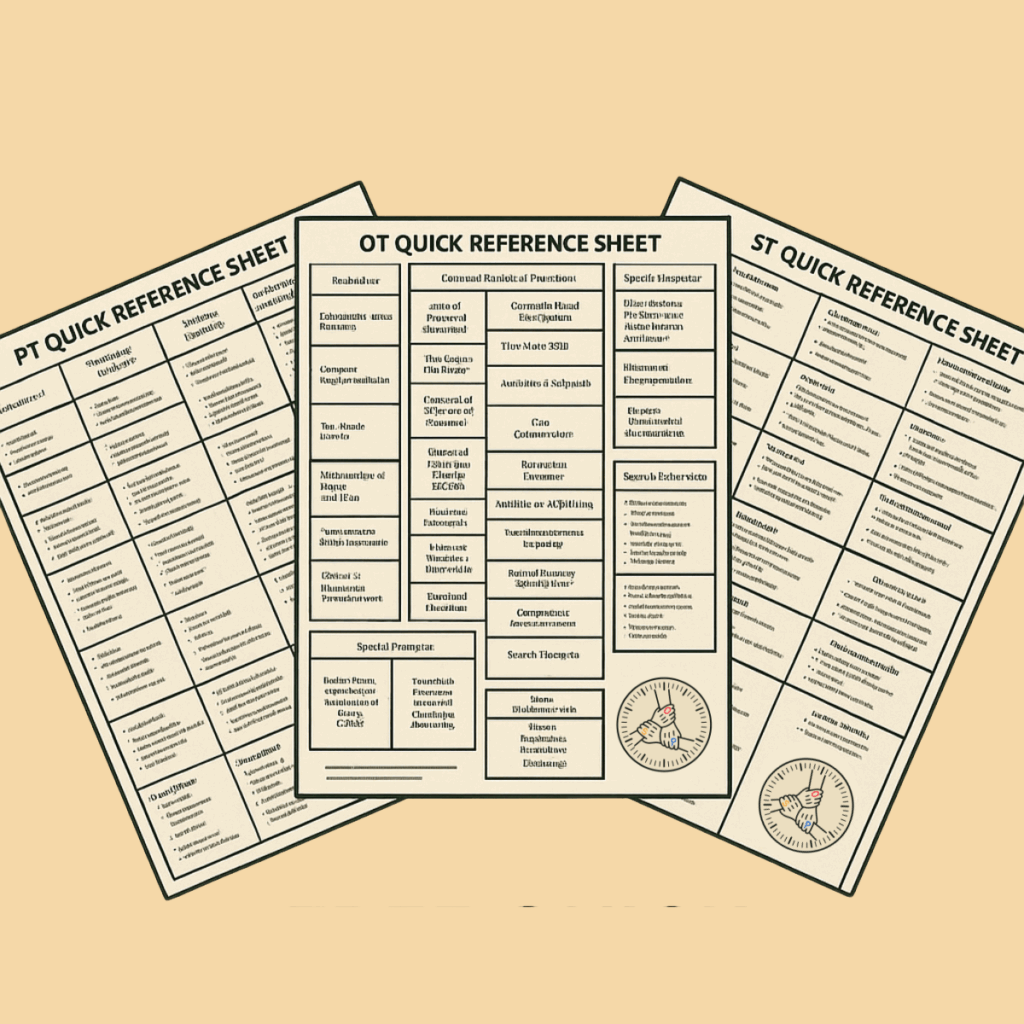

    Get Your Free Quick Reference Sheets


    Keep high-impact clinical tools at your fingertips. Perfect for students, therapists, and caregivers.


    Now Available: OT Pocket Guide

    Your go-to reference for evaluations, interventions, documentation, and more.


    Coming Soon:

    • ST Pocket Guide – May 2025
    • PT Pocket Guide – October 2025

    Each guide expands on the cheat sheets with actionable clinical strategies, simplified charts, and quick-access formats.

    Originally posted 2025-05-06 03:00:00.