Therapist Productivity Planner
Enter your schedule and treatment minutes to estimate your productivity, paid time, shift length, and expected clock-out time.
Essential tools for rehab pros — simplified.

To Every Speech Therapist: We See You
As Speech Therapy Month comes to a close, I just wanted to take a moment to remind SLPs and SLPAs that the work you do truly matters — even when it feels overlooked. Most people don’t realize how much life depends on communication until communication becomes difficult, which is exactly why speech therapy plays such an important role across every stage of life.
From helping patients reconnect after stroke, to supporting AAC communication, swallowing safety, cognition, and pediatric development, speech therapists do far more than most people realize. This blog is a reminder that your work is seen, appreciated, and genuinely life-changing — even in the small moments that often go unnoticed.

OT, PT, ST? I’ve Got You Covered
Three cheat sheets. One super helpful bundle.
Whether you’re lifting limbs, building language, or getting hands-on with ADLs–these quick references are made for you.
Subscribe and grab all three (for free!)–no stress, no spam. Just enter your email below.
📘 NOW AVAILABLE
The Speech Therapy Pocket Guide
A practical, streamlined reference for SLPs—covering assessments, intervention strategies, documentation tips, and goal templates to make your sessions more efficient and effective.


The Occupational Therapy Pocket Guide
Your go-to resource for clear, concise, and clinically relevant OT interventions. Designed to save time, reduce decision fatigue, and support your sessions—without the fluff.
On the Horizon:
The Physical Therapy Pocket Guide
A compact, no-nonsense reference designed to streamline rehab planning, interventions, and documentation—built specifically for busy PTs.
(You’ll also get free access to all three rehab quick reference sheets when you sign up, if you haven’t already.)

OT, PT, ST: What’s the Difference?
Rehab therapy is a team effort—but each discipline brings something unique to the table. Whether you’re new to the field or just need a refresher, here’s a quick breakdown of what makes each role essential in patient care.

Occupational Therapy (OT)
Primary Focus: Functional independence during self-care, cognitive skills, fine motor coordination
Settings: Hospitals, outpatient, schools, SNFs, home health
Key Areas: Adaptive equipment, sensory integration, mental health, upper extremity rehab
Goal: Help patients regain or build daily life skills to live as independently as possible

Speech Therapy (ST)
Primary Focus: Communication, swallowing, cognition, speech-language development
Settings: Schools, hospitals, rehab, private practice, home health
Key Areas: Aphasia, dysphagia, articulation, AAC, voice therapy
Goal: Improve communication, safety, and cognitive communication for daily functioning

Physical Therapy (PT)
Primary Focus: Movement, strength, balance, mobility, pain management
Settings: Acute care, outpatient ortho, inpatient rehab, SNFs
Key Areas: Gait training, manual therapy, orthopedic rehab, exercise prescription
Goal: Restore physical function and prevent future injury through movement-based interventions
BEHIND THE RESOURCES

I’m Noun, an Occupational Therapy Assistant who’s been right there in the middle of packed caseloads, progress notes, and the never-ending search for quick answers. I created this space to share the kind of tools I always needed—but couldn’t find.
Everything here is built to help you work smarter, support your clients better, and spend less time second-guessing.
My Latest Posts
• • •
- Life Without Speech Therapy: Why SLPs Matter More Than Ever

- Struggling with Feeding Therapy? Tips for New SLPs

- 17. Minority Mental Health Awareness: Why Rehab Therapists Are Essential Allies

- 8. Aphasia After Stroke: A Guide for Therapists and Caregivers

- 7. How Rehab Therapists Can Promote Mental Health: 7 Practical Tips

- 6. Helping Patients with ALS Communicate: 6 Tips from a Rehab Therapist

- 5. #SLPTok – How Social Media Is Finally Showing What Speech Therapists Really Do

- 4. Voices Heard, Lives Changed: The Power of Speech Therapy

- 3. Your First OT Job? Here Are the Tools You’ll Actually Use

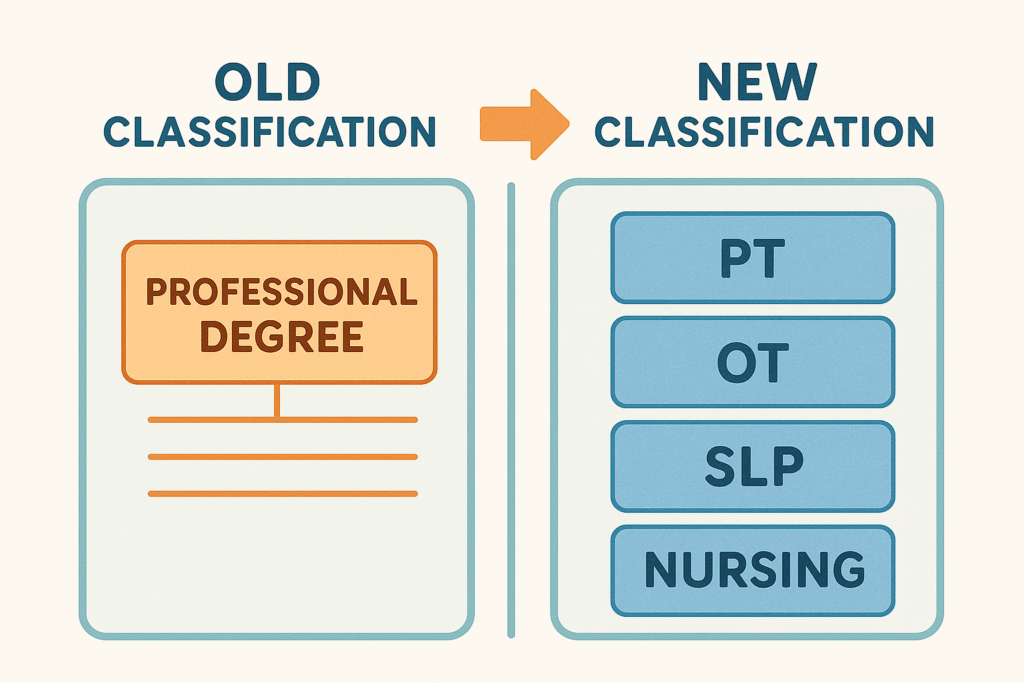
- 20. The Hidden Effects Of 2025’s New Professional Degree Rule
• • •
