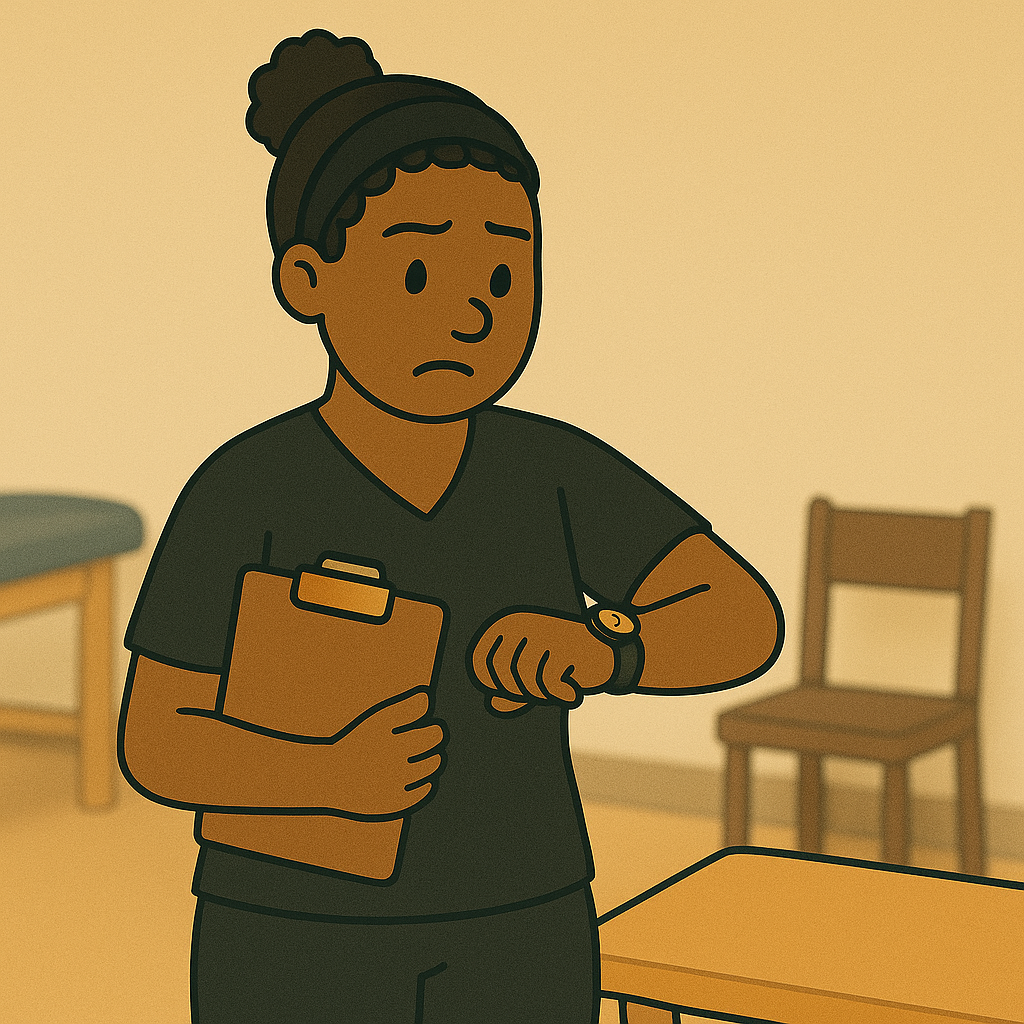
You clock in early, give everything to your patients, and somehow still end the day feeling behind. Notes pile up, your brain’s fried, and you’re left wondering, “How do they expect me to keep up?”
The truth? Rehab productivity expectations often don’t account for everything you do. But with the right tools—and a smart strategy to calculate and manage your time—you can stay efficient without burning out.
This post walks you through:
What productivity really means in OT, PT, and SLP
How to calculate it with real-time examples
When to track it during your day
Tools that will save you hours over the week
⚠ Affiliate Disclosure
This post includes affiliate links. That means I may earn a small commission (at no cost to you) if you purchase through them. I only recommend tools I’ve personally vetted or would use in clinical settings.
🧠 What Is Productivity in Rehab Therapy?
In therapy, productivity is the percentage of your shift spent delivering billable, direct care (usually tracked in your EMR—Electronic Medical Record system). It’s a business metric, but it directly affects how you’re judged as a therapist—and how exhausted you feel by 3 PM.
Productivity Formula: Total Work Time = (Treatment Minutes ÷ Productivity %) × 100
The remaining time in your day—non-billable minutes—is all you’ve got for documentation, collaboration, and admin work.
That’s why understanding this formula early in your day can help you set boundaries and avoid surprise overtime.
🧮 How to Calculate Rehab Productivity (With Clock-Out Time Examples)
🎥 Prefer to watch instead of read? I created a short video that walks through these exact productivity calculations—step by step—so you can visualize how it works in real life.
Let’s say you:
Clock in at 8:00 AM
Take a 30-minute unpaid lunch
Need to hit 8 total hours of paid time
Want to finish on time at 5:00 PM
Here are three real examples based on common productivity expectations:
✅ Example 1: 100% Productivity Goal
Treatment Time Required: 8 hours (480 minutes)
Clock-Out Time:4:30 PM
⚠️ You’ll need to bill for every minute you’re on the clock (minus lunch). This rarely allows time for documentation or indirect tasks. Best suited for high-volume outpatient clinics, and unrealistic without the use of group or concurrent treatments.
✅ Example 2: 90% Productivity Goal
Treatment Time Required: 7 hours 13 minutes (433 minutes)
💡 Tip: Do a quick productivity check mid-morning. If you’ve had a no-show or longer session, recalculate your clock-out time early so you’re not stuck finishing late. This productivity percentage is ideal for assistants in the field.
✅ Example 3: 85% Productivity Goal
Treatment Time Required: 6 hours 48 minutes (408 minutes)
Calculation: 408 ÷ 0.85 = 480 minutes (8 hrs)
Clock-Out Time:5:00 PM
You now have 72 minutes of your day to split across documentation, phone calls, team discussions, travel (if applicable), and setup time. Generally ideal for evaluating therapists who need the extra time.
🧭 How to Plan Your Clock-Out Time Before You Get Behind
A smart habit? Calculate your projected clock-out time once you’ve seen your second patient. That way, if you had a missed visit, longer eval, or ran a group session, you’ll know if you’re ahead or behind.
📌 Check again around your second-to-last patient. That’s your last chance to rebalance and wrap up on time.
🧩 Understanding Group and Concurrent Sessions (Productivity Boosters)
If your facility allows group or concurrent therapy, your EMR often counts each client’s time individually—even if you’re treating multiple people at once.
🧾 For example:
You see 2 patients together for a 30-minute group
Your EMR logs it as 30 min per patient = 60 min billable time
🎉 You just gained 30 minutes toward your productivity goal in half the time—leaving more space for documentation or a break.
⚠ Disclaimer: At the time of writing, most EMRs calculate group/concurrent minutes this way. Your system may differ, and future updates could change how minutes are logged. Always verify with your clinical supervisor or billing policies.
🧰 Time-Saving Tools That Help You Work Smarter
Time = your most valuable resource. These tools are therapist-tested and designed to help you save minutes that add up to hours:
These guides were created specifically to cut your documentation time in half—with goal banks, CPT cheat sheets, and functional intervention cues for every setting.
Productivity should never come at the expense of your well-being or clinical reasoning. By learning how to calculate your expected work time before you get behind—and by setting yourself up with the right tools—you can save time and reclaim control over your workday.
When Words Slip Away: How Therapists Bridge the Gap
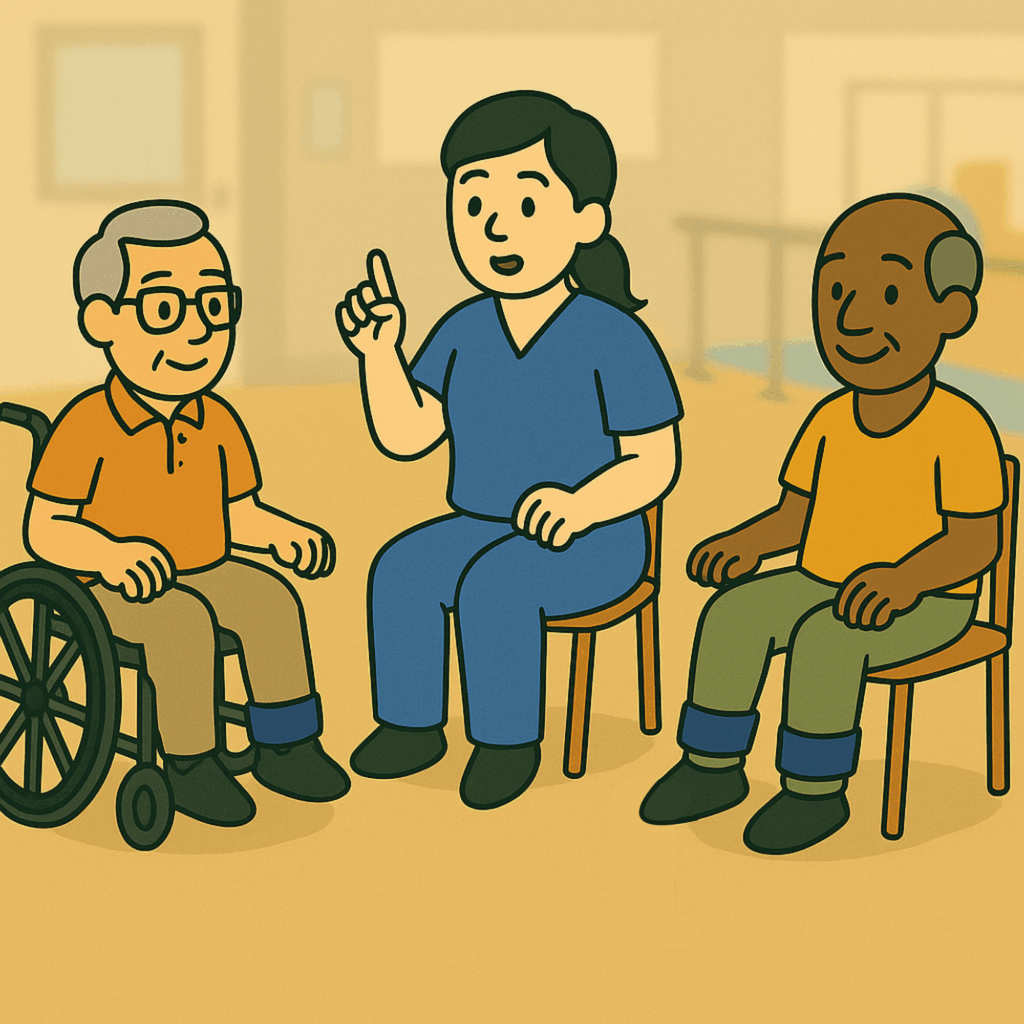
Imagine sitting across from a loved one and watching them struggle to say your name—or not remember it at all. Whether the cause is aphasia or Alzheimer’s, communication breakdowns can feel heartbreaking, frustrating, and isolating. But here’s the good news: rehab therapists are trained to help rebuild those bridges—even when words are lost or memory fades.
As an occupational therapy assistant who has worked with both types of clients, I’ve seen firsthand how different the root of the communication breakdown can be—and how vital tailored therapy is. In this blog, we’ll break down the differences between aphasia and Alzheimer’s, explore how speech-language pathologists (SLPs) and occupational therapists (OTs) support communication, and share tools and tips that caregivers and professionals can use starting today.
Want quick tools for working with clients facing language or memory challenges? [Download your Free Quick Reference Sheets] Includes strategies for OT, ST, and PT — plus affiliate links to therapy must-haves!
📌 Affiliate Link Disclosure:
Some links in this post are affiliate links, meaning I may earn a small commission (at no extra cost to you) if you choose to purchase through them. I only recommend tools I’ve used or trust in clinical settings.
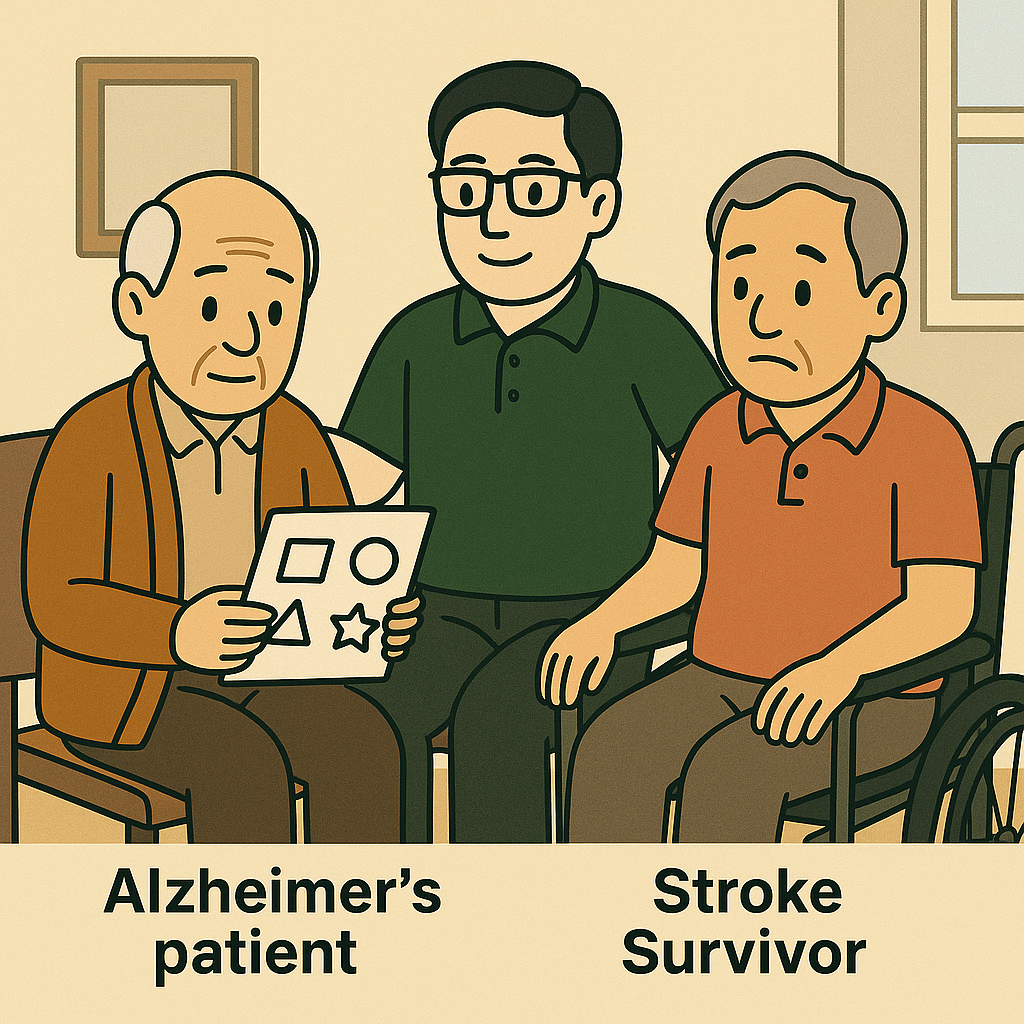
🧠 What’s the Difference Between Aphasia and Alzheimer’s?
At first glance, both conditions can look similar: someone has difficulty speaking, understanding, or remembering words. But the cause and treatment approach differ significantly.
✅ Aphasia
Cause: Brain damage, often from stroke, traumatic brain injury, or brain tumor
Main issue:Language – understanding, speaking, reading, or writing
Memory usually intact
✅ Alzheimer’s
Cause: Progressive neurodegenerative disease
Main issue:Memory – gradual loss of cognitive function
👩⚕️ How Speech Therapists Support Aphasia vs Alzheimer’s
Speech-language pathologists (SLPs) are communication specialists trained to assess, diagnose, and treat both aphasia and cognitive-communication deficits related to dementia.
🗣️ SLPs and Aphasia:
Rebuild expressive and receptive language through repetition and cueing
When words fail, therapists help find alternatives. SLPs teach gestures and picture systems. OTs adapt tasks and environments. Even a simple cue card or familiar object can prompt a smile, a word, a moment of recognition.
And that moment? That’s connection. That’s therapy.
💕 Final Thoughts: Different Diagnoses, Shared Goals
Whether you’re working with someone recovering from a stroke or living with Alzheimer’s, the goal is the same: preserve dignity, support independence, and restore communication in any form.
Let’s keep learning, sharing, and empowering patients—and each other.
✅ Get Free Therapist Tools
Stay prepared wherever you are—clinic, home health, or SNF.
Affiliate Disclosure: This post contains affiliate links. As an Amazon Associate, I earn from qualifying purchases—at no extra cost to you. I only recommend products I trust and believe can truly help.
When Words Get Stuck: Understanding Stroke and Aphasia
A stroke happens when blood flow to a part of the brain is blocked or disrupted, which deprives brain cells of oxygen and nutrients. When brain cells die—often within minutes—it can affect everything from movement to memory to speech.
There are three main types of strokes:
Ischemic Stroke – The most common, caused by a blocked artery.
Hemorrhagic Stroke – Caused by a blood vessel rupture that leads to bleeding in the brain.
Transient Ischemic Attack (TIA) – A “mini-stroke” with temporary symptoms due to a brief blockage.
When a stroke affects the left side of the brain—especially areas like Broca’s or Wernicke’s, which control language—it can lead to aphasia: a communication disorder that disrupts the ability to speak, understand, read, or write.
And that’s what we’ll focus on today: how therapists and caregivers can support someone with aphasia after stroke using practical tools, strategies, and empathy.
Aphasia Isn’t About Intelligence—It’s About Connection Loss
Aphasia can be confusing—especially when the person still “knows” what they want to say but just can’t get the words out. Here’s a breakdown of common types of aphasia in everyday terms:
Broca’s Aphasia (Expressive): You know what you want to say, but can’t find the words. Speech is slow and effortful.
Wernicke’s Aphasia (Receptive): Words flow easily, but they may not make sense—and it’s hard to understand others.
Global Aphasia: Severe difficulties with both speech and comprehension.
Anomic Aphasia: Trouble naming objects or finding the right word.
Understanding what type of aphasia someone has helps guide therapy and communication strategies.
Aphasia may feel like a loss of connection—but it doesn’t have to be permanent. Through therapy, daily practice, and support from those who care, recovery is always possible. Even small gains in communication can make a big difference in quality of life.
Download Your Free Quick Reference Sheets
Stay prepared in the clinic or at home with printable cheat sheets for OT, ST, and PT.
These guides go deeper than a handout and are built for real-world therapy.
We Want to Hear From You
Have you ever worked with or cared for someone with aphasia? What communication strategy helped the most? Share your story in the comments—we learn best when we learn together.
It hit like a bombshell on social media: “Nursing isn’t a professional degree anymore.” For many therapists — PTs, OTs, SLPs — and nurses hoping to advance their training, that message sparked fear. Would your DPT, MOT/OTD, or MSN stop counting? Would student loans dry up? As someone working in rehab (and planning content around PT/OT/SLP), I knew I had to dig deeper. Let’s walk through what’s really happening — the policy, the politics, and what it means for you, as of December 1, 2025.
TL;DR — What You Need to Know
In 2025, the U.S. Department of Education proposed narrowing the definition of “professional degrees” for federal loan purposes, not for licensure. Degrees in Nursing, PT, OT, SLP, PA, Public Health, Social Work, and more would be categorized as graduate degrees, losing access to the highest federal borrowing limits.
What this does not change: – Your degree title – Your license or scope of practice – Accreditation of PT/OT/SLP/Nursing programs – Existing loan forgiveness already granted
What it does change: – Reduces federal borrowing caps for many healthcare graduate programs – Pushes more students toward private loans, scholarships, or out-of-pocket funding – Raises concerns about workforce shortages and equity
These are the verified facts as of December 1, 2025. This summary will not reflect future updates until official rulings are finalized in 2026.
⚠️ Medical Disclaimer: This post is meant to be educational and informational — and maybe even a little fun. If you want real answers, talk to a real person (a licensed healthcare provider or financial aid advisor) — this post can’t evaluate, diagnose, or treat.
What Changed in 2025 — and Why It’s Getting So Much Attention
In late 2025, the U.S. Department of Education (ED) — under the recently passed One Big Beautiful Bill Act (OBBBA) — proposed a sweeping redefinition of what counts as a “professional degree.” NBC4 Washington+2U.S. Department of Education+2
Under this new classification, many graduate-level degrees — including those for nursing, physical therapy, occupational therapy, speech-language pathology, physician assistants, and others — would no longer be labeled “professional degree programs.” NBC4 Washington+2Spectrum News 1+2
Why? According to the Department, the redefinition is tied to new limits on federal student borrowing. Only “professional program” students — e.g. medicine, law, pharmacy, dentistry — get the highest borrowing cap. Other graduate-level students (in excluded fields) face stricter limits. U.S. Department of Education+2Statesman+2
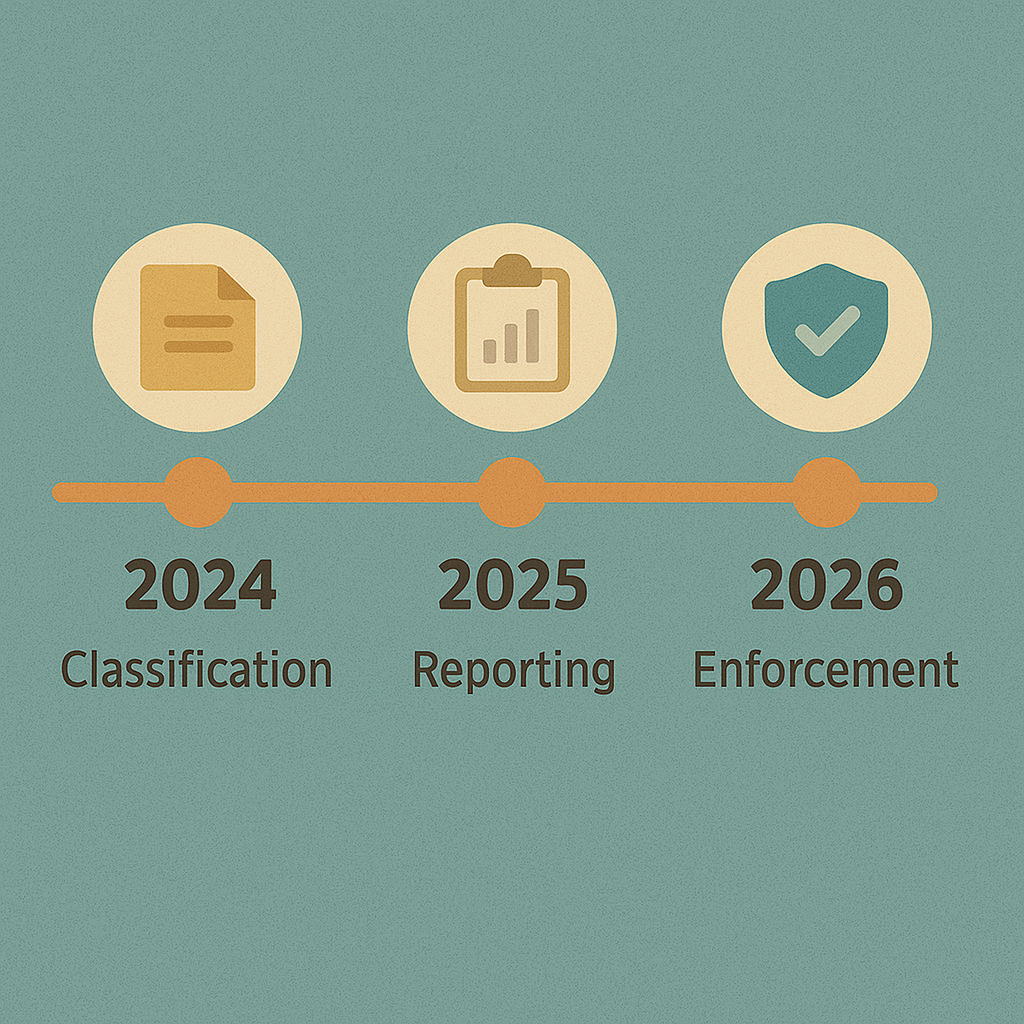
The official regulatory shift comes as part of broader efforts under OBBBA and the associated Financial Value Transparency and Gainful Employment regulations, which began implementation July 1, 2024. FSA Partner Connect+1
What “Professional Degree” Meant — and What It Means Now
Historically, a “professional degree” under ED’s guidelines referred to degrees preparing individuals for licensure-based, often independent-practice professions — medicine (M.D.), dentistry (D.D.S./D.M.D.), law (J.D.), pharmacy, etc. U.S. Department of Education+2Nurse.com+2
With the new rule, ED narrowed that list dramatically. The degrees still included as “professional”: medicine, pharmacy, dentistry, optometry, law, veterinary medicine, osteopathic medicine, podiatry, chiropractic, theology, and clinical psychology. NBC4 Washington+2Yahoo+2
Excluded from the list are nursing (MSN, DNP, NP), physical therapy (DPT), occupational therapy (MOT/OTD), speech-language pathology, physician assistant, public health — and several non-health fields like social work, education, architecture, etc. NBC4 Washington+2Newsweek+2
Important: This redefinition is for federal loan eligibility and borrowing limits. It is not a professional licensure or accreditation decision. ED clearly states that excluding a program from “professional degree” status in loan rules is not a value judgment on its legitimacy or importance. U.S. Department of Education+1
Who This Affects — PT, OT, SLP, Nursing, and More
Graduate students (current & future) in PT, OT, SLP, nursing (MSN / DNP / NP), physician assistant, public health, social work, etc. The reclassification affects their eligibility for high-limit federal loans. NBC4 Washington+2WPR+2
New applicants (2026 onward) — under the soon-to-be effective loan caps and redefinition — are most vulnerable to reduced federal borrowing power. Spectrum News 1+1
Current students Who’ve Already Borrowed — their existing degrees remain valid; licensure and accreditation are unaffected. The change does not retroactively strip credentials.
According to the American Physical Therapy Association (APTA), the proposed redefinition of DPT (and other health-care degrees) as merely “graduate,” not “professional,” threatens physical therapy’s recognition as a doctoring profession — potentially harming future workforce supply. American Physical Therapy Association
Similarly, the American Nurses Association (ANA) has publicly condemned the move, warning that cutting access to robust federal loan support will worsen nursing shortages — especially in underserved communities. ANA+2The Independent+2
What It Means for Student Loans & Financing Your Degree
Under the new rules:
Graduate students in excluded programs (nursing, PT, OT, etc.) would qualify for a lower borrowing cap: $20,500 per year, with a $100,000 lifetime cap. NBC4 Washington+2Campus Reform+2
“Professional degree” students — those in ED’s narrow list — remain eligible for higher borrowing limits: up to $50,000 per year, and a $200,000 aggregate cap. CBS News+2U.S. Department of Education+2
This dramatically reduces the amount of guaranteed federal funding for many prospective therapists, nurses, and related professionals.
Implications:
Students may need more out-of-pocket funds, private loans, or scholarships to afford grad school.
Higher debt burden may discourage people from entering these fields — potentially worsening workforce shortages.
Schools may feel pressure to lower tuition or rework funding models — but these are long-term effects, not guaranteed solutions.
It’s important to note: the change doesn’t impact undergraduate degrees (BSN, BSc-OT, etc.). Those remain unaffected under current guidance. U.S. Department of Education+1
What This Doesn’t Change — Licensure, Accreditation & Professional Identity
If you already have a DPT, MOT/OTD, MS-SLP, MSN, or similar degree, your license, credentials, and right to practice remain valid.
Accreditation bodies for PT, OT, SLP, Nursing, etc., are unaffected by ED’s financial-aid classification.
The clinical scope of practice, state licensure boards, and employer credentialing are not governed by ED’s loan-classification rules.
So while the new classification is financially significant, especially for future students, it does not mean these professions are no longer “real” or “legitimate.”
Different Viewpoints & Controversy Around the Change
Some people argue the new definition is just bureaucratic housekeeping — meant to curb excessive student borrowing and hold programs accountable. Indeed, ED claims that the “professional degree” label was always meant for a narrow set of high-cost, high-return vocations. U.S. Department of Education+1
But many in the healthcare community see it differently:
Nursing associations warn this move could widen existing workforce shortages, especially in rural and underserved areas. ANA+2WPR+2
The APTA says it undermines the recognition of physical therapy as a “doctoring profession” — which could reduce interest in PT graduate education. American Physical Therapy Association
Some critics frame the change as a gender-biased decision, given many excluded professions are female-dominated, which may disproportionately impact women and further reduce diversity in healthcare. World Socialist Web Site+2WPR+2
Although ED says the change is neutral, the ripple effects in education access, diversity, and workforce capacity are likely to be substantial.
What You Should Do (If You’re a Student, Pre-PT/OT/SLP, or Future Clinician)
Reassess your financing plan — don’t assume Graduate PLUS or large federal loan packages will be available.
Advocate — if you care, reach out to professional associations (e.g. APTA, ANA) to support voices urging preservation of fair loan access.
Helpful Resources for Navigating the 2025 Degree & Loan Changes
Because these federal updates affect how future PT, OT, SLP, and Nursing students access funding, many applicants and current students are looking for ways to study effectively, stay organized, and financially prepare for graduate school. Below are several resources that align with the theme of this post — focusing on smart planning, efficient studying, and financial readiness during a time of stricter lending rules.
📘 Academic & Exam Prep Support (Non-Affiliate)
If you’re aiming to strengthen your academic foundation before taking on additional debt, certain study platforms can reduce stress and improve board-prep efficiency. One of the most helpful tools for me personally was PassTheOT.com, which supported me through my OTA/COTA exam preparation. (I’m not affiliated with them at the time of writing — just sharing what genuinely helped me succeed.)
For PT and SLP students, I recommend checking reputable exam-prep sites, updated NPTE and Praxis-SLP review platforms, and APTA’s official guidance to ensure your study material reflects the newest exam standards.
These aren’t affiliate links — just practical supports for students who want to maximize success without unnecessary spending.
💰 Financial Tools to Stay Ahead of New Loan Limits
With federal borrowing caps tightening, understanding your finances is more important than ever. A good budgeting planner can help track tuition payments, deadlines, and living expenses as you balance reduced loan availability — you can explore one here: Budgeting Planner.
If you’re new to understanding federal loans, interest, repayment plans, or private alternatives, reading solid financial-literacy books specifically geared toward student loans can make the entire process less stressful: Financial Literacy Books.
🎓 Grad School Essentials for Better Focus & Organization
For many students, particularly in rehab therapy and nursing, time management becomes crucial when balancing classes, labs, clinicals, and part-time work (which may be more common due to lower loan caps). A high-quality academic planner can help you stay structured and intentional with your schedule.
If you tend to study in busy environments (shared housing, cafeterias, hospital lounges), noise-canceling headphones can make a huge difference in your focus: Noise-Canceling Headphones.
🩺 Clinical Tools to Support Efficiency in Rotations & Early Practice
Once you reach the clinical phase of your program, the right gear becomes essential. Long hours on your feet — especially in PT, OT, SLP, and Nursing — require reliable footwear. Students consistently recommend supportive brands like Hoka, On Cloud, and Brooks, which you can explore here:
If your program requires on-the-go documentation or bedside note-taking, a HIPAA-compliant storage clipboard can help keep papers secure while making evaluations easier: Storage Clipboard.
Clinical measurement tools (like goniometers, pulse oximeters, or stopwatches) are also worth considering if your program encourages you to build your own practical toolkit.
Final Thoughts
This redefinition by the Department of Education is a big deal for future students — particularly those entering PT, OT, SLP, nursing, and similar fields. But it’s also a bureaucratic/financial shift — not a professional downgrade.
If you already have your license or are currently practicing, nothing about your professional identity changes. But if you’re thinking about going back to school, now’s the time to re-examine your financing plan, consider scholarships or alternate funding, and be prepared for tighter borrowing limits.
I’ll continue tracking developments as the final rules roll out (expected mid-2026). In the meantime, sign up for my free quick-reference sheets and guidebooks — and stay on top of changes that could affect your future as a clinician.
Question for the readers: If you were planning to go back for an advanced degree in PT, OT, SLP, or Nursing — would this change make you hesitate? Or would you still apply and find alternate funding? Drop your thoughts in the comments — I’m curious what others are thinking.