Category: Short/Opinion

  • 12. How SLP, OT, and PT Work Together: Interdisciplinary Rehab for Stronger Patient Recovery

    12. How SLP, OT, and PT Work Together: Interdisciplinary Rehab for Stronger Patient Recovery

    When my grandmother had her stroke, I remember seeing three different therapists walk into her room—one after the other. First came the speech therapist, then the occupational therapist, and finally the physical therapist. They were kind, knowledgeable, and patient. But what really amazed me was how they worked together like a well-oiled machine.

    That experience opened my eyes to something that too often goes unnoticed in healthcare: the power of collaboration in rehabilitation. Individually, each therapist brings essential expertise to the table—but when they unite, SLP, OT, and PT become a force for transformational recovery.

    Let’s take a deeper look into why interdisciplinary teamwork is not just ideal—but essential—for patient-centered care.

    💡 Affiliate Disclosure: This post may contain affiliate links. If you click and purchase, I may earn a small commission at no extra cost to you. As an Amazon Associate, I earn from qualifying purchases. I only recommend tools I trust and use.


    🧠 What Is Interdisciplinary Rehab—and Why Does It Matter?

    Visual explaining interdisciplinary rehab team mode

    In interdisciplinary rehab, therapists from different specialties—speech-language pathologists (SLPs), occupational therapists (OTs), and physical therapists (PTs)—collaborate with a shared treatment plan. Unlike a multidisciplinary approach, where each discipline works in parallel, interdisciplinary teams coordinate in real-time to improve patient outcomes, reduce therapy overlap, and enhance communication.

    This approach leads to:

    • More cohesive goal-setting
    • Fewer redundancies in care
    • Better progress tracking
    • Enhanced patient satisfaction

    📌 According to the World Health Organization, integrated rehab services improve function, reduce hospital stays, and support long-term independence.


    🤝 The Unique Role Each Therapist Plays

    Three therapists providing different forms of rehab

    Let’s break down what each professional brings to the table—and how they complement one another.

    🗣 Speech-Language Pathologist (SLP)

    Focus: Communication, cognition, swallowing

    • Assess and treat speech/language deficits
    • Manage swallowing disorders (dysphagia)
    • Support cognitive-linguistic therapy

    Helpful Tool:
    👉 Low-Tech AAC Flip Book – ideal for collaborative bedside communication
    👉 Speech Therapy Mirror – great for articulation work during co-treatment sessions

    ✋ Occupational Therapist (OT)

    Focus: Functional independence and daily living

    • Help with dressing, grooming, and adaptive techniques
    • Address sensory processing, fine motor skills
    • Facilitate postural alignment for communication and feeding

    Helpful Tool:
    👉 Therapy Putty for Hand Strengthening
    👉 Weighted Lap Pad for Sensory Regulation

    🦵 Physical Therapist (PT)

    Focus: Mobility, strength, balance

    • Assist in walking, transferring, and body mechanics
    • Build endurance and coordination
    • Promote safety with ADLs and mobility devices

    Helpful Tool:
    👉 Regular Gait Belt
    👉 Balance Pad for Rehabilitation


    🔄 How Interdisciplinary Teams Collaborate in Practice

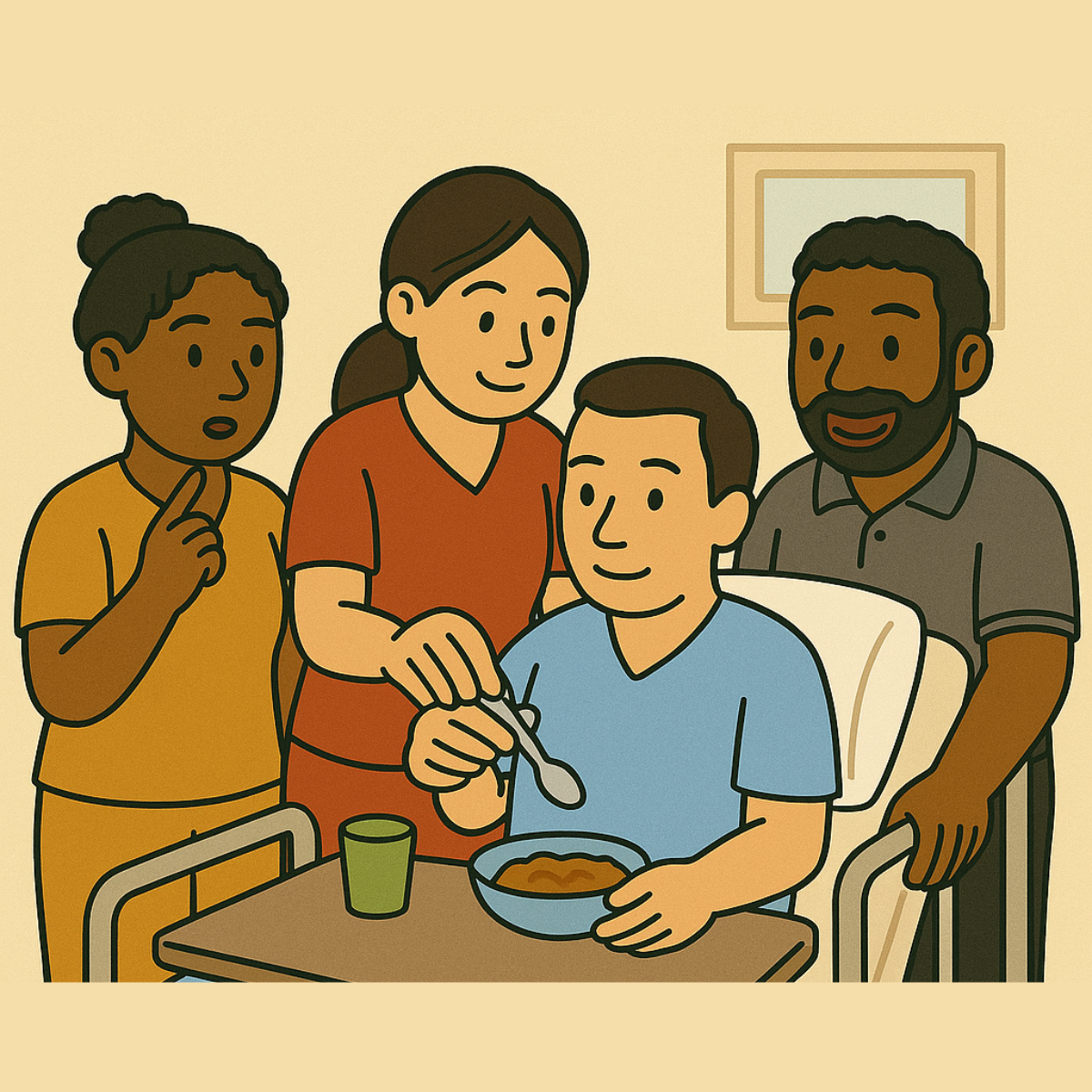
    Interdisciplinary co-treatment with patient during mealtime

    Here’s how this looks in action:

    • During a co-treatment, an SLP might work on cognitive sequencing while the OT facilitates a grooming task.
    • PT could position the patient safely for feeding, while the SLP assesses swallowing.
    • All three may meet weekly to align their goals, adjust interventions, and celebrate progress as a team.

    Shared Tools for Coordination:
    👉 Whiteboard Clipboard – great for writing down goals during sessions
    👉 HIPAA-Compliant Therapy Notebooks – excellent for coordinated care notes
    👉 Rehabilitation Team Communication Board – visual support for patients and team


    💪 Why Teamwork Improves Patient Outcomes
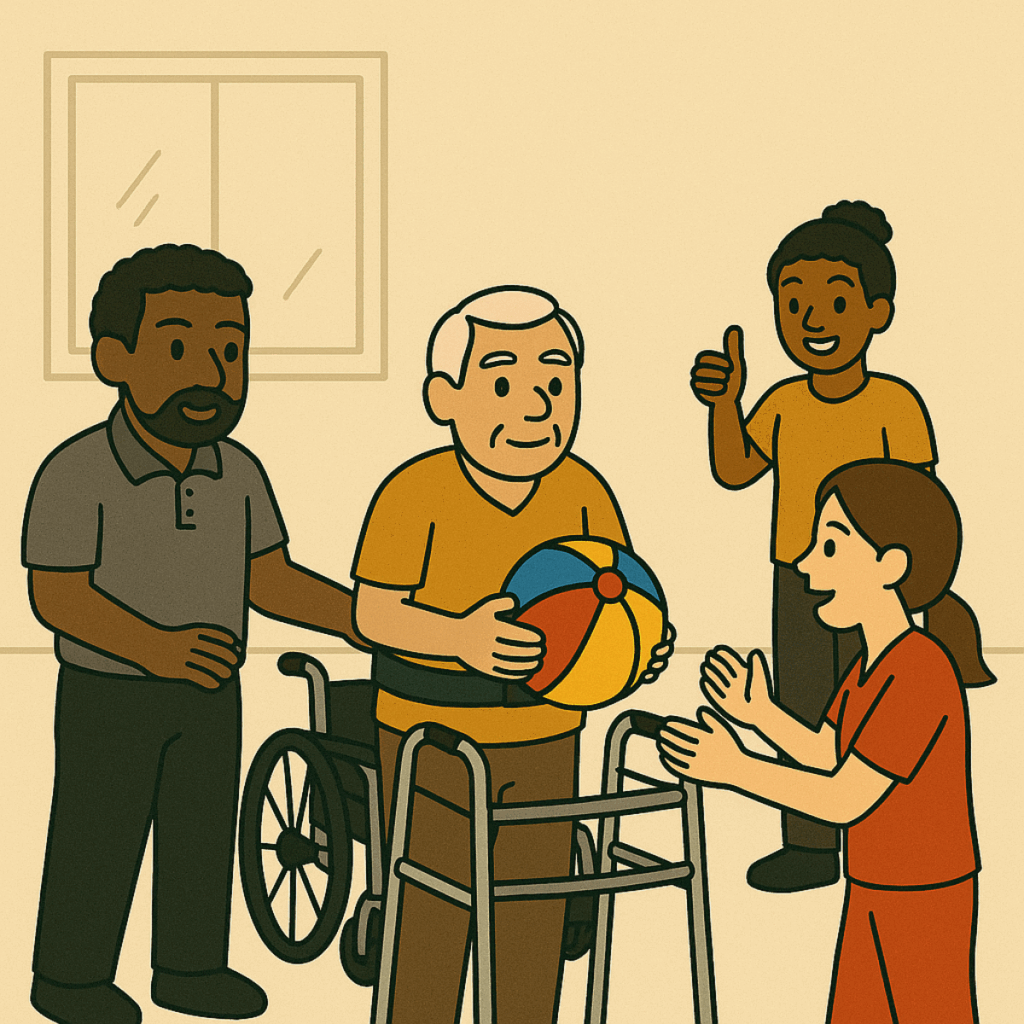
    Therapists supporting patient success as a team

    When therapists collaborate, the patient:

    • Receives comprehensive care that treats the whole person, not just one issue
    • Feels more supported, seen, and empowered
    • Shows faster and more sustainable progress
    • Gains consistent reinforcement across therapies

    A 2018 review published in the Journal of Rehabilitation Medicine emphasized that interdisciplinary teamwork is essential in physical and rehabilitation medicine, improving not only functional outcomes but also communication, patient satisfaction, and long-term success. By sharing goals, coordinating strategies, and delivering cohesive care, SLPs, OTs, and PTs can dramatically enhance a patient’s quality of life—especially in complex rehab scenarios.


    📚 Resources for Continued Learning


    🧡 Conclusion: Together, We Heal Faster

    Recovery isn’t linear—and it’s certainly not solitary. When SLPs, OTs, and PTs work together, the road to healing becomes smoother, faster, and more empowering for everyone involved.

    Whether you’re a therapist, student, caregiver, or patient—recognize the value of collaboration in every step toward independence.


    📥 Want Free Therapy Tools at Your Fingertips?
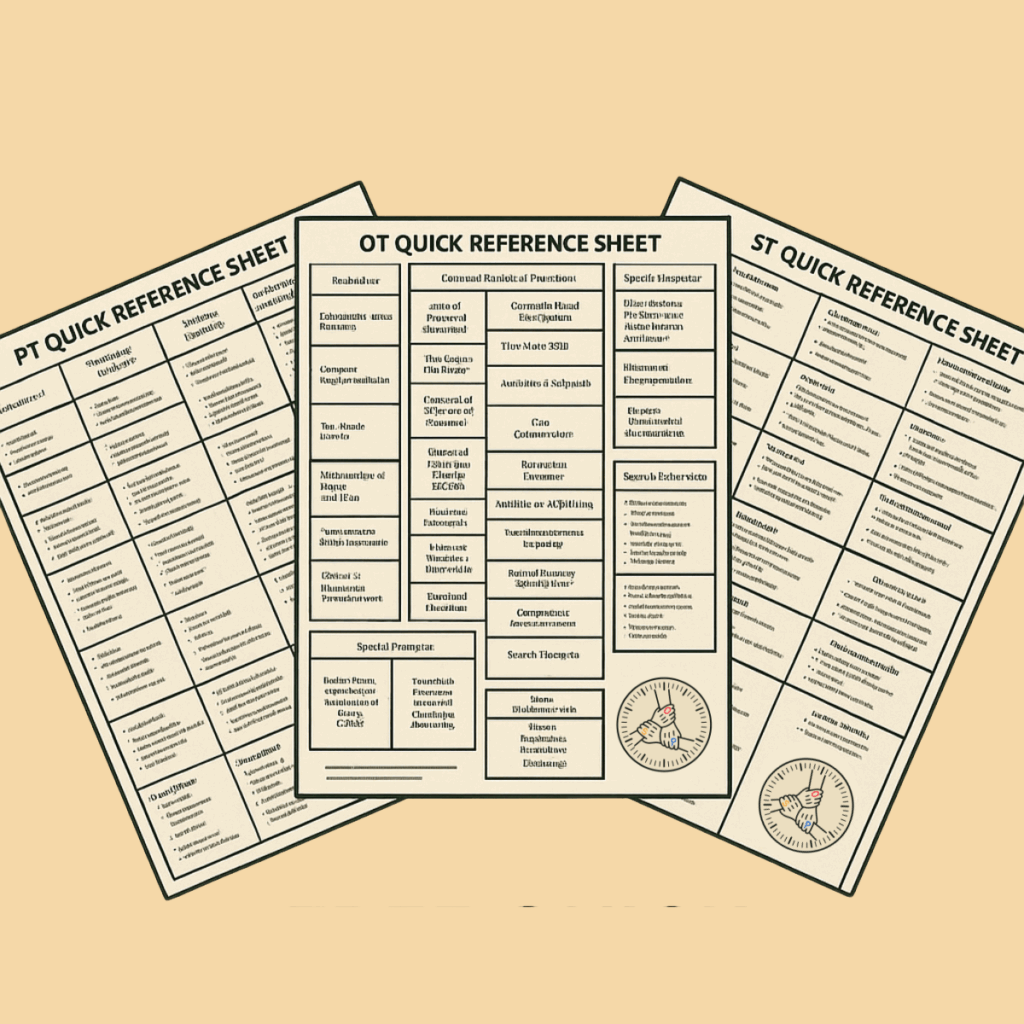
    3 Quick sheets available: OT,PT & SLP

    Download your free quick reference sheets for OT, PT, and ST—perfect for therapists, students, or anyone in the field.

    📘 OT Pocket Guide available now


    📕 ST Pocket Guide releasing soon
    📗 PT Pocket Guide launching in October

    👉 Download Your Free Quick Sheets


    💬 We Want to Hear From You

    Therapists sharing feedback and goals together

    Have you ever seen a great therapy team in action? What made the difference?

    👇 Share your story in the comments—we learn best when we learn together.

    Originally posted 2025-05-29 05:39:05.
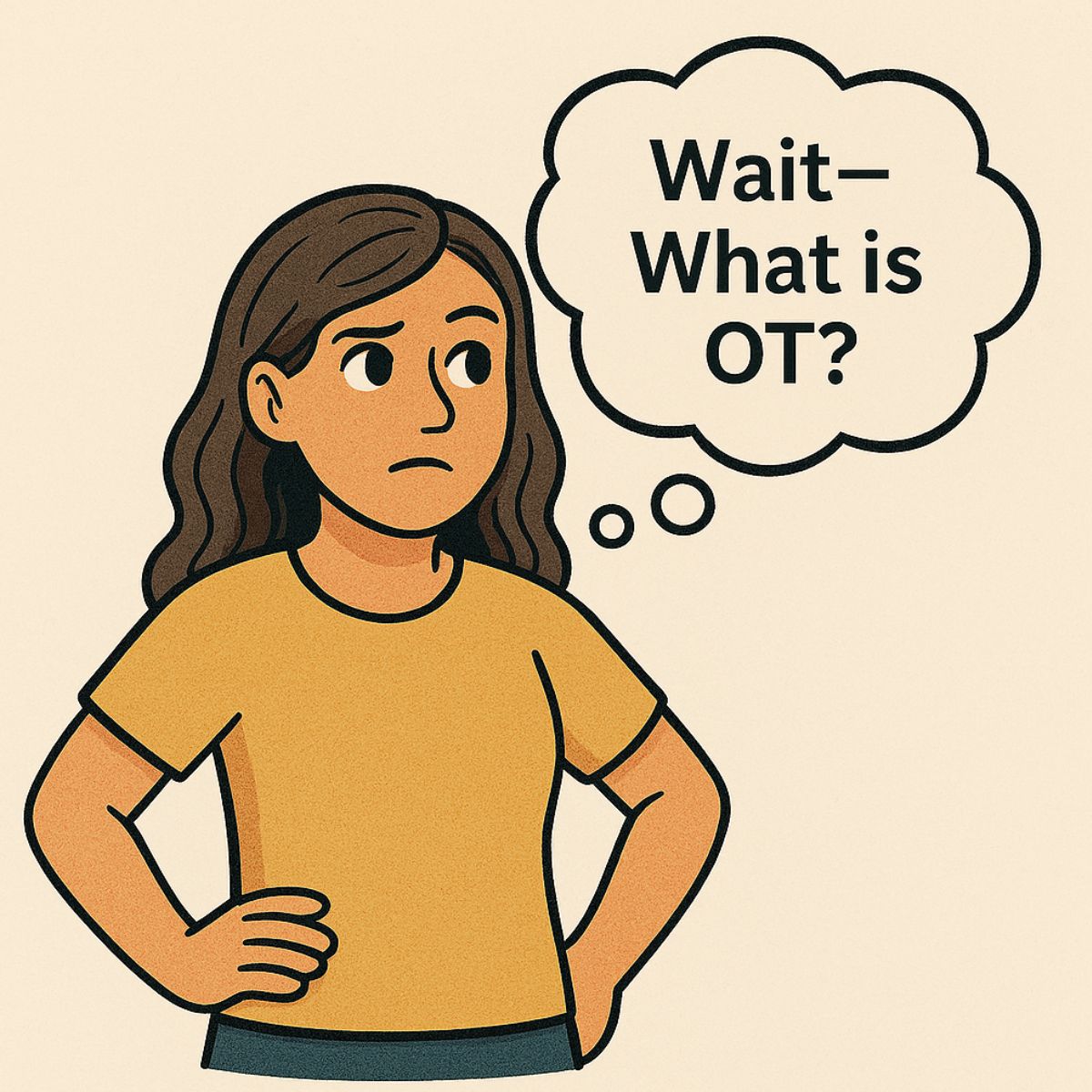
  • Why Occupational Therapy Deserves More Recognition (From A Therapist’s Perspective)

    Why Occupational Therapy Deserves More Recognition (From A Therapist’s Perspective)

    7-minute read

    Heads up! This post may include affiliate links, which means I might earn a small commission (at no extra cost to you) if you decide to make a purchase. I only share things I truly find helpful—thanks for supporting the blog!

    Ever notice how you still have to explain what you do… even to other healthcare professionals?

    “Wait, so you help people get jobs?”
    “Isn’t that like physical therapy?”

    Yeah… we’ve all been there.

    Occupational therapy (OT) is one of the most impactful professions in healthcare—yet it still flies under the radar. And if you’re in the field, you already know: we’re doing way more than people realize.

    From helping a stroke patient get dressed again… to guiding a child through sensory regulation… to supporting independence after life-changing diagnoses—OT is everywhere.

    And it’s time it got the recognition it deserves.


    occupational therapy sensory play pediatric fine motor intervention
    OTs help children build real-life skills through play and meaningful activities.

    What Is Occupational Therapy, Really?

    At its core, occupational therapy is about helping people participate in the activities that make up their daily lives—their occupations.

    That includes:

    • Getting dressed
    • Managing medications
    • Cooking meals
    • Returning to work or school
    • Engaging in hobbies

    It’s not just physical—it’s cognitive, emotional, and environmental.

    OTs look at the whole person, not just the diagnosis.

    🔗 Learn more from the AOTA: What is Occupational Therapy?


    occupational therapy practitioners working in hospital home health and school settings
    You’ll find OTs everywhere—from hospitals to homes to schools.

    What Do Occupational Therapists Actually Do? (Across Settings)

    One of the most underrated things about OT? The versatility.

    • Pediatrics
    • Acute care
    • Rehab
    • Mental health
    • Home health
    • Schools

    OTs adapt to wherever life happens.


    occupational therapist documentation using ipad clinical workflow
    Efficient documentation systems can make or break your day.

    The Documentation Time Crunch

    You finish your last patient… and still have notes left.

    You’re tired, trying to remember details, and honestly just ready to go home.

    ➡️ Having a quick system makes a huge difference—whether that’s a structured planner, a reliable clipboard setup like a Saunders Clipboard with Storage, or even using an Apple iPad with an Apple Pencil (latest generation, of course) to speed things up.

    Even something simple like a Moleskine Classic Notebook or throwing on Soundcore Anker Life Q20 Noise Cancelling Headphones at the end of the day can help you focus and finish faster.


    occupational therapy assistant feeding therapy pediatric intervention
    OTAs play a key role in hands-on care and patient progress.

    Don’t Forget OTAs: The Unsung Heroes

    OTAs are doing the hands-on work every single day.

    They’re:

    • Running treatments
    • Building rapport
    • Adjusting sessions in real time
    • Managing documentation

    And doing it all under productivity expectations.


    occupational therapy interventions across multiple settings collage
    OT spans across settings, populations, and treatment approaches.

    Specialized Areas in Occupational Therapy

    OT is incredibly diverse:

    • Autism & sensory integration
    • Hand therapy
    • Geriatrics
    • School-based therapy

    We’re not just generalists—we’re adaptable problem-solvers.


    Patient Engagement Struggles

    You planned a great session… and your patient just isn’t into it.

    It happens.

    ➡️ Having go-to tools ready—like FlintRehab Therapy Putty Set, Learning Resources Fine Motor Tool Set, or even a Time Timer Visual Timer—can help you pivot quickly without overthinking.


    Occupational Therapy Career Outlook

    Is OT a good career?

    Yes—with flexibility, growth, and meaningful work.

    • ~12% job growth
    • Multiple settings
    • Strong salaries

    But more importantly—it’s impactful.


    Productivity Pressure Is Real

    Balancing treatments, documentation, and time constraints is tough.

    ➡️ Small tools help—like your OT Pocket Guide, or even a structured planner like the Blue Sky Daily Planner to stay organized.


    Why OT Is Still Underrated

    Let’s be honest:

    • The name confuses people
    • It’s not highlighted enough
    • It’s often misunderstood

    But what we do?

    It’s essential.


    Burnout & Mental Fatigue

    Some days, it’s not even the patients—it’s everything else.

    ➡️ Reducing decision fatigue matters. Even small upgrades—like supportive shoes such as HOKA Bondi Running Shoes or Brooks Ghost Running Shoes, or tools like Blue Light Blocking Glasses and a reliable work bag like LOVEVOOK Professional Work Backpack—can make long days more manageable.

    🛒 Affiliate Picks for Busy OT Days

    If you’re anything like me, you don’t need more stuff—you need tools that actually make your day easier.

    📋 Documentation & Workflow

    🧠 Treatment Tools

    ⏱ Productivity Tools

    😌 Comfort & Support

    💡 These are tools that actually help reduce stress, save time, and make your workflow smoother.

    occupational therapy month celebration therapists teamwork
    April is OT Month—a time to recognize the impact of OT.

    Conclusion: OT Deserves the Spotlight

    Occupational therapy has always been powerful—it just hasn’t always been visible.

    But that’s changing.

    And honestly? It’s about time.


    ✅ Get Your Free OT, PT & ST Quick Reference Sheets

    Download your free 1-page rehab reference sheets—designed to save time and reduce decision fatigue.

    Subscribe and grab your free Rehab Therapy Quick Reference Sheets

    OT Pocket Guide — Available now
    ST Pocket Guide — Available now
    ✔ PT Pocket Guide — Coming soon


    ⚠️ Medical Disclaimer

    This content is for educational purposes only and should not replace clinical judgment, facility guidelines, or professional medical advice.


    💬 Let’s Talk:

    What’s one thing you wish people understood about occupational therapy?

    Originally posted 2025-04-24 03:00:00.