Most people don’t think about communication until communication becomes difficult.
We don’t usually stop to consider how much of life depends on being able to express needs, ask for help, connect with loved ones, advocate for ourselves, learn, work, joke around, or simply say, “I’m okay.”
But for many patients, those everyday moments are not simple at all.
Imagine knowing exactly what you want to say — but not being able to get the words out after a stroke.
Imagine a child becoming frustrated because they cannot communicate their wants or needs clearly.
Imagine struggling to swallow food safely after an injury, illness, or neurological condition.
Imagine losing confidence in social situations because your voice no longer sounds the same.
This is why speech therapy matters.
And during Speech Month, it’s important to recognize that speech-language pathologists (SLPs) do far more than most people realize.
They help people reconnect with the world around them.
TL;DR: Life without speech therapy would impact far more than communication alone. This blog explores how speech therapy is about more than speech, why communication shapes everyday life, the life-changing work speech therapists do every day, and why speech therapists deserve more recognition for the incredible impact they have on patients and families.
Speech Therapy Is About More Than Speech

One of the biggest misconceptions about speech therapy is that it only focuses on pronunciation or helping children say sounds correctly.
In reality, speech therapists work with communication, cognition, swallowing, voice, language, social interaction, and overall quality of life.
SLPs work with:
- children with speech and language delays
- autistic individuals using AAC communication systems
- stroke survivors relearning communication skills
- patients with traumatic brain injuries
- individuals with swallowing disorders (dysphagia)
- people with voice disorders
- patients with cognitive communication deficits
- adults experiencing neurological decline
Speech therapy touches nearly every stage of life.
From helping a child communicate for the first time… to helping an adult regain speech after a life-changing medical event.
And in many cases, therapy is not about “perfect speech.”
It’s about connection.
It’s about helping someone participate in everyday life again.
According to the American Speech-Language-Hearing Association, communication disorders can impact academic success, relationships, independence, emotional well-being, and safety. ASHA
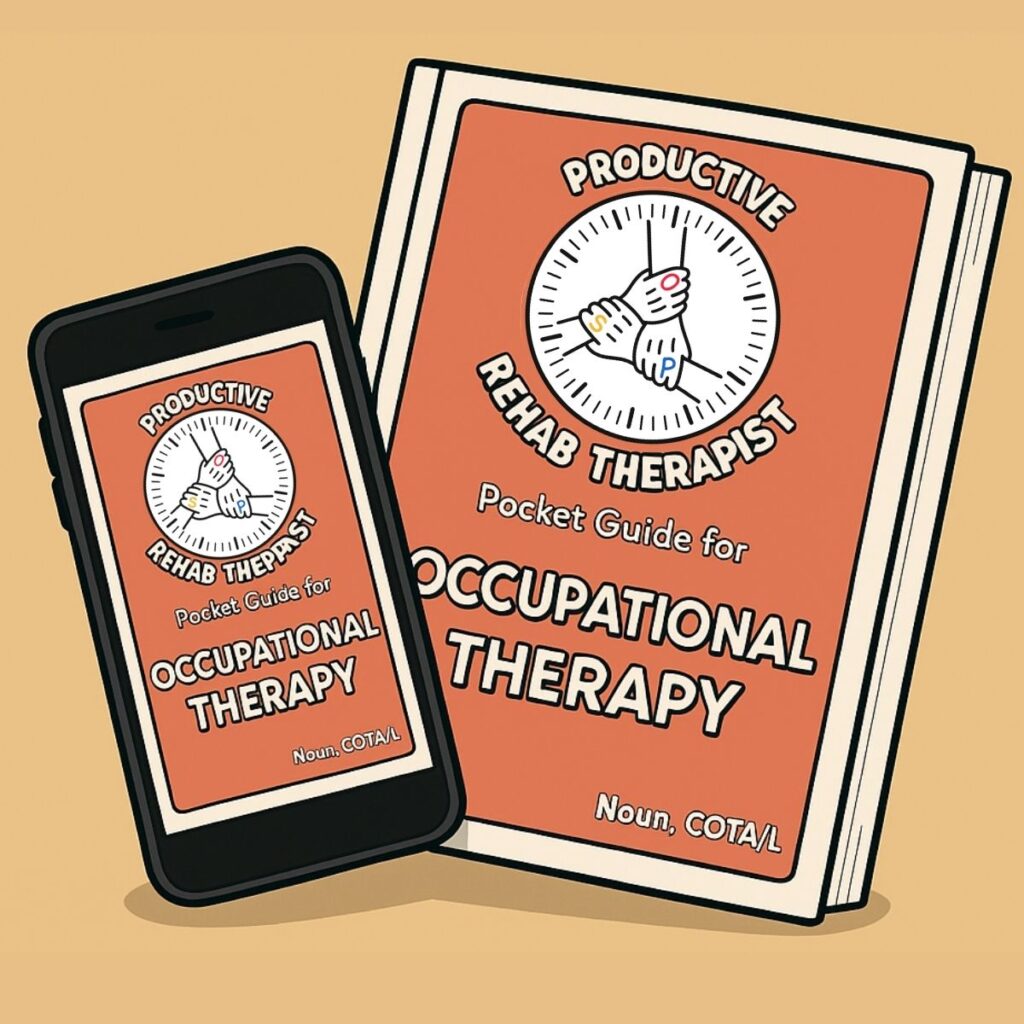
📘 Why I Created the Speech Therapy Pocket Guide

I created the Speech Therapy Pocket Guide after spending countless hours listening to the real frustrations rehab clinicians face every day — productivity pressure, documentation overload, constantly switching between patients, and trying to remember “just one more thing” during already exhausting therapy days.
What makes this guide especially meaningful to me is that I didn’t build it alone.
I collaborated with SLPs and SLPAs throughout the process to help shape it into something that feels practical, easy to use, and genuinely helpful in real clinical settings. Instead of creating another overwhelming textbook-style resource, the goal was to create something clinicians could realistically keep nearby during busy workdays for quick support, reminders, and workflow help.
Inside, you’ll find practical references covering areas like:
- speech and language interventions
- cognition and communication
- documentation support
- dysphagia and swallowing considerations
- AAC-related topics
- pediatric and adult therapy concepts
- everyday clinical workflow support
Whether you’re a student, new grad, or experienced clinician, my hope is that this becomes one of those resources you actually reach for during the week — not something that just sits on a shelf.
And honestly? I’d truly love feedback from fellow SLPs and SLPAs. The rehab community helped inspire this project, and hearing what clinicians find helpful (or what they’d love improved in future editions) genuinely means a lot to me.
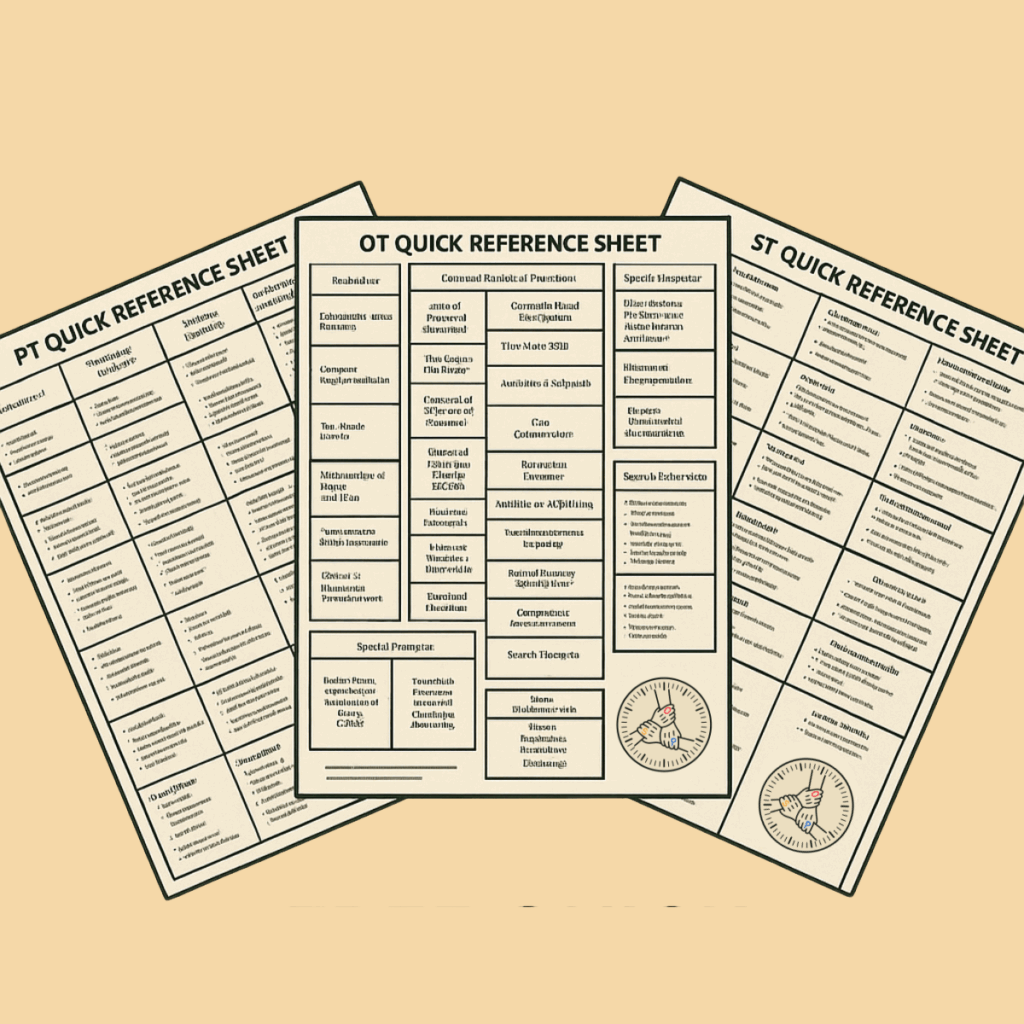
If you’d like additional free resources, you can also download the OT/PT/ST Quick Reference Sheets — but the Speech Therapy Pocket Guide was designed to be the more complete, in-depth resource for clinicians looking for something practical to keep close throughout demanding therapy days.
Why Communication Shapes Everyday Life

Communication affects almost everything we do.
It affects:
- relationships
- education
- employment
- emotional regulation
- medical safety
- self-advocacy
- independence
When communication becomes difficult, even small daily tasks can become overwhelming.
For children, communication challenges can affect confidence, social development, classroom participation, and emotional expression.
For adults, speech and cognitive changes after stroke, Parkinson’s disease, brain injury, or illness can completely change how someone navigates daily life.
And for families, not being able to fully communicate with a loved one can be heartbreaking.
This is why speech therapy is so important.
SLPs help bridge that gap between frustration and connection.
Sometimes the progress looks huge:
- a patient speaking again after stroke
- a child using AAC to independently request something for the first time
- safer swallowing during meals
And sometimes the victories are incredibly small to outsiders — but life-changing to patients and families.
A clearer sentence.
A safer meal.
A successful conversation.
A moment of confidence.
Those moments matter.
The Life-Changing Work Speech Therapists Do Every Day

Speech therapists work in so many different environments:
- schools
- hospitals
- inpatient rehab
- skilled nursing facilities
- outpatient clinics
- home health
- early intervention programs
And regardless of setting, the work is rarely easy.
SLPs are constantly balancing:
- evaluations
- documentation
- treatment planning
- caregiver education
- collaboration with rehab teams
- productivity expectations
- emotionally demanding caseloads
A lot of the work they do happens quietly behind the scenes.
The prep work.
The problem-solving.
The emotional energy.
The constant adapting.
Many therapists are switching between pediatric and adult caseloads, complex cognitive sessions, feeding therapy, AAC programming, and documentation — all in the same day.
And despite how mentally demanding the profession can be, SLPs are often overlooked when people talk about rehabilitation healthcare.
That deserves to change.
💡 Quick Tip

One thing that can make documentation feel less overwhelming during busy therapy days is having a simple system for keeping evaluation notes, quick-reference materials, and session outlines organized in one place.
A lot of clinicians find that using an iPad for documentation alongside an Apple Pencil or stylus pen helps speed up note-taking between sessions, especially when moving quickly between patients or treatment settings.
For therapists juggling multiple evaluations, productivity standards, and back-to-back treatments, even small workflow adjustments can make the day feel more manageable.
Small Wins in Speech Therapy Are Often the Biggest Victories

One of the most beautiful parts of speech therapy is that progress does not always come in giant milestones.
Sometimes it comes quietly.
A patient saying their spouse’s name again.
A child communicating a need independently for the first time.
A safer swallow reducing aspiration risk.
A previously frustrated patient finally feeling understood.
These moments may last seconds.
But for patients and families, they can mean everything.
And for therapists, those moments are often what keep them going through the difficult days.
Because speech therapy is not just about words.
It’s about dignity.
Connection.
Confidence.
Participation.
Quality of life.
💡 Quick Tip
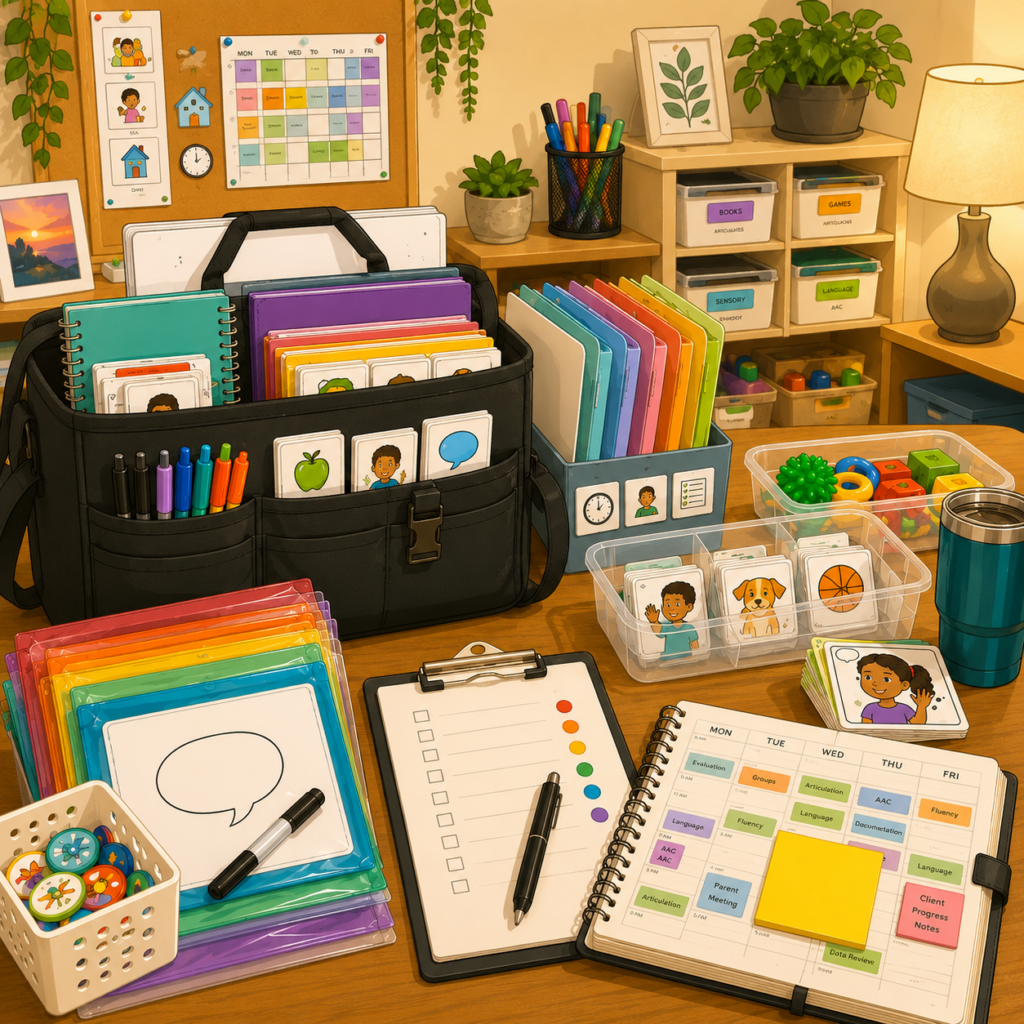
For therapists balancing high caseloads and productivity pressure, having go-to therapy materials and portable organizational tools ready ahead of time can help reduce end-of-day burnout.
Simple things like an organized therapy tote bag, color-coded folders, or dry erase pocket sleeves can make transitioning between patients, schools, or facilities much less chaotic throughout the week.
Sometimes the smallest workflow systems make the biggest difference in protecting your mental energy.
Speech Therapists Deserve More Recognition

Speech therapists advocate for patients constantly.
They help patients communicate pain, emotions, preferences, fears, needs, and goals.
They help patients eat safely.
They help families reconnect.
They help people participate in school, work, relationships, and everyday conversations again.
And yet, many people still do not fully understand what speech therapy actually involves.
That’s part of why Speech Month matters.
Not just to celebrate the profession —
but to recognize the life-changing impact SLPs have every single day.
Because life without communication can feel isolating.
And life without speech therapy would leave many patients without the support needed to reconnect with the world around them.
💡 Quick Tip
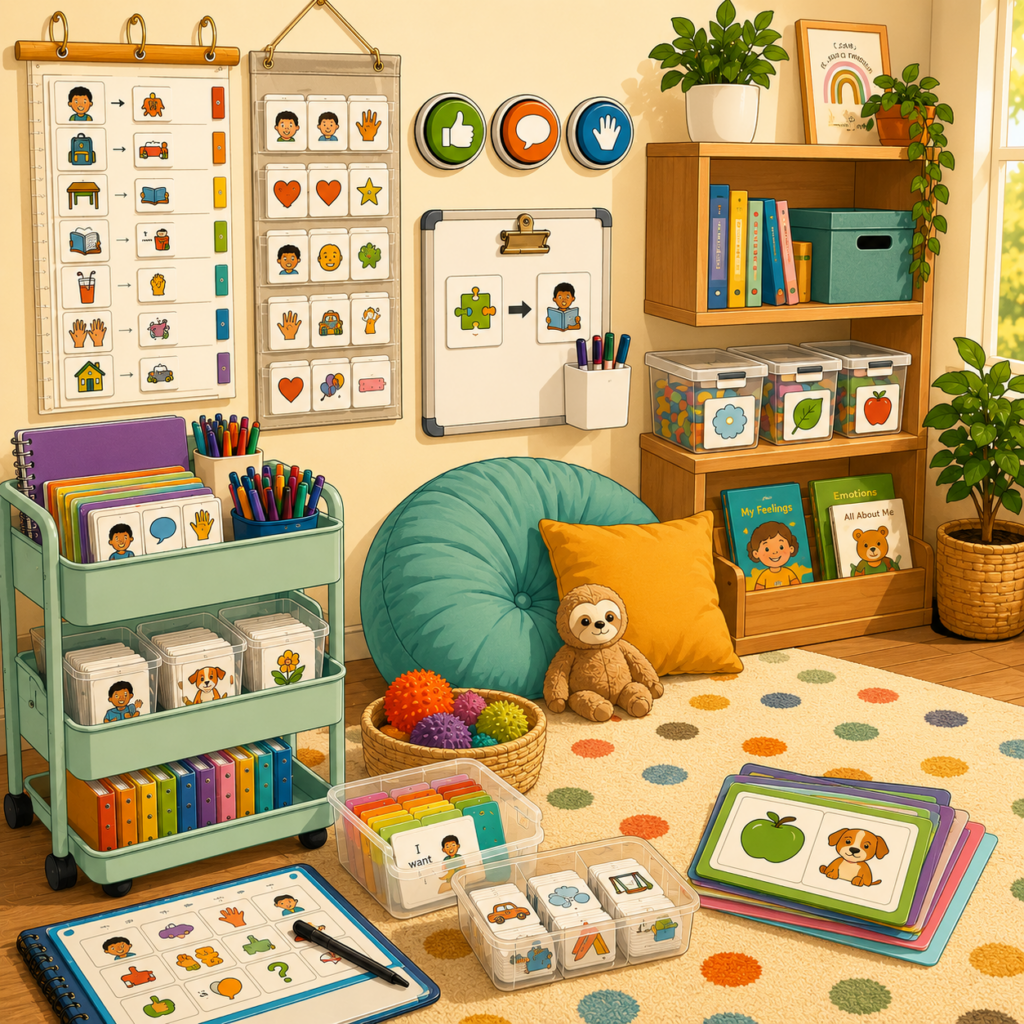
For pediatric therapists especially, having engaging communication materials readily available can help sessions run more smoothly while supporting participation and attention.
Many SLPs keep tools like AAC communication buttons, visual schedule cards, and language activity flashcards nearby to help support communication across different patient needs and therapy environments.
To Every Speech Therapist: Thank You

To the SLPs working through impossible schedules, long documentation days, emotionally heavy sessions, and productivity pressure:
Thank you.
Thank you for the patience you bring into difficult moments.
Thank you for celebrating progress that others may not even notice.
Thank you for helping patients feel heard, understood, safer, and more confident.
And thank you for doing work that changes lives in ways most people never fully see.
Speech therapy matters.
And so do the people providing it.
💡 What I Actually Recommend
Therapy days can get overwhelming fast, especially when you’re balancing documentation, productivity expectations, treatment planning, and emotionally demanding sessions.
I’m a big believer that small systems and practical tools can make daily workflow feel more manageable without overcomplicating things.
Whether it’s using an iPad for faster documentation, keeping materials organized with a portable therapy tote bag, or relying on quick-reference therapy resources throughout the day, having reliable systems in place can make a real difference over time.
🛒 Tools Mentioned in This Post
- iPad for therapy documentation
- Apple Pencil / stylus pens
- Portable therapy tote bag
- Color-coded folders
- Dry erase pocket sleeves
- AAC communication buttons
- Visual schedule cards
- Language activity flashcards
Looking for additional rehab resources?
Explore the Speech Therapy Pocket Guide and download the free OT/PT/ST Quick Reference Sheets on PRT Blog.
Affiliate Disclaimer
This post may contain affiliate links, meaning I may earn a small commission at no extra cost to you. I only share tools and resources I’d genuinely recommend to fellow clinicians.
Medical Disclaimer
This content is intended for educational and informational purposes only and should not replace individualized medical, therapeutic, or professional advice.
💬 Let’s Talk
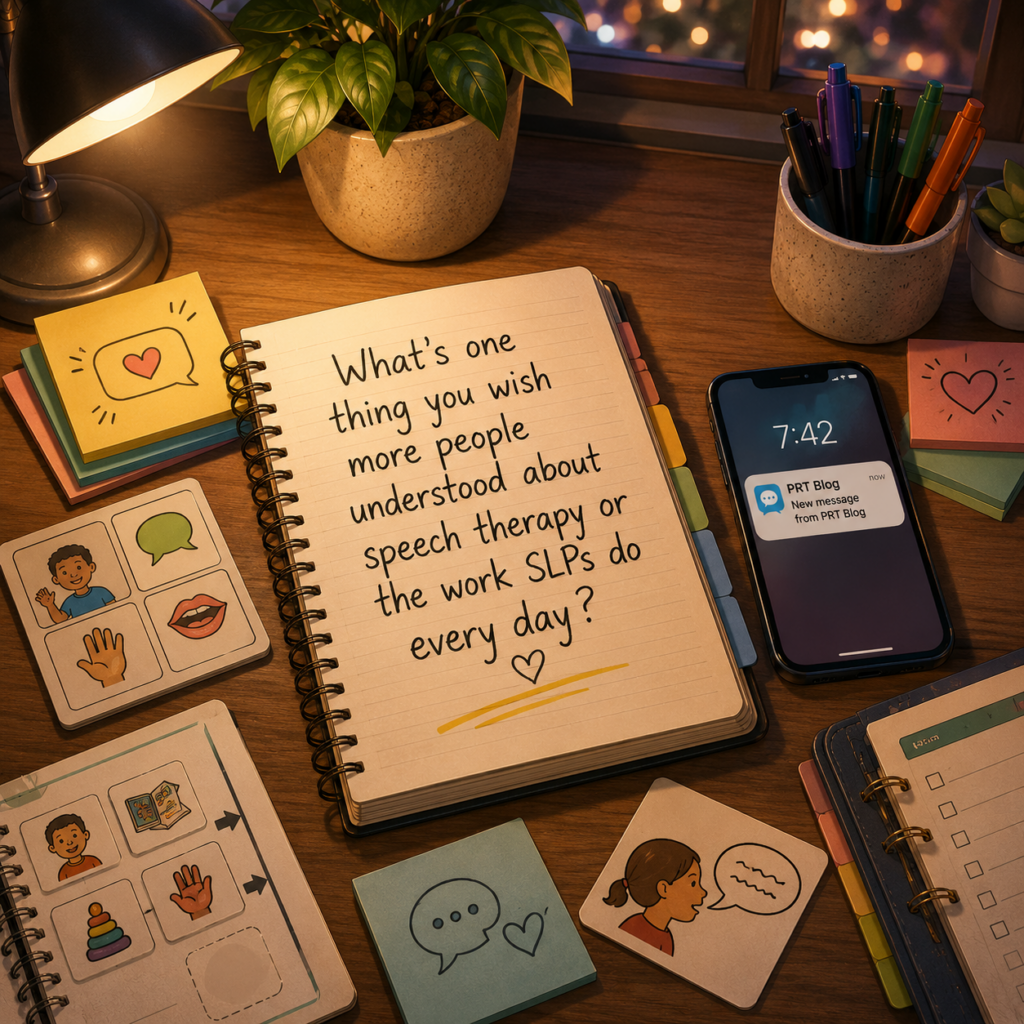
What’s one thing you wish more people understood about speech therapy or the work SLPs do every day?