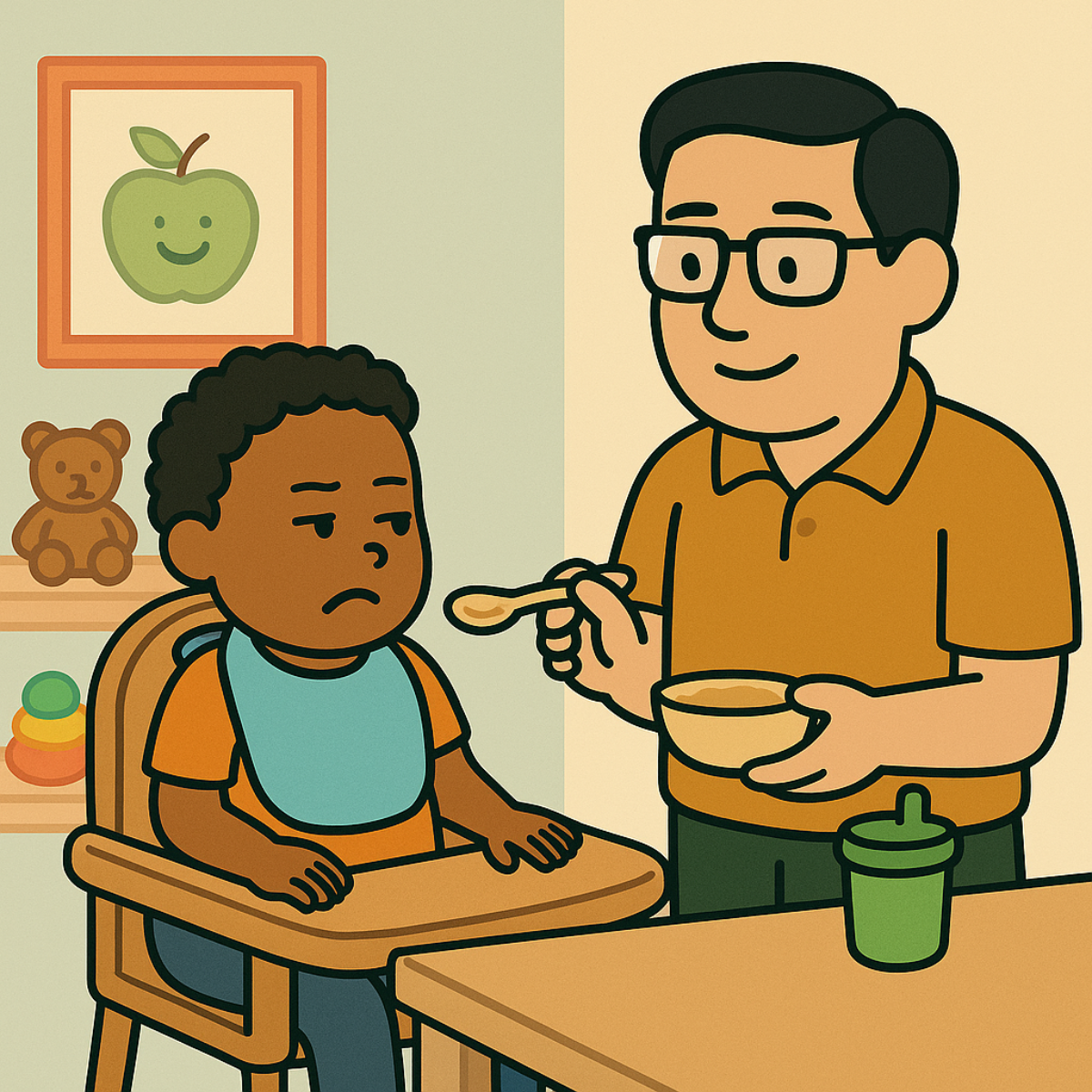
Tag: Speech Therapy Resources

  • Struggling with Feeding Therapy? Tips for New SLPs

    Struggling with Feeding Therapy? Tips for New SLPs

    That First Feeding Case Feeling… (What New SLPs Experience)

    You walk into the therapy room, spoon in one hand, visual schedule in the other—and there’s a toddler across from you turning their head, refusing every bite.

    Your first instinct? Panic.

    But here’s the truth: if you’re a new speech-language pathologist (or SLPA) stepping into feeding therapy, you’re not alone in feeling unsure.

    Feeding therapy is incredibly rewarding—but also complex. You’re not just helping a child eat. You’re supporting sensory processing, oral motor development, emotional regulation, and family dynamics.

    It can feel overwhelming at first—but with the right tools, guidance, and mindset, you will find your rhythm.

    👉 Starting your feeding therapy journey? This guide breaks down practical feeding therapy tips for SLPs so you can walk into sessions with more confidence—and less stress.


    What Feeding Therapy Really Involves (Beyond “Getting Kids to Eat”)

    Feeding therapy tools used by SLPs

    Feeding therapy goes far beyond “getting kids to eat more.”

    As an SLP, you’re addressing:

    • Oral motor strength and coordination
    • Sensory processing and food tolerance
    • Swallow safety and efficiency
    • Food variety and progression
    • Caregiver education and carryover

    Across settings—NICU follow-ups, early intervention, outpatient—the goal stays the same:

    ➡️ Safe intake
    ➡️ Skill development
    ➡️ Family involvement

    📚 External Resource:

    For a foundational overview, explore ASHA’s Pediatric Feeding and Swallowing Guidelines


    Feeding Therapy Tools Every SLP Should Start With

    Beginner feeding therapy tools for pediatric SLPs.

    The good news? You don’t need a full clinic closet to get started.

    Here are beginner-friendly essentials:

    These tools help:

    • Improve oral awareness
    • Build jaw strength
    • Reduce sensory defensiveness
    • Support developmental feeding skills

    You’re mid-session, the child is refusing the spoon, gagging—and you’re internally thinking: “Am I doing this wrong?”

    Instead of pushing bites, you shift.

    You introduce something for exploration instead of intake.

    👉 Tools like the ARK Z-Vibe or Chewy Tubes can reduce defensiveness and help the child tolerate input before expecting them to eat.


    Understand Oral Motor & Sensory Foundations First

    SLP guiding oral motor development using therapy tools, as part of sensory feeding strategies

    Before focusing on what a child eats, focus on how they process food.

    Common underlying issues:

    • Weak jaw or tongue strength
    • Hypersensitive gag reflex
    • Texture aversions
    • Limited oral exploration

    Your role is to make feeding:

    ✔️ Play-based
    ✔️ Low pressure
    ✔️ Exploratory

    📚 External Resource:

    Curious about integrating sensory strategies? Check out the SOS Approach to Feeding


    You’re trying to introduce new textures—but every attempt ends in refusal or meltdown.

    Instead of jumping textures, you scale back.

    👉 Using tools like Maroon Spoons or silicone training spoons can reduce gag triggers and help build tolerance gradually.


    Create a Consistent Mealtime Setup (Reduce Chaos, Increase Participation)

    Structured mealtime setup in pediatric feeding therapy with feeding therapy tips for SLPs

    Structure matters more than we think.

    Simple adjustments can change everything:

    • Use visual schedules
    • Keep the same chair and setup
    • Limit distractions
    • Separate textures visually

    👉 Tools like the ezpz Mini Mat can help visually organize meals and reduce sensory overload.

    Consistency reduces anxiety → increases engagement.


    You notice the child does better some days—but worse others.

    What changed?

    The environment.

    Same food. Same therapist. Same goal.

    But one small difference:
    ➡️ the setup

    👉 Using something like the ezpz Mini Mat can help separate textures, reduce overwhelm, and make mealtimes feel more predictable.

    Sometimes it’s not the intervention—it’s the environment.


    Coach Caregivers Without Overwhelming Them

    Speech therapist coaching parent on home feeding strategies and educating on oral motor feeding therapy

    Feeding therapy is emotional for families.

    Your job isn’t just intervention—it’s support.

    Teach caregivers to:

    • Recognize subtle refusal cues
    • Avoid pressure-based language
    • Accept non-linear progress

    A simple shift from:

    ❌ “You need to eat this”
    ➡️ ✅ “Let’s try one small bite”

    If caregivers are struggling with carryover at home, a resource like Helping Your Child with Extreme Picky Eating can reinforce strategies in a way that feels practical—not overwhelming.


    You give great strategies—but nothing carries over at home.

    Caregivers feel overwhelmed.

    👉 Simple structured resources and guides (like quick sheets or structured books)

    Sometimes simplicity—not complexity—is what sticks.


    Know When to Refer (Strong Clinicians Collaborate)

    Collaborative team discussion for feeding therapy referrals

    Feeding therapy is team-based.

    Refer when needed:

    • OTs → posture, sensory processing, self-feeding skills
    • Registered Dietitians → nutritional intake, growth, and feeding plans
    • GI/ENT → underlying medical, reflux, or structural concerns

    📚 See interdisciplinary model:

     Stanford Children’s Interdisciplinary Feeding Program


    Your Confidence Will Grow With Every Bite

    Feeding therapy is:

    • Messy
    • Creative
    • Non-linear
    • Deeply rewarding

    You don’t need to know everything right away.

    Start with:

    ✔️ One child
    ✔️ One tool
    ✔️ One goal


    🛒 Affiliate Picks for Busy Therapy Days

    Documentation & Workflow


    Treatment Tools


    Productivity

    • Session planners
    • Timers

    Comfort / Lifestyle

    • Water bottles
    • Supportive footwear

    💡 What I Actually Recommend

    If you’re trying to stay on top of productivity without burning out, a few small tools can make a big difference. I’ve linked a couple of things throughout this post that I personally think are worth having—especially on busy days.


    🗣️ ST Month Feature — A Small Thank You

    Before anything else—this month is for you.

    To the SLPs and SLPAs showing up every day…
    navigating complex cases, adapting on the fly, managing behaviors, documentation, caregiver expectations—and still finding a way to make sessions meaningful…

    We see it.

    We see the patience.
    The creativity.
    The problem-solving that happens in real time.

    And the effort it takes to keep going—even on the days that don’t go as planned.

    So this is a small thank you.


    🗣️ Built With Real SLP Input — Not Guesswork
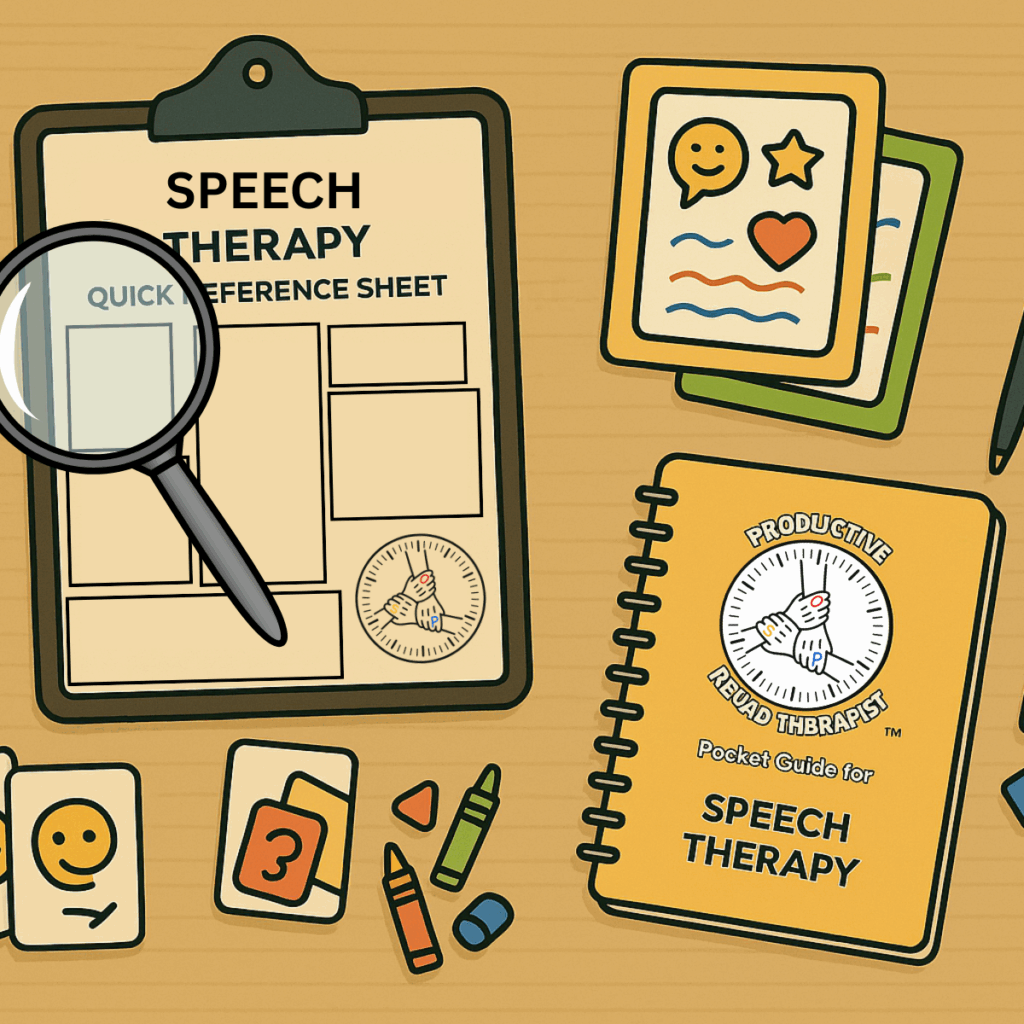
    I also want to be transparent for a second.

    I’m not an SLP.

    But this guide—and especially the ST Pocket Guide—wasn’t created in isolation.

    I took the time to:

    • Learn directly from SLP peers
    • Observe real workflows across settings
    • Pay attention to what actually slows sessions down
    • Identify what clinicians wish they had in the moment

    This wasn’t guesswork—it was built from real-world input.

    And honestly—that’s exactly why I’m sharing it during ST Month.

    👉 Not as something “perfect”
    👉 But as something practical

    Something you can actually reach for mid-session—when time is tight and your brain is juggling ten things at once.


    📘 About the ST Pocket Guide

    This guide was created to be:

    • Quick to reference during sessions
    • Easy to navigate under pressure
    • Focused on what actually matters clinically

    👉 ST POCKET GUIDE (PAPERBACK)


    💬 And I Mean This Genuinely…

    If you pick it up and think:

    “Something’s missing”
    “This could be better”
    “This isn’t how we do it in my setting”

    I want to hear that.

    Because this isn’t just a product—it’s something I want to build with the field.

    I’m not an SLP.

    But this guide—and especially the ST Pocket Guide—wasn’t created in isolation.

    I took the time to:

    • Learn directly from SLP peers
    • Observe real workflows across settings
    • Pay attention to what actually slows sessions down
    • Identify what clinicians wish they had in the moment

    This wasn’t guesswork—it was built from real-world input.

    And honestly?

    That’s exactly why I’m putting it out there during ST Month.

    👉 Not as something “perfect”
    👉 But as something practical

    Something you can actually use in a session when time is tight and your brain is juggling 10 things at once.


    📥 Therapy Support You Can Use Right Now

    If you want something free to start with:

    👉 Download your OT/PT/ST Quick Reference Sheets

    These are designed for:

    • Quick session support
    • Easy carryover
    • Real clinical use

    ⚠️ Disclaimers

    Affiliate Disclosure:
    This post contains affiliate links. If you choose to purchase through them, I may earn a small commission at no extra cost to you. I only recommend tools that support real therapy practice.

    Medical Disclaimer:
    This content is for educational purposes only and does not replace clinical judgment or individualized patient care. Always assess and treat based on each patient’s needs and collaborate with appropriate professionals when necessary.


    💬 Let’s Learn From Each Other

    What’s one feeding therapy strategy or tool that helped you feel more confident early on?

    Or—if you’ve worked in feeding—what’s something you wish someone told you when you were just starting out?

    Drop it below 👇

    Originally posted 2025-05-21 04:00:54.
  • 5. #SLPTok – How Social Media Is Finally Showing What Speech Therapists Really Do

    5. #SLPTok – How Social Media Is Finally Showing What Speech Therapists Really Do

    8-minute read

    Intro: The SLP World Is Going Viral—and It’s About Time


    If you’ve ever asked, “What does a speech therapist actually do?”—you’re not alone. For years, speech-language pathologists (SLPs) have worked quietly behind the scenes, helping clients of all ages find their voice—literally and figuratively. But now, thanks to the rise of #SLPTok on TikTok and other social platforms, the mystery is fading. Social media is finally putting a spotlight on what speech therapists really do, and spoiler alert: it’s way more than just helping kids pronounce their “R’s.”


    From AAC devices to school-based therapy, medical rehab to adult swallowing therapy, #SLPTok is showcasing the real-life work of licensed SLPs. Let’s take a closer look at how these creators are reshaping public understanding—and the tools and tips commonly associated with their specialties.


    Section 1: What Is #SLPTok and Why Is It Important?

    #SLPTok is a hashtag movement where licensed speech-language pathologists share tips, debunk myths, and show what their day-to-day really looks like. In an era of short attention spans, TikTok has become a powerful educational tool. For many, it’s the first time they’re seeing the full scope of what SLPs do—from helping a child say “mama” to teaching adults how to swallow again after a stroke.


    Why it matters:

    • It raises awareness of SLP roles in schools, hospitals, homes, and online.
    • It helps families and caregivers recognize signs of communication delays.
    • It encourages future therapists to explore non-traditional SLP careers.

    Section 2: Meet the SLPs of TikTok (And the Tools They Recommend)

    This post contains affiliate links. If you click on a link and make a purchase, I may earn a small commission—at no extra cost to you. As an Amazon Associate, I earn from qualifying purchases. I only recommend tools I trust or those used by licensed SLPs.

    Here are eight standout SLPs from TikTok, each representing a unique specialty—plus affiliate-linked tools you can explore to learn more or support the journey.

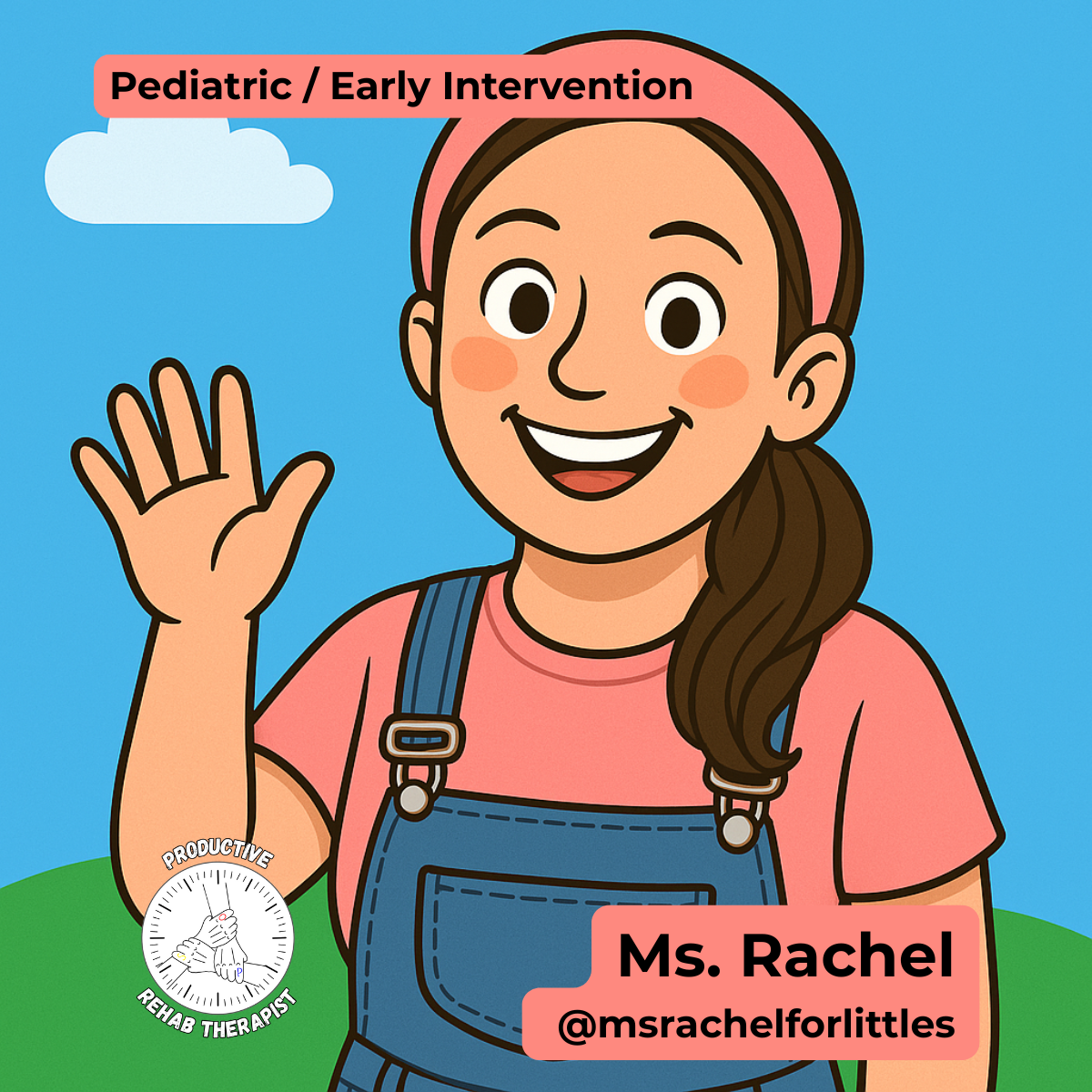
    1. Ms. Rachel (@msrachelforlittles): Pediatric / Early Intervention

    Beloved by parents and toddlers alike, Ms. Rachel uses music and repetition to support language development. Her content is often recommended by early intervention SLPs.

    Tools inspired by her approach:


    2. Brenda Volk (@spillthespeech)School-Based SLP

    Brenda Volk, known as @spillthespeech on TikTok, is a seasoned school-based speech-language pathologist who shares invaluable insights into the daily life of an SLP in educational settings. Her content includes practical strategies for managing caseloads, effective therapy activities, and scheduling tips, making her a go-to resource for fellow SLPs and educators.


    Tools inspired by her approach:


    3. Chung Brewer, CCC-SLP (@adultspeechtherapy.co): Geriatric SLP

    Chung Brewer is a certified speech-language pathologist who specializes in adult and geriatric care. Through her TikTok account, @adultspeechtherapy.co, she shares valuable resources and therapy ideas tailored for older adults. Her content includes accessible visual aids, cognitive-communication strategies, and swallowing therapy techniques aimed at enhancing the quality of life for seniors.


    Geriatric SLP aids:


    4. Beth Riehle (@beth_riehle): Medical SLP / Cancer Recovery

    Beth documents her powerful journey of relearning to speak after tongue cancer. Her recovery highlights the critical role SLPs play in medical rehab.


    Therapy resources:


    5. Elena (@peds_slp): Early Intervention SLP

    Elena is a certified speech-language pathologist specializing in early intervention for toddlers. Through her TikTok account, @peds_slp, she shares valuable resources and therapy ideas tailored for young children. Her content includes accessible visual aids, play-based strategies, and parent coaching techniques aimed at enhancing communication skills in toddlers.


    Early Intervention SLP aids:


    6. Chris Wenger (@speechdude): AAC & Neurodiversity

    A champion of neurodiverse learnersChris focuses on AAC and accessible education for students with complex needs.


    AAC device suggestions:


    7. Maurice Goodwin (@maurice_goodwin): Non-Traditional Career Path

    Maurice speaks candidly about transitioning from traditional SLP work to new ventures. His journey is a breath of fresh air for SLPs seeking alternative routes.


    Suggested resources:


    8. Carrie Clark (@carrie_clark_slp): AAC Specialist / Child Communication

    Carrie provides tutorials for AAC implementation at home or in therapy, demystifying complex communication tools for parents and teachers.

    Suggested tools:


    Section 3: The Bigger Picture—#SLPTok as Advocacy and Education

    Social media is more than just entertainment. For the speech community, it’s:

    • Representation: Clients see themselves reflected.
    • Education: Parents, caregivers, and future therapists learn what SLPs really do.
    • Connection: Professionals build community, reduce burnout, and promote clinical best practices.


    Credible External Resources:


    Conclusion: Give Voice to the Work That Matters

    Social media is giving SLPs the mic—and they’re using it to amplify the truth: Speech therapists do so much more than people think. Whether it’s teaching a child to ask for help, helping a stroke survivor speak again, or guiding a family through AAC options, their work changes lives.


    Want a deeper dive into practical tools and strategies SLPs use every day?


    Get Your Free Quick Reference Sheets


    Keep high-impact clinical tools at your fingertips. Perfect for students, therapists, and caregivers.


    Now Available: OT Pocket Guide

    Your go-to reference for evaluations, interventions, documentation, and more.


    Coming Soon:

    • ST Pocket Guide – May 2025
    • PT Pocket Guide – October 2025

    Each guide expands on the cheat sheets with actionable clinical strategies, simplified charts, and quick-access formats.

    Originally posted 2025-05-06 03:00:00.

  • 4. Voices Heard, Lives Changed: The Power of Speech Therapy

    4. Voices Heard, Lives Changed: The Power of Speech Therapy

    6-minute read

    As an Amazon Associate, I earn from qualifying purchases. I recommend products based on their use in speech therapy practice, industry trust, and educational value.


    Introduction: The Unsung Heroes of Communication

    Have you ever stopped to think about the power of communication? For many people—children, adults, and families—finding their voice is a challenge. That’s where Speech-Language Pathologists (SLPs) come in. These professionals help individuals speak, understand, and swallow—giving people back one of the most essential parts of life: connection.

    As we celebrate Better Speech and Hearing Month this May, let’s take a closer look at the world of speech therapy—how it works, who it helps, and how we can all support the incredible work of SLPs.


    1: What is Speech Therapy?

    Speech therapy is more than correcting a lisp or saying “r” correctly. It encompasses evaluation and treatment for:

    SLPs work in schools, hospitals, clinics, and homes—and support everyone from toddlers with speech delays to adults recovering from strokes or living with ALS.

    🔗 Learn more at ASHA: What Do Speech-Language Pathologists Do?

    💡 SLP Tool Highlight:
    Try this GoTalk 9+ Lite Touch AAC Device for clients who need a low-tech, reliable communication option.


    2: Why Better Speech and Hearing Month Matters

    May is Better Speech and Hearing Month, a time to raise awareness about communication disorders and the professionals who treat them.

    This month emphasizes:

    • Early identification of speech, language, and hearing issues
    • Accessible care for all age groups
    • Appreciation for SLPs who change lives every day

    Whether you’re a caregiver, client, student, or therapist—this month is your opportunity to speak up about the value of communication.

    🔗 Visit ASHA: Better Hearing and Speech Month to explore campaigns and resources.


    3: The Life-Changing Work of SLPs

    SLPs support people through every stage of life. Their work is diverse, impactful, and often life-altering.

    In Early Intervention and Schools:

    • Helping children meet speech and language milestones
    • Supporting IEP goals and academic success
    • Providing visuals, social stories, and play-based therapy

    🎒 Must-Have:
    For SLPs seeking a versatile and engaging tool for articulation therapy, the Say & Play Mini Objects Set offers over 300 miniature items categorized by speech sounds. This comprehensive kit supports various therapeutic activities, from sound production to language expansion.

    In Medical and Adult Rehab:

    • Assisting stroke survivors and TBI patients regain speech
    • Providing strategies and support for swallowing safety
    • Using tools like tongue depressors or FEES studies to evaluate function

    In All Settings:

    • Empowering voices through connection, advocacy, and individualized care

    4: How You Can Support SLPs This Month

    Want to join the celebration? Here’s how:

    ✅ Thank an SLP — A kind word or social media shoutout goes a long way.
    ✅ Share success stories — Celebrate clients and families who’ve overcome communication barriers.
    ✅ Donate — Support nonprofits that provide speech therapy services to underserved populations.
    ✅ Wear Awareness Gear — Pins, posters, and shirts show your support.
    ✅ Talk About It — Spread the word about early intervention and hearing protection.

    🎧 Working with sensory-sensitive clients? Try Loop Quiet Earplugs or Kids Earmuffs to reduce auditory distractions.


    5: Tools & Resources for SLPs and Caregivers

    Whether you’re a therapist or caregiver, the right tools make all the difference.

    🗂 Top Tools I Recommend:


    🎁 Free Quick Reference Sheets

    Print-friendly, intervention-based cheat sheets for busy rehab therapists.
    Designed for SLPs, OTs, and PTs.


    📘 More Resources from Our Therapy Library:

    • OT Pocket Guide: Available now as eBook and Paperback
      (Packed with functional tools, checklists, and tips—perfect for daily clinical use.)
    • SLP Pocket Guide: Coming May 2025
    • PT Pocket Guide: Launching October 2025

    Conclusion: Let’s Give a Voice to Those Who Need It Most

    Whether it’s a toddler speaking their first words, a stroke survivor finding confidence again, or a nonverbal child learning to communicate, SLPs make it possible. Their work is not just professional—it’s personal, transformational, and deeply impactful.

    This Better Speech and Hearing Month, join us in celebrating the life-changing power of speech therapy. Download your tools, thank a therapist, and support better communication for everyone.


    Get Your Free Tools

    Download our FREE Quick Reference Sheets for OT, PT, and ST.
    Stay organized, confident, and ready for any session.

    Originally posted 2025-05-01 03:00:00.