Tag: SLP Tools

  • 11. #SwallowTok? How Dysphagia Awareness is Trending Online

    11. #SwallowTok? How Dysphagia Awareness is Trending Online

    7-minute read

    Ever heard of #SwallowTok?

    If not, you’re not alone—but you might be missing out on one of the most powerful healthcare awareness movements growing on social media today.

    Whether you’re an SLP, caregiver, or someone who’s struggled with swallowing, this TikTok trend is turning the spotlight onto dysphagia—a medical condition that affects how people swallow food and liquids. The videos are raw, informative, sometimes humorous, and often deeply moving. They’re changing the conversation around dysphagia care, therapy tools, and accessibility like never before.

    And let’s be honest—how often do swallowing disorders go viral?


    Affiliate Link Disclosure:

    This post may contain affiliate links. If you purchase something through the recommended links, I may earn a small commission at no extra cost to you. As an Amazon Associate, I earn from qualifying purchases. Thanks for your support—it helps me continue creating free resources for therapists and caregivers.


    What Is Dysphagia, Really?

    Dysphagia is the medical term for swallowing difficulties. It can impact people of all ages, but it’s especially common after strokeneurological conditions like ALS or Parkinson’s, or in individuals with head and neck cancer.

    Signs of dysphagia include:

    • Coughing or choking during meals
    • Food getting “stuck”
    • Wet or gurgly voice after eating
    • Unexplained weight loss
    • Frequent pneumonia or respiratory issues

    Left untreated, dysphagia can lead to aspiration, malnutrition, dehydration, and serious health risks. That’s why early identification and intervention by a speech-language pathologist (SLP) is critical.

    Learn more from ASHA


    The Rise of #SwallowTok: Awareness in Action

    “SLP creating TikTok content about dysphagia therapy tools”

    So, how did swallowing therapy end up trending online?

    Thanks to creators like @carrie_clark_slp, @dysphagiaduo, and @sprucestreetslp TikTok is now home to countless videos explaining swallowing strategies, signs of aspiration, oral motor exercises, and clinical tips. These professionals break down complex concepts into bite-sized, easy-to-digest formats (pun intended), making dysphagia education accessible to a broader audience.

    You’ll find:

    • Real-time demos of thickened liquids
    • Safe swallow techniques like the chin tuck
    • Behind-the-scenes looks at FEES and MBSS
    • Caregiver tips for pureed diet prep
    • Myth busting: “Dysphagia ≠ picky eater!”

    This content is humanizing and demystifying a condition that often goes unnoticed. It’s also empowering patients and caregivers to ask better questions and seek care earlier.


    Tools That Help: SLP-Approved Dysphagia Gear

    With visibility comes curiosity—and many people on #SwallowTok ask, “What tools are you using?”

    Here are some therapist-approved tools often seen in dysphagia therapy and evaluations:

    Each of these products plays a role in improving safety, independence, and dignity during meals—whether you’re working in a clinic or caring for someone at home.


    Who’s Most at Risk? Spotting Swallowing Disorders

    Elderly stroke patient receiving feeding support at home”

    SLPs on TikTok are helping the public recognize that dysphagia doesn’t just “look old.” Here’s who’s most commonly affected:

    • Stroke survivors
    • Individuals with neurological conditions (ALS, Parkinson’s, MS)
    • Children with developmental disabilities or feeding delays
    • People with head and neck cancer
    • Adults post-intubation or tracheostomy
    • Seniors with general muscle weakening or dementia

    By showing real patients, real stories, and real strategies, creators are changing the face of dysphagia from clinical mystery to shared experience.


    From Screen to Session: Swallowing Strategies Worth Knowing

    Some of the most viral #SwallowTok tips are simple yet impactful:

    • Chin tuck to prevent aspiration
    • Double swallow technique
    • Pacing with sips of water
    • Postural positioning during mealtime
    • Small bite sizes and slow rate

    Remember: these aren’t substitutes for personalized care. But they encourage awareness and open the door to professional support.

    If you’re a caregiver or professional, consider printing or saving visual cheat sheets and tips to reinforce safe feeding habits.

    Subscribe now to download free SLP Quick Reference Sheets →


    The Power of Going Viral—for Good

    “Social media post with trending dysphagia hashtags

    While not every trend leads to real change, #SwallowTok is different.

    It’s created:

    • An online community of caregivers, clinicians, and survivors
    • A platform to debunk misinformation
    • Easier access to professional tools and resources
    • More demand for dysphagia-trained SLPs

    And as therapists continue to build these bridges between care and content, we move one step closer to making swallowing safety universal—not just clinical.


    Conclusion: What We Swallow Matters—And So Does Awareness

    “SLP offering support to patient during meal”

    Dysphagia might not be glamorous, but it’s deeply human. Eating, drinking, and connecting over meals are essential to our wellbeing—and when those functions are threatened, it’s more than medical. It’s emotional.

    Thanks to #SwallowTok, people are finally talking about it.

    Want free therapy tools at your fingertips?
    Subscribe to download your SLP Quick Reference Sheets with feeding tools, therapy strategies, and more.

    OT Pocket Guide available now (ebook + paperback)


    ST Pocket Guide coming soon | PT Guide in October


    We Want to Hear From You:

    “Person reading TikTok comments on dysphagia awareness video”

    Have you created or seen an impactful dysphagia awareness video?
    Are you a caregiver or therapist with a go-to swallowing tip?

    Drop a comment below. Let’s learn from each other.

    Originally posted 2025-05-28 05:37:43.
  • 10. What Is AAC? Why It’s Life-Changing for So Many

    10. What Is AAC? Why It’s Life-Changing for So Many

    6-minute read

    Imagine Not Being Able to Speak…

    Imagine you’re in a hospital bed after a stroke, your thoughts racing—but your mouth can’t form the words. Or you’re a young child with autism, frustrated every day because you can’t express your wants, needs, or emotions. How would you ask for help, say “I’m in pain,” or tell someone “I love you”?

    That’s the daily reality for millions of individuals with communication challenges.

    Thankfully, AAC—Augmentative and Alternative Communication—bridges that gap.

    Whether through a high-tech tablet or a simple picture board, AAC empowers people to be heard, understood, and included. If you’re a therapist, caregiver, or educator, understanding AAC is key to transforming lives.

    👉 Want practical AAC tools and cheat sheets?
    Subscribe to get free Quick Reference Sheets for OT, PT, and ST—plus sneak peeks of our therapy Pocket Guides.


    As an Amazon Associate, I earn from qualifying purchases. This means if you click on a product link and make a purchase, I may receive a small commission at no extra cost to you. I only recommend tools I trust and use to support AAC and therapy practices.


    What Exactly Is AAC Communication?

    AAC stands for Augmentative and Alternative Communication—a broad term describing all forms of communication (other than verbal speech) used to express thoughts, needs, and ideas.

    AAC can be:

    • Augmentative: Adding to someone’s existing speech
    • Alternative: Replacing speech when none is available

    It helps:

    • Children and adults with autismcerebral palsyDown syndrome
    • People with ALSstroketraumatic brain injury
    • Anyone with temporary or permanent speech limitations

    Communication is a human right. AAC helps ensure no one is left voiceless.

    📚 External Resource: ASHA – What Is AAC?


    Types of AAC: From Picture Boards to Eye Gaze Devices

    Various AAC tools including speech app, picture book, and communication switch.

    AAC tools vary widely depending on the individual’s needs.

    ✅ No-Tech AAC

    • Gestures
    • Sign language
    • Facial expressions
    • Drawing or writing

    ✅ Low-Tech AAC

    ✅ Mid-Tech AAC

    ✅ High-Tech AAC


    How AAC Changes Lives

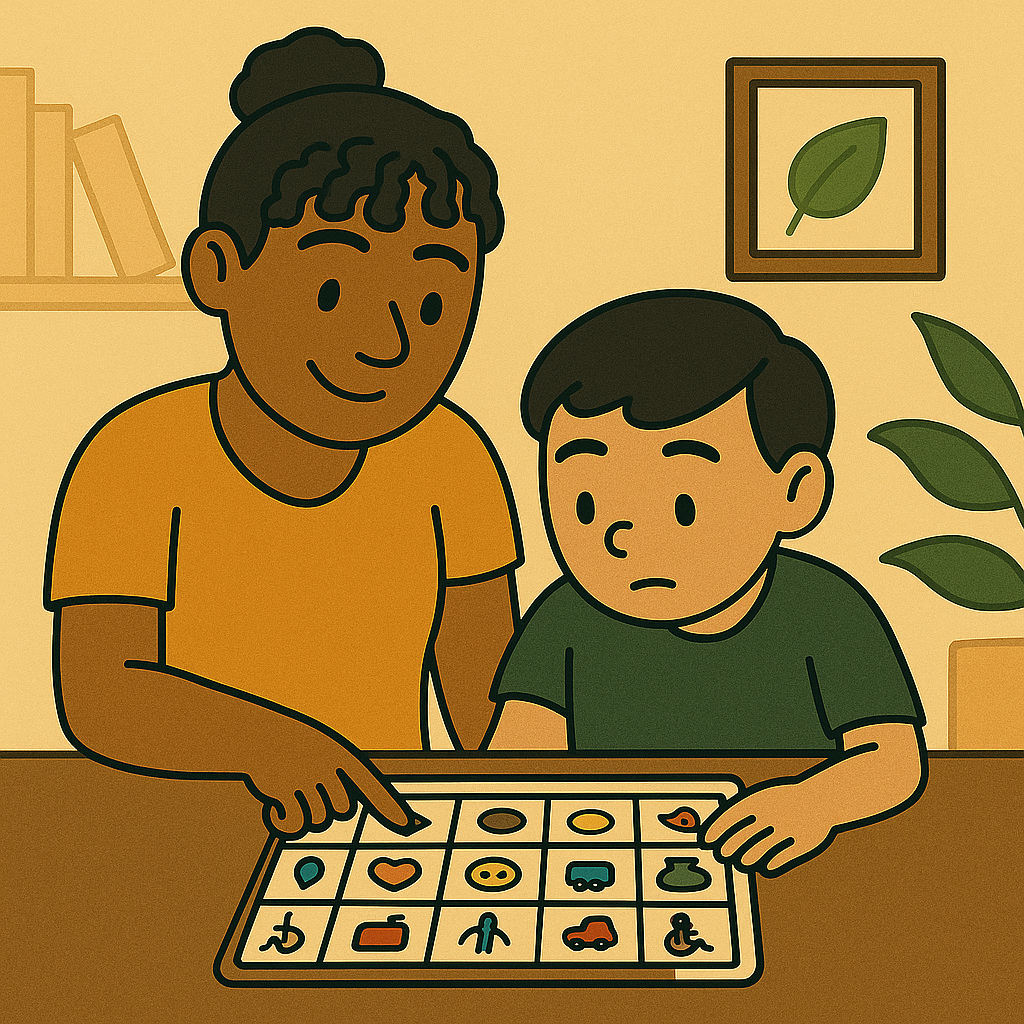
    Speech therapist and child engaging in joyful AAC activity.

    AAC can be transformative:

    • ✅ Increases independence
    • ✅ Builds confidence
    • ✅ Supports academic success
    • ✅ Encourages social connection
    • ✅ Allows for self-advocacy

    From toddlers learning their first words to adults reclaiming their voice after injury or illness, AAC empowers people to fully participate in their lives.

    📚 External Resource: Communication Matters – Benefits of AAC


    Common Myths About AAC

    Let’s bust some of the most common misconceptions:

    🛑 “AAC will stop someone from learning to talk.”
    ✅ Research shows AAC often supports speech development.

    🛑 “AAC is only for nonverbal people.”
    ✅ Many AAC users have limited, unclear, or inconsistent speech.

    🛑 “AAC is too expensive or hard to learn.”
    ✅ There are free apps, school supports, and customizable tools at all levels.

    AAC should never be a last resort—it should be a first step toward communication.


    The Role of the SLP (and the Whole Team!)

    Speech therapist coaching a caregiver on how to use an AAC device.

    SLPs are at the heart of AAC support:

    • 🔍 Evaluate communication abilities
    • 🔧 Trial different tools and systems
    • 📚 Train caregivers, clients, and educators
    • 🤝 Collaborate with:
      • Occupational Therapists (for motor and sensory access)
      • Physical Therapists (for positioning and mobility)
      • Teachers and parents (for carryover at home and school)

    Helpful tools:


    Choosing the Right AAC System

    Teen using eye gaze AAC device in a classroom setting.

    There is no one-size-fits-all solution. Factors to consider:

    • Fine motor and visual abilities
    • Cognitive level
    • Preferences and motivation
    • Access method (e.g., direct touch, switch scanning, eye gaze)
    • Portability and durability

    💸 Funding options:

    • Insurance
    • Medicaid/Medicare
    • School districts (IEPs)
    • Grants and donations

    📚 External Resource: Funding AAC Devices – PrAACtical AAC


    Every Voice Matters: Let’s Keep Talking About AAC

    AAC therapy materials neatly arranged on a desk with clipboard.

    AAC isn’t just a clinical tool—it’s a life-changing pathway to freedomconnection, and confidence.

    Whether you’re working with a preschooler developing early language or an adult recovering from a stroke, AAC gives people the chance to be heard—and that’s everything.


    💡 Want More AAC Tools at Your Fingertips?

    Subscribe now to get:

    • 🧠 Free Quick Reference Sheets for OT, PT, and ST
    • 📘 Previews of our therapy Pocket Guides
    • 💌 Tips and product ideas delivered to your inbox!
    • OT Pocket Guide – Out now (ebook + paperback)

    • ST Pocket Guide – Releasing this month
    • PT Pocket Guide – Coming in October

    💬 We Want to Hear From You

    Speech therapist attentively listening to a caregiver sharing an AAC experience

    Have you ever worked with or cared for someone who used AAC?
    What tool, tip, or breakthrough made the biggest difference?

    👇 Share your story in the comments—we learn best when we learn together.

    Originally posted 2025-05-22 03:00:00.

  • 7. How Rehab Therapists Can Promote Mental Health: 7 Practical Tips

    7. How Rehab Therapists Can Promote Mental Health: 7 Practical Tips

    7-minute read

    Affiliate Disclosure:

    As an Amazon Associate, I earn from qualifying purchases. This means if you click a product link and make a purchase, I may receive a small commission—at no extra cost to you. I only recommend products I personally use or believe are helpful in therapy.


    Introduction: It’s Not Just the Body We’re Treating

    If you’ve been in the therapy world long enough, you’ve probably had that moment: your client breaks down mid-session, shares something heavy, or just zones out with that distant look. And suddenly, the exercise or language drill you were working on doesn’t feel like the real priority anymore.

    As rehab therapists, we aren’t mental health providers—but we are people who spend a lot of time with our clients. We notice changes. We build trust. We often see sides of people that others don’t. And yes, we can absolutely play a role in supporting their mental health.

    Here are seven approachable, research-backed ways to do just that.


    1. Make Trauma-Informed Care Your Default

    You may not always know your client’s history—but chances are, many of them have faced trauma. Whether it’s a stroke survivor coping with a sudden loss of independence or a child with complex medical trauma, our clients bring invisible wounds into the therapy space.

    A trauma-informed approach means offering consistent routines, choices, and clear explanations. Even small gestures—like giving a client control over the order of activities—can make therapy feel safer.

    Try This: A simple visual support tool like a feelings flip chart can give clients a way to express emotions they may not have words for.

    Learn more about trauma-informed care from NCTSN.


    2. Create a Calm Space That Invites Regulation

    Think of your therapy space: does it promote calm—or chaos? A sensory-friendly environment can make a huge difference, especially for clients dealing with anxiety, ADHD, or overstimulation.

    That doesn’t mean a full makeover. A few thoughtful additions—like a small aromatherapy diffuser, a decluttered workspace, or natural light—can help regulate emotions. A weighted lap pad works wonders for grounding, especially in pediatric or neurodivergent sessions.

    Bonus: A calm environment benefits you, too.


    3. Sprinkle in Mindfulness and Grounding Tools

    Mindfulness isn’t just yoga and silence. In rehab, it might look like a guided deep breath, a pause between transitions, or a grounding activity before a challenging task.

    Quick mindfulness cards like these are perfect for adding a reflective moment between tasks. They work across age groups, especially when adapted into visuals or movement.

    You can even build these into treatment goals: sustained attention, emotional regulation, and even functional communication.

    Explore more mindfulness practices from Greater Good Science Center.


    4. Build Trust Through Compassionate Communication

    Therapeutic rapport isn’t fluff—it’s the foundation of everything we do. Our clients need to feel heard, understood, and safe, especially when they’re working through something hard.

    Try weaving in open-ended questions, reflective statements, and emotion-based vocabulary. A visual reminder like the “How Are You Feeling Today?” chart on your wall can help both kids and adults express themselves during sessions.

    This is where our skillset overlaps with mental health—through empathy, clarity, and patience.


    5. Use Activity as a Safe Outlet for Emotions

    Rehab therapy can be deeply emotional, whether it’s frustration over slow progress, grief from a new diagnosis, or the joy of regained independence.

    Build in ways for clients to release or express what they’re feeling. Use creative outlets like journaling, drawing, or storytelling during sessions. For pediatric clients, this could be puppet play or pretend scenarios. For adults, it might be reflective prompts or role-play.

    Keeping your own self-care journal on hand also models emotional processing in a subtle, powerful way.


    6. Be Aware of Burnout—In Clients and Yourself

    Clients with chronic or long-term rehab needs often show signs of burnout: loss of motivation, irritability, even hopelessness. We can help by adjusting expectations, validating their experiences, and celebrating small wins.

    But therapist burnout is real, too. We give a lot, emotionally and physically. Add in productivity pressures, and it’s no wonder burnout rates are rising.

    Build small moments of care into your day—a mindful pause, a short walk, even a faux plant on your desk to brighten your view. It’s okay to protect your energy. Your clients will benefit from it.


    7. Normalize Help and Know When to Refer

    Mental health doesn’t have to be taboo in rehab settings. Normalize talking about feelings, struggles, and resources. When you spot red flags, don’t ignore them—refer.

    You don’t have to do it all. Just be someone who notices.

    Create a simple resource list with local therapists, support groups, or mental health hotlines. Sites like MentalHealth.gov and Psychology Today are great starting points for finding professional support.


    Conclusion: A Little Goes a Long Way

    We may not be mental health professionals—but as rehab therapists, we’re often a trusted presence during tough times. The way we speak, listen, and show up matters. Sometimes just being there—consistently and compassionately—is the best support we can offer.

    Let’s keep showing up for our clients—not just as clinicians, but as humans.


    Grab Your Free Quick Reference Sheets

    Designed for OT, PT, and STs who want smart tools, not more paperwork.
    Subscribe to the newsletter to get your free Quick Reference Sheets—perfect to keep by your side during sessions.


    Looking for More Clinical Tools?

    Explore the Productive Rehab Therapist Pocket Guide Series for expanded tools and structured quick references:

    • OT Pocket Guide – Out now! Available on Amazon, in
    • ST Pocket Guide – Launching this month!
    • PT Pocket Guide – Releasing October 2025

    Stay organized, empowered, and confident—whether you’re new to the field or a seasoned therapist.


    Originally posted 2025-05-13 03:00:00.

  • 5. #SLPTok – How Social Media Is Finally Showing What Speech Therapists Really Do

    5. #SLPTok – How Social Media Is Finally Showing What Speech Therapists Really Do

    8-minute read

    Intro: The SLP World Is Going Viral—and It’s About Time


    If you’ve ever asked, “What does a speech therapist actually do?”—you’re not alone. For years, speech-language pathologists (SLPs) have worked quietly behind the scenes, helping clients of all ages find their voice—literally and figuratively. But now, thanks to the rise of #SLPTok on TikTok and other social platforms, the mystery is fading. Social media is finally putting a spotlight on what speech therapists really do, and spoiler alert: it’s way more than just helping kids pronounce their “R’s.”


    From AAC devices to school-based therapy, medical rehab to adult swallowing therapy, #SLPTok is showcasing the real-life work of licensed SLPs. Let’s take a closer look at how these creators are reshaping public understanding—and the tools and tips commonly associated with their specialties.


    Section 1: What Is #SLPTok and Why Is It Important?

    #SLPTok is a hashtag movement where licensed speech-language pathologists share tips, debunk myths, and show what their day-to-day really looks like. In an era of short attention spans, TikTok has become a powerful educational tool. For many, it’s the first time they’re seeing the full scope of what SLPs do—from helping a child say “mama” to teaching adults how to swallow again after a stroke.


    Why it matters:

    • It raises awareness of SLP roles in schools, hospitals, homes, and online.
    • It helps families and caregivers recognize signs of communication delays.
    • It encourages future therapists to explore non-traditional SLP careers.

    Section 2: Meet the SLPs of TikTok (And the Tools They Recommend)

    This post contains affiliate links. If you click on a link and make a purchase, I may earn a small commission—at no extra cost to you. As an Amazon Associate, I earn from qualifying purchases. I only recommend tools I trust or those used by licensed SLPs.

    Here are eight standout SLPs from TikTok, each representing a unique specialty—plus affiliate-linked tools you can explore to learn more or support the journey.

    1. Ms. Rachel (@msrachelforlittles): Pediatric / Early Intervention

    Beloved by parents and toddlers alike, Ms. Rachel uses music and repetition to support language development. Her content is often recommended by early intervention SLPs.

    Tools inspired by her approach:


    2. Brenda Volk (@spillthespeech)School-Based SLP

    Brenda Volk, known as @spillthespeech on TikTok, is a seasoned school-based speech-language pathologist who shares invaluable insights into the daily life of an SLP in educational settings. Her content includes practical strategies for managing caseloads, effective therapy activities, and scheduling tips, making her a go-to resource for fellow SLPs and educators.


    Tools inspired by her approach:


    3. Chung Brewer, CCC-SLP (@adultspeechtherapy.co): Geriatric SLP

    Chung Brewer is a certified speech-language pathologist who specializes in adult and geriatric care. Through her TikTok account, @adultspeechtherapy.co, she shares valuable resources and therapy ideas tailored for older adults. Her content includes accessible visual aids, cognitive-communication strategies, and swallowing therapy techniques aimed at enhancing the quality of life for seniors.


    Geriatric SLP aids:


    4. Beth Riehle (@beth_riehle): Medical SLP / Cancer Recovery

    Beth documents her powerful journey of relearning to speak after tongue cancer. Her recovery highlights the critical role SLPs play in medical rehab.


    Therapy resources:


    5. Elena (@peds_slp): Early Intervention SLP

    Elena is a certified speech-language pathologist specializing in early intervention for toddlers. Through her TikTok account, @peds_slp, she shares valuable resources and therapy ideas tailored for young children. Her content includes accessible visual aids, play-based strategies, and parent coaching techniques aimed at enhancing communication skills in toddlers.


    Early Intervention SLP aids:


    6. Chris Wenger (@speechdude): AAC & Neurodiversity

    A champion of neurodiverse learnersChris focuses on AAC and accessible education for students with complex needs.


    AAC device suggestions:


    7. Maurice Goodwin (@maurice_goodwin): Non-Traditional Career Path

    Maurice speaks candidly about transitioning from traditional SLP work to new ventures. His journey is a breath of fresh air for SLPs seeking alternative routes.


    Suggested resources:


    8. Carrie Clark (@carrie_clark_slp): AAC Specialist / Child Communication

    Carrie provides tutorials for AAC implementation at home or in therapy, demystifying complex communication tools for parents and teachers.

    Suggested tools:


    Section 3: The Bigger Picture—#SLPTok as Advocacy and Education

    Social media is more than just entertainment. For the speech community, it’s:

    • Representation: Clients see themselves reflected.
    • Education: Parents, caregivers, and future therapists learn what SLPs really do.
    • Connection: Professionals build community, reduce burnout, and promote clinical best practices.


    Credible External Resources:


    Conclusion: Give Voice to the Work That Matters

    Social media is giving SLPs the mic—and they’re using it to amplify the truth: Speech therapists do so much more than people think. Whether it’s teaching a child to ask for help, helping a stroke survivor speak again, or guiding a family through AAC options, their work changes lives.


    Want a deeper dive into practical tools and strategies SLPs use every day?


    Get Your Free Quick Reference Sheets


    Keep high-impact clinical tools at your fingertips. Perfect for students, therapists, and caregivers.


    Now Available: OT Pocket Guide

    Your go-to reference for evaluations, interventions, documentation, and more.


    Coming Soon:

    • ST Pocket Guide – May 2025
    • PT Pocket Guide – October 2025

    Each guide expands on the cheat sheets with actionable clinical strategies, simplified charts, and quick-access formats.

    Originally posted 2025-05-06 03:00:00.

  • 4. Voices Heard, Lives Changed: The Power of Speech Therapy

    4. Voices Heard, Lives Changed: The Power of Speech Therapy

    6-minute read

    As an Amazon Associate, I earn from qualifying purchases. I recommend products based on their use in speech therapy practice, industry trust, and educational value.


    Introduction: The Unsung Heroes of Communication

    Have you ever stopped to think about the power of communication? For many people—children, adults, and families—finding their voice is a challenge. That’s where Speech-Language Pathologists (SLPs) come in. These professionals help individuals speak, understand, and swallow—giving people back one of the most essential parts of life: connection.

    As we celebrate Better Speech and Hearing Month this May, let’s take a closer look at the world of speech therapy—how it works, who it helps, and how we can all support the incredible work of SLPs.


    1: What is Speech Therapy?

    Speech therapy is more than correcting a lisp or saying “r” correctly. It encompasses evaluation and treatment for:

    SLPs work in schools, hospitals, clinics, and homes—and support everyone from toddlers with speech delays to adults recovering from strokes or living with ALS.

    🔗 Learn more at ASHA: What Do Speech-Language Pathologists Do?

    💡 SLP Tool Highlight:
    Try this GoTalk 9+ Lite Touch AAC Device for clients who need a low-tech, reliable communication option.


    2: Why Better Speech and Hearing Month Matters

    May is Better Speech and Hearing Month, a time to raise awareness about communication disorders and the professionals who treat them.

    This month emphasizes:

    • Early identification of speech, language, and hearing issues
    • Accessible care for all age groups
    • Appreciation for SLPs who change lives every day

    Whether you’re a caregiver, client, student, or therapist—this month is your opportunity to speak up about the value of communication.

    🔗 Visit ASHA: Better Hearing and Speech Month to explore campaigns and resources.


    3: The Life-Changing Work of SLPs

    SLPs support people through every stage of life. Their work is diverse, impactful, and often life-altering.

    In Early Intervention and Schools:

    • Helping children meet speech and language milestones
    • Supporting IEP goals and academic success
    • Providing visuals, social stories, and play-based therapy

    🎒 Must-Have:
    For SLPs seeking a versatile and engaging tool for articulation therapy, the Say & Play Mini Objects Set offers over 300 miniature items categorized by speech sounds. This comprehensive kit supports various therapeutic activities, from sound production to language expansion.

    In Medical and Adult Rehab:

    • Assisting stroke survivors and TBI patients regain speech
    • Providing strategies and support for swallowing safety
    • Using tools like tongue depressors or FEES studies to evaluate function

    In All Settings:

    • Empowering voices through connection, advocacy, and individualized care

    4: How You Can Support SLPs This Month

    Want to join the celebration? Here’s how:

    ✅ Thank an SLP — A kind word or social media shoutout goes a long way.
    ✅ Share success stories — Celebrate clients and families who’ve overcome communication barriers.
    ✅ Donate — Support nonprofits that provide speech therapy services to underserved populations.
    ✅ Wear Awareness Gear — Pins, posters, and shirts show your support.
    ✅ Talk About It — Spread the word about early intervention and hearing protection.

    🎧 Working with sensory-sensitive clients? Try Loop Quiet Earplugs or Kids Earmuffs to reduce auditory distractions.


    5: Tools & Resources for SLPs and Caregivers

    Whether you’re a therapist or caregiver, the right tools make all the difference.

    🗂 Top Tools I Recommend:


    🎁 Free Quick Reference Sheets

    Print-friendly, intervention-based cheat sheets for busy rehab therapists.
    Designed for SLPs, OTs, and PTs.


    📘 More Resources from Our Therapy Library:

    • OT Pocket Guide: Available now as eBook and Paperback
      (Packed with functional tools, checklists, and tips—perfect for daily clinical use.)
    • SLP Pocket Guide: Coming May 2025
    • PT Pocket Guide: Launching October 2025

    Conclusion: Let’s Give a Voice to Those Who Need It Most

    Whether it’s a toddler speaking their first words, a stroke survivor finding confidence again, or a nonverbal child learning to communicate, SLPs make it possible. Their work is not just professional—it’s personal, transformational, and deeply impactful.

    This Better Speech and Hearing Month, join us in celebrating the life-changing power of speech therapy. Download your tools, thank a therapist, and support better communication for everyone.


    Get Your Free Tools

    Download our FREE Quick Reference Sheets for OT, PT, and ST.
    Stay organized, confident, and ready for any session.

    Originally posted 2025-05-01 03:00:00.