
The Story Behind the Stats — & Why It Matters
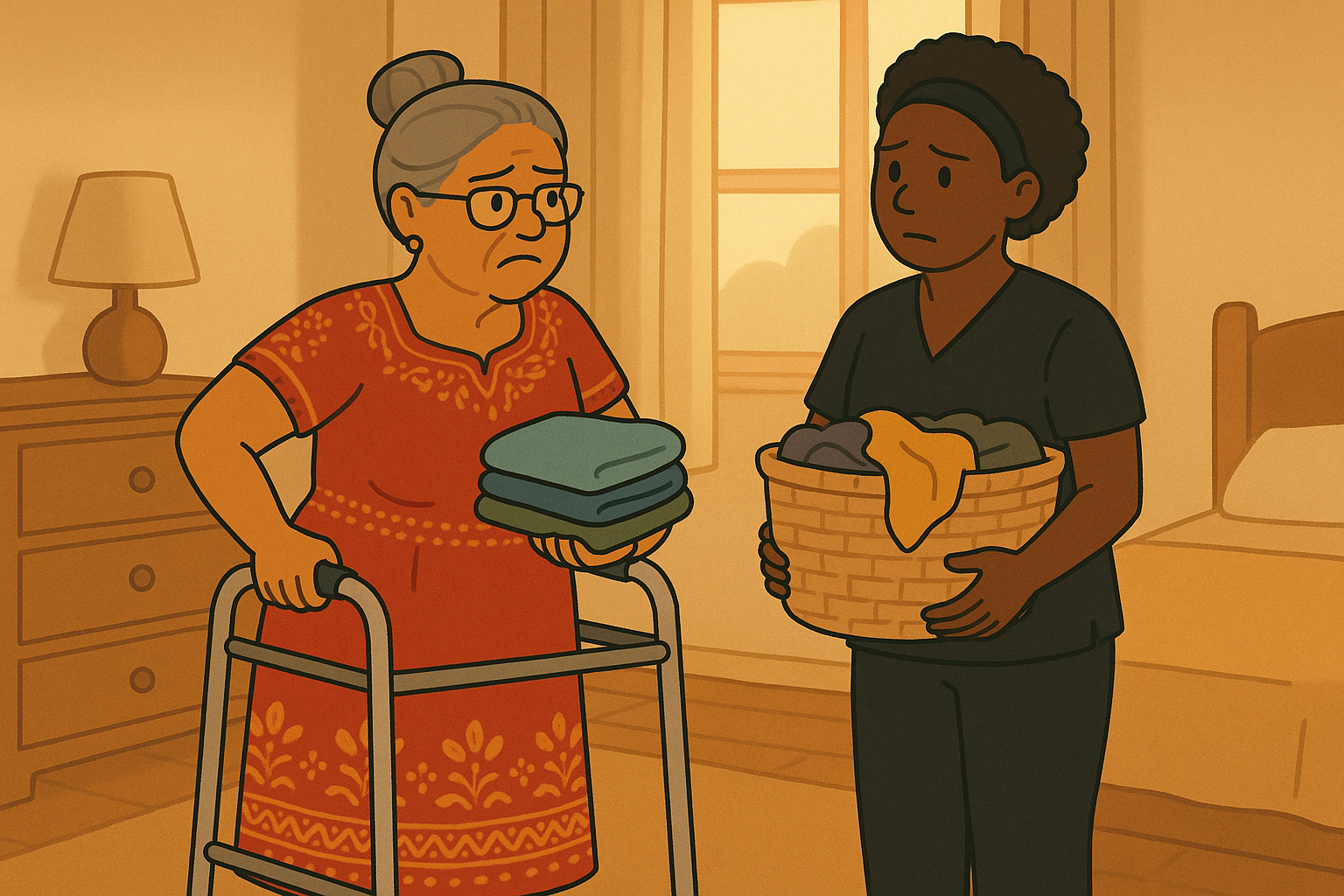
You’ve just finished a productive home-visit. Your client—a Latina grandmother recovering from a hip fracture—quietly mentions how anxious she’s felt since surgery. She hasn’t told her primary doctor yet; the last time she tried, “they just gave me another pill.” Stories like hers are common: mental-health needs are spoken, yet unmet, across many minority communities.
July is Minority Mental Health Awareness Month, and the numbers remain sobering. In 2023, serious psychological distress touched 11.4 % of Black adults, 13.8 % of Hispanic adults, and a striking 15.4 % of American Indian/Alaska Native adults.Bay Area Clinical Associates Yet people of color are still less likely to receive culturally responsive mental-health care—and more likely to hit barriers when they try. Only 36 % of Hispanic and 39 % of Black adults who reported fair or poor mental health received services in the prior three years, compared with 50 % of White adults.KFF
How Barriers Widen the Mental-Health Gap

- Structural hurdles: insurance coverage, high out-of-pocket costs, and limited clinicians of similar background.
- Stigma & mistrust: past negative encounters make it harder to seek help.KFF
- Language & cultural mismatch: assessments and education materials often ignore linguistic nuance or cultural beliefs.
Where Rehab Therapy Fits In

Rehab clinicians already address cognition, daily routines, and quality of life—touchpoints that naturally overlap with mental-health goals:
- OT, PT & ST interventions reduce psych distress. An updated 2024 meta-analysis confirmed that cognitive rehabilitation significantly improved depressive symptoms and executive function in adults with depression.PubMed
- Culturally tailored OT services matter. A 2025 qualitative study found that perinatal OT practitioners identified stigma, fear, and language as primary barriers for ethnic-minority mothers—yet also uncovered enablers such as peer support and community partnerships.PubMed
- Digital therapeutics expand reach. In 2024 the FDA cleared Rejoyn, the first app-based depression treatment, illustrating how tech can supplement care when clinician access is limited.TIME
Building Culturally Competent Care (OT | PT | ST)
Action ideas:
- Screen & listen
Use brief, validated tools in the client’s preferred language and follow up with open-ended questions. - Co-create goals
Embed cultural values (e.g., faith practices, multigenerational caregiving) into your functional objectives. - Leverage interdisciplinary teamwork
Pair mobility sessions with mindfulness coaching, or embed communication strategies into ADL training.
Affiliate Disclosure
Some links below are affiliate links. If you choose to purchase, I may earn a small commission—at no extra cost to you. Your support helps me create free quick-reference sheets, blog posts, and upcoming pocket guides.
Empower Clients With At-Home Mental-Health Tools

Recommend evidence-informed, budget-friendly items your readers can find via the blog’s affiliate shop:
| Need | Try This | Why It Helps |
|---|---|---|
| Daily reflection | Guided mental-health journal | Prompts normalize emotional check-ins. |
| Track moods & triggers | Anxiety/depression planner | Visual patterns make symptom trends obvious. |
| In-session grounding | Grounding card deck | Quick 5-4-3-2-1 cues to re-center. |
| Label feelings | Pocket emotion wheel | Supports emotional literacy across ages. |
Pro-tip: Encourage clients to bring these tools to therapy so you can practice using them together.
Stock Your Therapist DEI Toolkit

DEI stands for Diversity, Equity, and Inclusion—a framework aimed at ensuring fair representation, opportunity, and a sense of belonging for individuals from historically underrepresented or marginalized groups.(en.wikipedia.org)
Invest in resources that strengthen culturally responsive care:
- Visual Diversity Cards – illustrate a wide range of skin tones, family structures, and abilities for more inclusive role-playing.
- Health Disparities Training Manual – concise CEU-ready guide to social determinants of health.
Inclusive Communication & Sensory Aids

Sometimes the simplest low-tech tool removes the biggest barrier:
- Voice-output device for clients with limited speech.
- Emotion-regulation visuals designed for children of color.
- Fidget tool set for trauma-sensitive therapy spaces.
Pair these with tactile items like therapy putty or a sensory kit to weave regulation into movement or speech practice.
Final Thoughts & Next Steps

Rehab therapists sit at a powerful intersection of physical function, communication, and mental well-being. By merging culturally competent practice with evidence-based self-care tools, we can shrink the mental-health gap for BIPOC clients—one therapy session at a time.
👉 Grab Your Free Quick Reference Sheets
Need fast clinical tips? Download my OT, PT & ST quick sheets and check out the published Occupational Therapy Pocket Guide—now on Amazon! The Speech Therapy Pocket Guide drops later this month, and the Physical Therapy edition arrives in October.
Question for you: What’s one culturally responsive strategy you’ve added to your rehab sessions? Share in the comments so we can learn together!
Originally posted 2025-07-22 02:47:54.