

TL;DR:
If you’ve been looking for organization tips for OTs, this post breaks down simple, realistic strategies to improve your OT daily workflow organization, strengthen point of service documentation OT, and improve therapy scheduling and time management. These practical systems are designed to help you stay consistent, reduce overwhelm, and prevent burnout occupational therapy—without adding more to your plate.
Let’s be real for a second…
You didn’t go into occupational therapy to spend your evenings catching up on documentation, reorganizing your schedule, or mentally replaying your entire caseload.
But somehow, that’s exactly where many of us end up.
Since it’s Occupational Therapy Month, I wanted to center this around OTs—but honestly, everything we’re about to talk about applies just as much to PTs, SLPs, and rehab clinicians across the board. If you’re in a productivity-driven setting, you’ve probably felt this at some point.
Between productivity standards, back-to-back treatments, and constant interruptions, “staying organized” starts to feel like just another task on an already overwhelming list.
This isn’t about becoming perfectly organized.
This is about building a system that actually protects your time, your energy, and your sanity—because most of us were never really taught the kind of organization tips for OTs that actually make the job feel manageable.
🧠 Why Organization Tips for OTs Matter More Than You Think
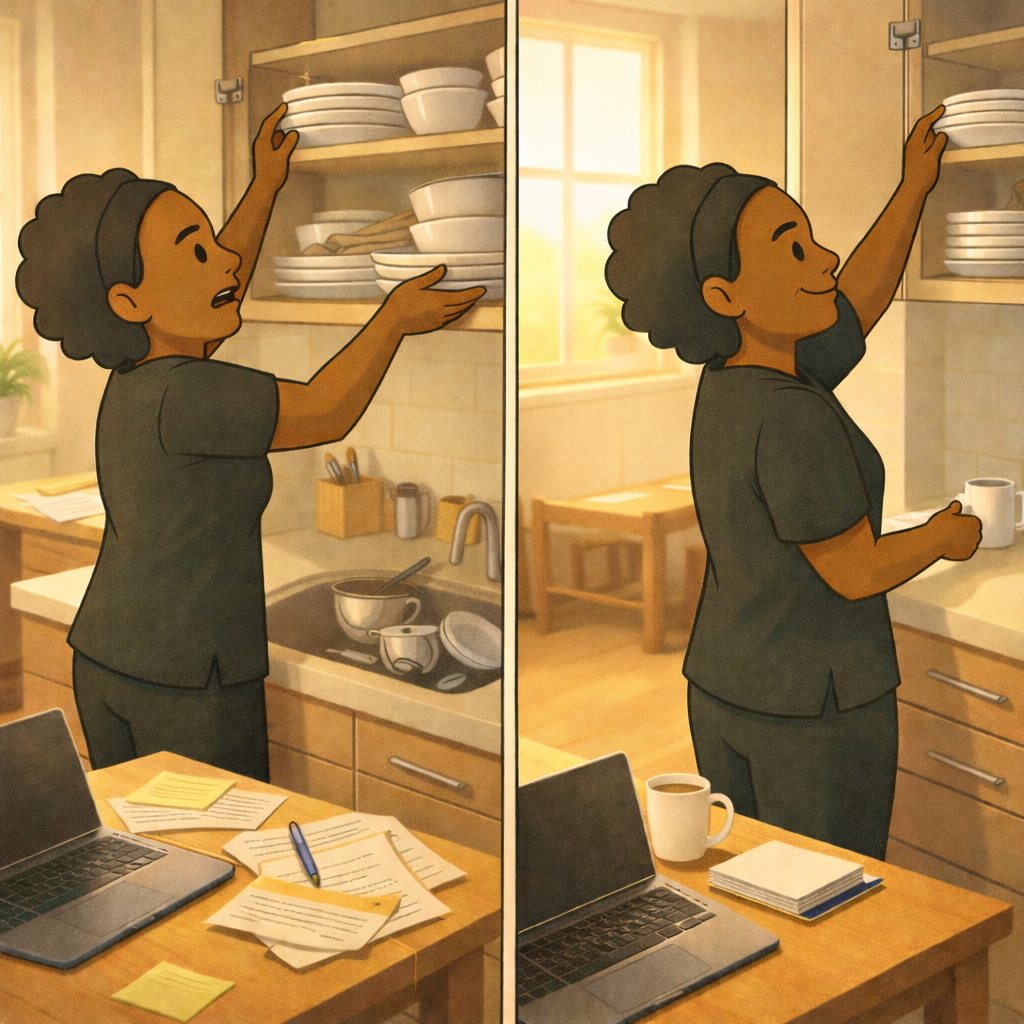
Organization in OT isn’t about being neat—it’s about survival.
When your workflow is scattered, everything takes longer:
- Documentation drags
- Treatments feel rushed
- You forget small (but important) details
- Mental fatigue hits faster
According to the American Occupational Therapy Association, efficient workflows support better patient outcomes and reduce clinician burnout.
👉 Translation:
Better systems = better care + less stress
⚠️ The Real Reason You Feel Disorganized (It’s Not You)

Most therapists assume:
“I just need to be more disciplined.”
Not true.
The real issue?
👉 You’re trying to stay organized in a system that wasn’t designed for efficiency.
- Productivity expectations are high
- Time between patients is minimal
- Documentation is constant
- Interruptions are unavoidable
So instead of forcing yourself to “try harder,” we fix the system.
These organization tips for OTs aren’t about perfection—they’re about making your day more manageable.
🧩 Build a Repeatable Daily Workflow
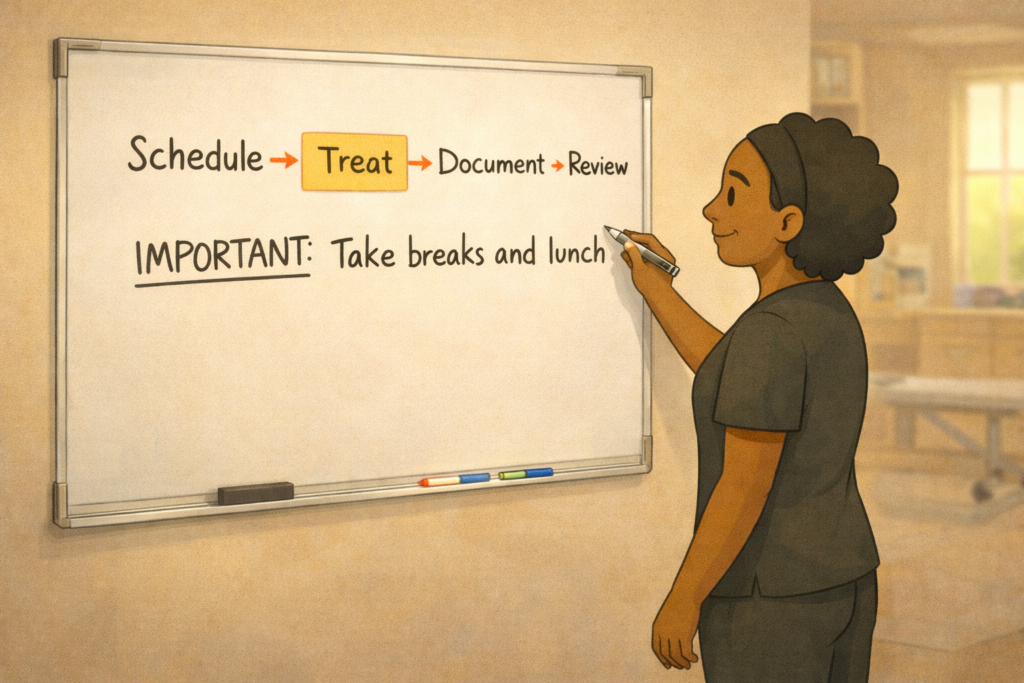
The most organized therapists don’t rely on memory—they rely on patterns.
Your day should feel predictable, even when patients aren’t.
Simple OT Workflow Example:
- Before first patient: Quick schedule + priority scan
- Between sessions: Point-of-service documentation
- Midday reset: Review incomplete notes
- End of day: Finalize + prep for tomorrow
📌 The goal:
Reduce decision fatigue
💡 Quick Tip
You know that feeling when your day ends… and you still have a stack of notes waiting for you?
Using something as simple as a daily planner notepad with time blocking can help you stay on track between sessions and keep documentation from piling up at the end of the day.
📝 Master Point-of-Service Documentation
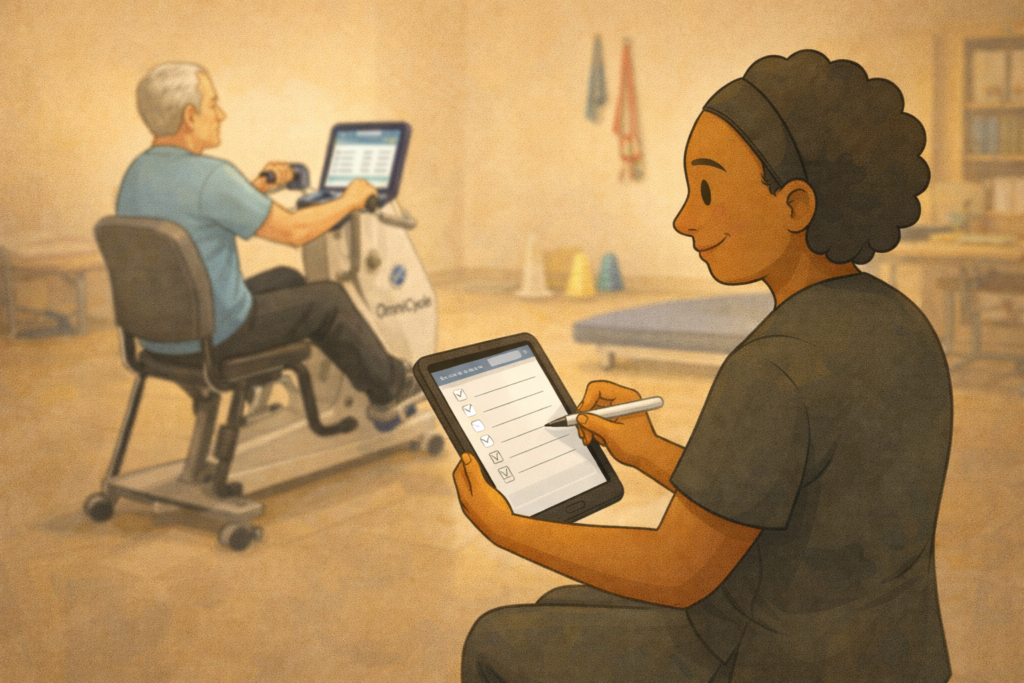
This is the skill that changes everything.
Instead of:
“I’ll remember it later…”
You train yourself to document:
- Key responses
- Levels of assist
- Functional changes
During the session
Why this works:
- Reduces end-of-day overload
- Improves accuracy
- Keeps productivity consistent
Even jotting down 3–5 bullet points per patient can cut your documentation time in half.
💡 Quick Tip
You’ve probably sat down to document and realized… you don’t fully remember what your patient did earlier.
Having a medical clipboard with storage to quickly jot down notes during sessions—or pairing it with a stylus pen for your iPad—can make capturing details in real time much easier (and way less stressful later).
📅 Work With Your Schedule—Not Against It

You may not control your caseload…
But you can control how you interact with it.
Small shifts that make a big difference:
- Group similar patients when possible
- Batch documentation tasks
- Identify your “heavy” sessions early
- Leave buffer space (even 5 minutes helps)
The goal of these organization tips for OTs is to help you stay consistent without feeling overwhelmed.
📌 Think of your schedule like energy management—not just time management.
🔄 Build a Simple Reset System

Disorganization compounds quickly.
That’s why you need a reset system built into your day.
Your reset checkpoints:
- Midday (quick audit of unfinished tasks)
- End of day (clean slate for tomorrow)
Without this, small delays turn into overwhelming backlogs.
💡 Quick Tip
If your week tends to spiral by Wednesday, it’s usually not the workload—it’s the lack of a reset point.
Using a weekly desk planner (glass whiteboard style) can give you a quick visual of your week and help you reset priorities daily without overcomplicating things.
🧘 Protect Your Mental Bandwidth

Here’s what no one talks about:
👉 Organization is directly tied to burnout
When your brain is constantly:
- Remembering tasks
- Rebuilding your schedule
- Tracking unfinished notes
…it never actually rests.
Reduce mental load by:
- Writing everything down
- Using consistent templates
- Creating routines instead of decisions
📌 Less thinking = more energy for patient care
💡 Quick Tip
Trying to remember everything throughout the day is exhausting.
Keeping a small pocket notebook or using sticky tabs/page markers can help you quickly track important details without relying on memory alone.
⚡ Quick OT Organization Tips
- ✔ Document during—not after—sessions
- ✔ Use templates for repeat tasks
- ✔ Keep a running task list (not in your head)
- ✔ Reset your day before leaving
- ✔ Focus on progress, not perfection
🧭 A Quick Note That Helped Me
One thing that really helped me get more organized wasn’t just “trying harder”—it was actually understanding how productivity, documentation, and treatment flow all connect.
That’s a big part of why I created the OT Pocket Guide—to break things down in a way that’s easy to follow, from calculating productivity to structuring interventions and staying on top of your day without feeling overwhelmed.
It’s not about adding more to your plate—it’s about making what you’re already doing feel more manageable and structured.
💡 What I Actually Recommend
Over time, I’ve realized that staying organized as a therapist isn’t about doing more—it’s about using the right small tools consistently. Whether it’s a simple planner, a quick way to capture notes during sessions, or something that helps you stay on schedule, these small changes can completely shift how your day feels.
If your workflow has been feeling overwhelming, it might not be you—it might just be your system.
🛒 Tools Mentioned in This Post
- Daily planner notepad (time-blocking style)
- Medical clipboard with storage
- Stylus pen for iPad
- Weekly desk planner (glass whiteboard style)
- Pocket notebook
- Sticky tabs / page markers
- OT Pocket Guide
📥 Want Help Staying Organized?
👉 Grab your FREE OT, PT & SLP Quick Reference Sheets
👉 Check out the Pocket Guides for real-world workflow strategies
Designed to help you work smarter, not harder—especially on busy clinical days.
⚠️ Medical Disclaimer
This content is for educational purposes only and reflects general occupational therapy practices. It is not medical advice. Always use your clinical judgment and follow your facility guidelines and regulations.
💼 Affiliate Disclaimer
This post may contain affiliate recommendations. I may earn a small commission at no extra cost to you. I only suggest tools that genuinely support real clinical workflows.
💬 Let’s Talk
What’s the ONE thing that makes your day feel the most disorganized right now?

Originally posted 2026-04-12 12:26:24.