
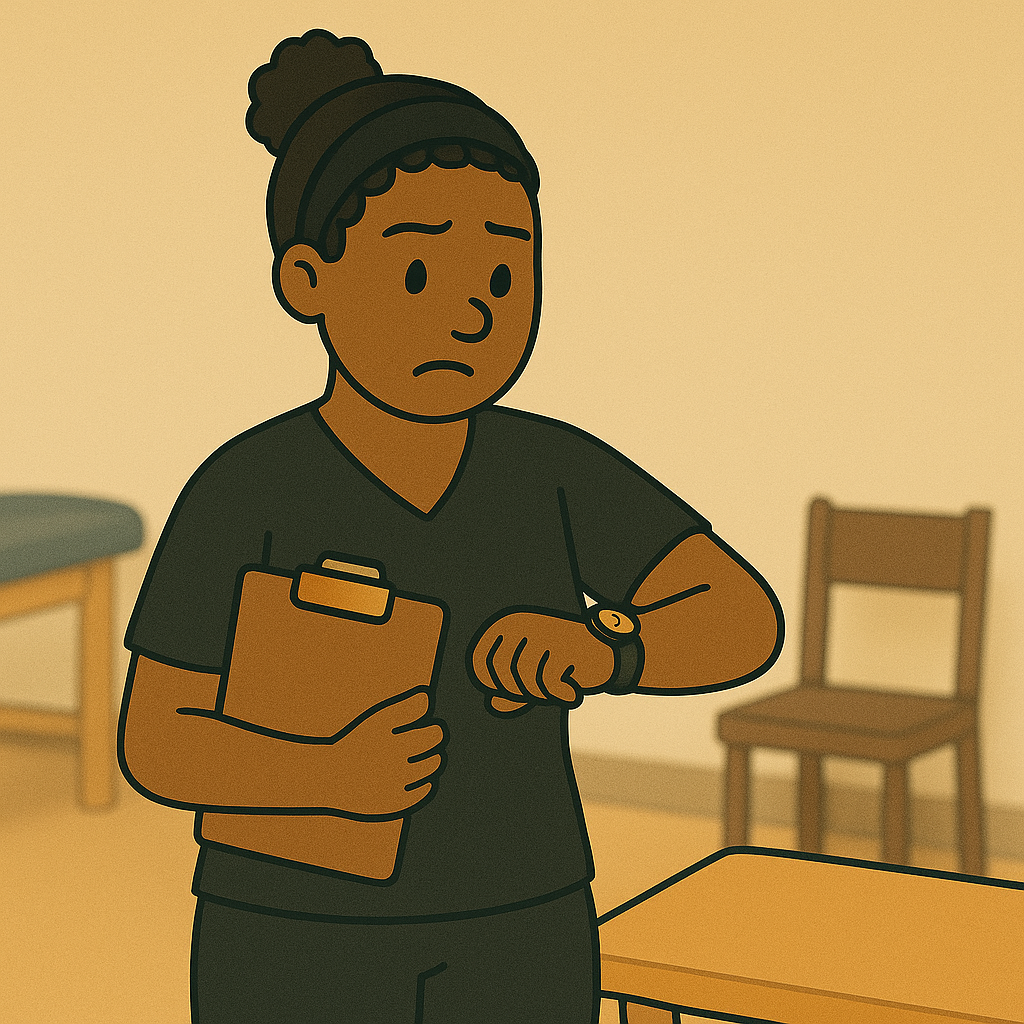
😵💫 When You’re Productive… But Still Behind
You clock in early, give everything to your patients, and somehow still end the day feeling behind. Notes pile up, your brain’s fried, and you’re left wondering, “How do they expect me to keep up?”
The truth? Rehab productivity expectations often don’t account for everything you do. But with the right tools—and a smart strategy to calculate and manage your time—you can stay efficient without burning out.
This post walks you through:
- What productivity really means in OT, PT, and SLP
- How to calculate it with real-time examples
- When to track it during your day
- Tools that will save you hours over the week
⚠ Affiliate Disclosure
This post includes affiliate links. That means I may earn a small commission (at no cost to you) if you purchase through them. I only recommend tools I’ve personally vetted or would use in clinical settings.
🧠 What Is Productivity in Rehab Therapy?

In therapy, productivity is the percentage of your shift spent delivering billable, direct care (usually tracked in your EMR—Electronic Medical Record system).
It’s a business metric, but it directly affects how you’re judged as a therapist—and how exhausted you feel by 3 PM.
Productivity Formula:
Total Work Time = (Treatment Minutes ÷ Productivity %) × 100
The remaining time in your day—non-billable minutes—is all you’ve got for documentation, collaboration, and admin work.
That’s why understanding this formula early in your day can help you set boundaries and avoid surprise overtime.
🧮 How to Calculate Rehab Productivity (With Clock-Out Time Examples)
🎥 Prefer to watch instead of read?
I created a short video that walks through these exact productivity calculations—step by step—so you can visualize how it works in real life.
Let’s say you:
- Clock in at 8:00 AM
- Take a 30-minute unpaid lunch
- Need to hit 8 total hours of paid time
- Want to finish on time at 5:00 PM
Here are three real examples based on common productivity expectations:
✅ Example 1: 100% Productivity Goal
- Treatment Time Required: 8 hours (480 minutes)
- Clock-Out Time: 4:30 PM
⚠️ You’ll need to bill for every minute you’re on the clock (minus lunch). This rarely allows time for documentation or indirect tasks. Best suited for high-volume outpatient clinics, and unrealistic without the use of group or concurrent treatments.
✅ Example 2: 90% Productivity Goal
- Treatment Time Required: 7 hours 13 minutes (433 minutes)
- Calculation: 433 ÷ 0.90 = 481 minutes ≈ 8 hrs 1 min
- Clock-Out Time: 5:00 PM
💡 Tip: Do a quick productivity check mid-morning. If you’ve had a no-show or longer session, recalculate your clock-out time early so you’re not stuck finishing late. This productivity percentage is ideal for assistants in the field.
✅ Example 3: 85% Productivity Goal
- Treatment Time Required: 6 hours 48 minutes (408 minutes)
- Calculation: 408 ÷ 0.85 = 480 minutes (8 hrs)
- Clock-Out Time: 5:00 PM
You now have 72 minutes of your day to split across documentation, phone calls, team discussions, travel (if applicable), and setup time. Generally ideal for evaluating therapists who need the extra time.
🧭 How to Plan Your Clock-Out Time Before You Get Behind

A smart habit? Calculate your projected clock-out time once you’ve seen your second patient.
That way, if you had a missed visit, longer eval, or ran a group session, you’ll know if you’re ahead or behind.
📌 Check again around your second-to-last patient. That’s your last chance to rebalance and wrap up on time.
🧩 Understanding Group and Concurrent Sessions (Productivity Boosters)

If your facility allows group or concurrent therapy, your EMR often counts each client’s time individually—even if you’re treating multiple people at once.
🧾 For example:
- You see 2 patients together for a 30-minute group
- Your EMR logs it as 30 min per patient = 60 min billable time
🎉 You just gained 30 minutes toward your productivity goal in half the time—leaving more space for documentation or a break.
⚠ Disclaimer: At the time of writing, most EMRs calculate group/concurrent minutes this way. Your system may differ, and future updates could change how minutes are logged. Always verify with your clinical supervisor or billing policies.
🧰 Time-Saving Tools That Help You Work Smarter
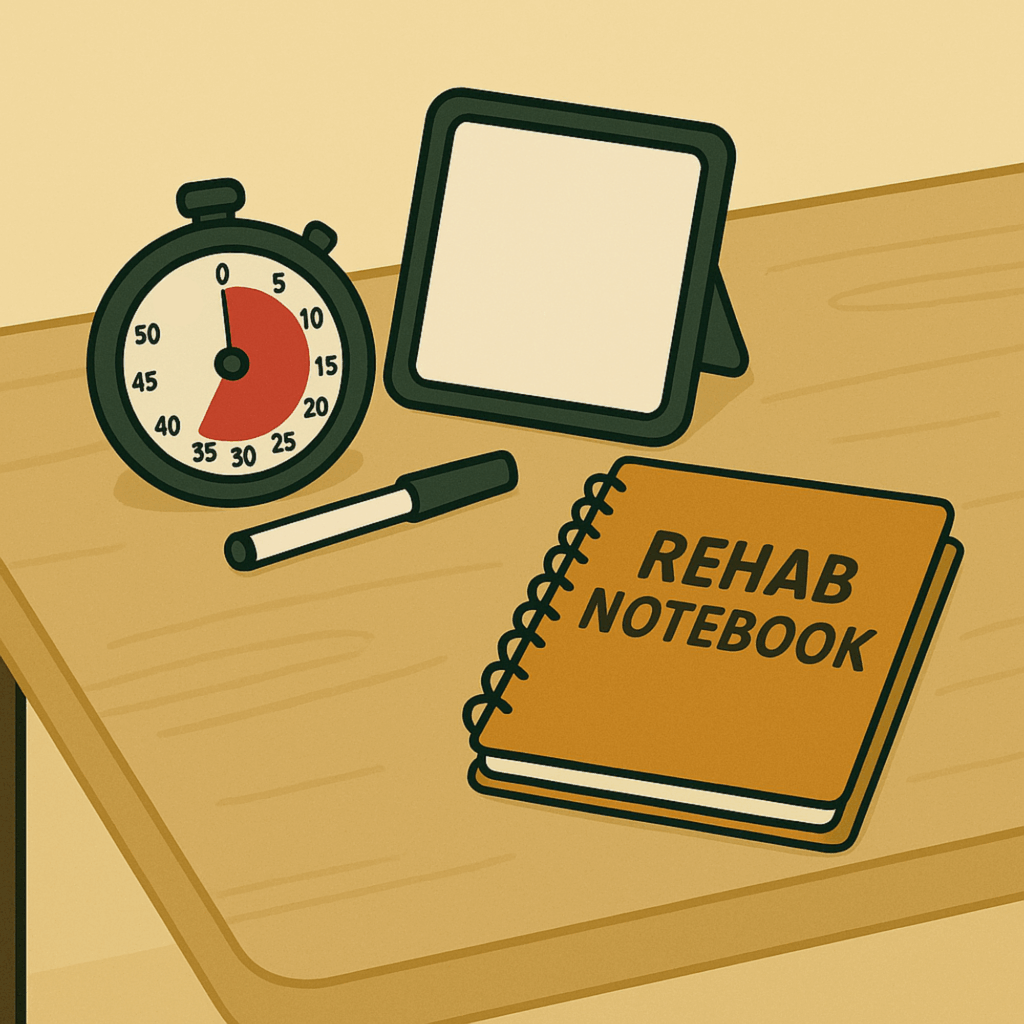
Time = your most valuable resource. These tools are therapist-tested and designed to help you save minutes that add up to hours:
🔧 Therapy Tools for Productivity
- ⏱ Stopwatch with visual cues »
- 🧼 Magnetic dry-erase therapy board »
- 📓 HIPAA-compliant therapy notebook »
🧾 Documentation Aids That Actually Help
- 🎙 Dictation tool for faster notes »
- 📋 Clipboard with storage (privacy shield included) »
- 📌 Quick-reference sheets for CPT codes, goal writing, and terminology:
👉 Download all 3 free cheat sheets here » - 🧠 Want more in-depth templates?
OT Guide »
ST Guide »
🛋 Session Setup & Organization
💻 Tech Tools for EMR Efficiency
- ⌨ Bluetooth keyboard for tablets »
- 💻 Laptop stand »
- 🪑 Portable lap desk »
- 🖊 Stylus pens for touchscreen notes »
👕 Wearables That Make Long Days Easier

📚 Pocket Guides That Save You Hours
These guides were created specifically to cut your documentation time in half—with goal banks, CPT cheat sheets, and functional intervention cues for every setting.
- OT Pocket Guide (Paperback) – Grab it here »
- ST Pocket Guide (Paperback) – Get your copy »
📘 Want to see all available guides? Visit the full book page here »
💬 Final Thoughts
Productivity should never come at the expense of your well-being or clinical reasoning.
By learning how to calculate your expected work time before you get behind—and by setting yourself up with the right tools—you can save time and reclaim control over your workday.
🎯 Want the tools I mentioned all in one place?
Subscribe to get all 3 free Quick Reference Sheets instantly »
💬 Therapist Talk: Let’s Hear From You
How do you keep your productivity high without staying late?
Share your tips in the comments—I’d love to highlight your ideas in a future post!
Originally posted 2025-09-17 14:47:30.