Tag: AAC Devices

  • 10. What Is AAC? Why It’s Life-Changing for So Many

    10. What Is AAC? Why It’s Life-Changing for So Many

    6-minute read

    Imagine Not Being Able to Speak…

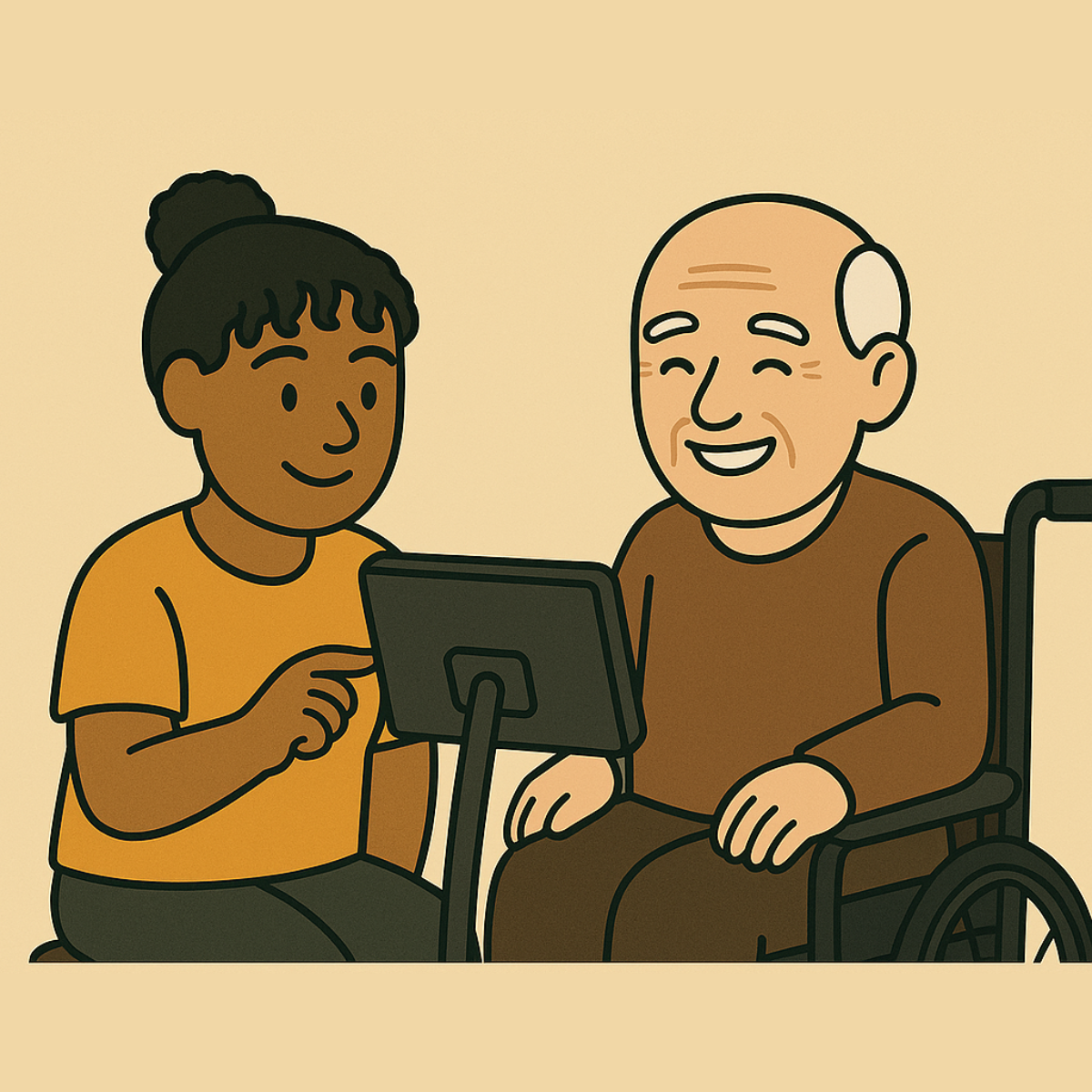
    Imagine you’re in a hospital bed after a stroke, your thoughts racing—but your mouth can’t form the words. Or you’re a young child with autism, frustrated every day because you can’t express your wants, needs, or emotions. How would you ask for help, say “I’m in pain,” or tell someone “I love you”?

    That’s the daily reality for millions of individuals with communication challenges.

    Thankfully, AAC—Augmentative and Alternative Communication—bridges that gap.

    Whether through a high-tech tablet or a simple picture board, AAC empowers people to be heard, understood, and included. If you’re a therapist, caregiver, or educator, understanding AAC is key to transforming lives.

    👉 Want practical AAC tools and cheat sheets?
    Subscribe to get free Quick Reference Sheets for OT, PT, and ST—plus sneak peeks of our therapy Pocket Guides.


    As an Amazon Associate, I earn from qualifying purchases. This means if you click on a product link and make a purchase, I may receive a small commission at no extra cost to you. I only recommend tools I trust and use to support AAC and therapy practices.


    What Exactly Is AAC Communication?

    AAC stands for Augmentative and Alternative Communication—a broad term describing all forms of communication (other than verbal speech) used to express thoughts, needs, and ideas.

    AAC can be:

    • Augmentative: Adding to someone’s existing speech
    • Alternative: Replacing speech when none is available

    It helps:

    • Children and adults with autismcerebral palsyDown syndrome
    • People with ALSstroketraumatic brain injury
    • Anyone with temporary or permanent speech limitations

    Communication is a human right. AAC helps ensure no one is left voiceless.

    📚 External Resource: ASHA – What Is AAC?


    Types of AAC: From Picture Boards to Eye Gaze Devices

    Various AAC tools including speech app, picture book, and communication switch.

    AAC tools vary widely depending on the individual’s needs.

    ✅ No-Tech AAC

    • Gestures
    • Sign language
    • Facial expressions
    • Drawing or writing

    ✅ Low-Tech AAC

    ✅ Mid-Tech AAC

    ✅ High-Tech AAC


    How AAC Changes Lives

    Speech therapist and child engaging in joyful AAC activity.

    AAC can be transformative:

    • ✅ Increases independence
    • ✅ Builds confidence
    • ✅ Supports academic success
    • ✅ Encourages social connection
    • ✅ Allows for self-advocacy

    From toddlers learning their first words to adults reclaiming their voice after injury or illness, AAC empowers people to fully participate in their lives.

    📚 External Resource: Communication Matters – Benefits of AAC


    Common Myths About AAC

    Let’s bust some of the most common misconceptions:

    🛑 “AAC will stop someone from learning to talk.”
    ✅ Research shows AAC often supports speech development.

    🛑 “AAC is only for nonverbal people.”
    ✅ Many AAC users have limited, unclear, or inconsistent speech.

    🛑 “AAC is too expensive or hard to learn.”
    ✅ There are free apps, school supports, and customizable tools at all levels.

    AAC should never be a last resort—it should be a first step toward communication.


    The Role of the SLP (and the Whole Team!)

    Speech therapist coaching a caregiver on how to use an AAC device.

    SLPs are at the heart of AAC support:

    • 🔍 Evaluate communication abilities
    • 🔧 Trial different tools and systems
    • 📚 Train caregivers, clients, and educators
    • 🤝 Collaborate with:
      • Occupational Therapists (for motor and sensory access)
      • Physical Therapists (for positioning and mobility)
      • Teachers and parents (for carryover at home and school)

    Helpful tools:


    Choosing the Right AAC System

    Teen using eye gaze AAC device in a classroom setting.

    There is no one-size-fits-all solution. Factors to consider:

    • Fine motor and visual abilities
    • Cognitive level
    • Preferences and motivation
    • Access method (e.g., direct touch, switch scanning, eye gaze)
    • Portability and durability

    💸 Funding options:

    • Insurance
    • Medicaid/Medicare
    • School districts (IEPs)
    • Grants and donations

    📚 External Resource: Funding AAC Devices – PrAACtical AAC


    Every Voice Matters: Let’s Keep Talking About AAC

    AAC therapy materials neatly arranged on a desk with clipboard.

    AAC isn’t just a clinical tool—it’s a life-changing pathway to freedomconnection, and confidence.

    Whether you’re working with a preschooler developing early language or an adult recovering from a stroke, AAC gives people the chance to be heard—and that’s everything.


    💡 Want More AAC Tools at Your Fingertips?

    Subscribe now to get:

    • 🧠 Free Quick Reference Sheets for OT, PT, and ST
    • 📘 Previews of our therapy Pocket Guides
    • 💌 Tips and product ideas delivered to your inbox!
    • OT Pocket Guide – Out now (ebook + paperback)

    • ST Pocket Guide – Releasing this month
    • PT Pocket Guide – Coming in October

    💬 We Want to Hear From You

    Speech therapist attentively listening to a caregiver sharing an AAC experience

    Have you ever worked with or cared for someone who used AAC?
    What tool, tip, or breakthrough made the biggest difference?

    👇 Share your story in the comments—we learn best when we learn together.

    Originally posted 2025-05-22 03:00:00.

  • 8. Aphasia After Stroke: A Guide for Therapists and Caregivers

    8. Aphasia After Stroke: A Guide for Therapists and Caregivers

    6-minute read

    Affiliate Disclosure: This post contains affiliate links. As an Amazon Associate, I earn from qualifying purchases—at no extra cost to you. I only recommend products I trust and believe can truly help.


    When Words Get Stuck: Understanding Stroke and Aphasia

    A stroke happens when blood flow to a part of the brain is blocked or disrupted, which deprives brain cells of oxygen and nutrients. When brain cells die—often within minutes—it can affect everything from movement to memory to speech.

    There are three main types of strokes:

    • Ischemic Stroke – The most common, caused by a blocked artery.
    • Hemorrhagic Stroke – Caused by a blood vessel rupture that leads to bleeding in the brain.
    • Transient Ischemic Attack (TIA) – A “mini-stroke” with temporary symptoms due to a brief blockage.

    When a stroke affects the left side of the brain—especially areas like Broca’s or Wernicke’s, which control language—it can lead to aphasia: a communication disorder that disrupts the ability to speak, understand, read, or write.

    And that’s what we’ll focus on today: how therapists and caregivers can support someone with aphasia after stroke using practical tools, strategies, and empathy.


    Aphasia Isn’t About Intelligence—It’s About Connection Loss

    Diagram of different types of aphasia and their communication effects

    Aphasia can be confusing—especially when the person still “knows” what they want to say but just can’t get the words out. Here’s a breakdown of common types of aphasia in everyday terms:

    • Broca’s Aphasia (Expressive): You know what you want to say, but can’t find the words. Speech is slow and effortful.
    • Wernicke’s Aphasia (Receptive): Words flow easily, but they may not make sense—and it’s hard to understand others.
    • Global Aphasia: Severe difficulties with both speech and comprehension.
    • Anomic Aphasia: Trouble naming objects or finding the right word.

    Understanding what type of aphasia someone has helps guide therapy and communication strategies.

    Learn more about aphasia types – National Aphasia Association
    Affiliate Link: EZ Speech Communication Board – Easy-to-use board to support basic needs and emotions.


    Therapy That Works: Rebuilding Language, One Word at a Time

    Speech-language pathologist using visual aids with aphasia patient

    Supporting someone with aphasia means engaging the brain in communication—over and over again. Repetition, cues, and functional practice are key.

    Therapists may use:

    • Script training with short, everyday phrases
    • Picture-based communication aids
    • Singing or rhythm-based speaking (melodic intonation therapy)
    • AAC devices for those with more severe needs

    Helpful Tools to Try:


    Caregivers Make a Big Difference—Here’s How

    Caregiver helping stroke survivor with visual communication aid

    If you’re supporting someone at home, know this: your patience and presence matter just as much as therapy.

    Try these communication-friendly habits:

    • Speak slowly and clearly
    • Use simple, direct phrases
    • Ask yes/no questions when possible
    • Use written words, gestures, or images
    • Be patient—let them finish their thought

    Tools That Help at Home:


    Assistive Tech That Supports Speech Recovery

    Tablet with AAC app used for aphasia communication

    Modern tools can offer a lifeline when words are hard to come by. These devices can be used both in therapy sessions and at home.

    Recommended tools include:

    • Tablets with AAC apps (like Speech Assistant or Proloquo2Go)
    • Voice recorders to practice speech or capture reminders
    • Adaptive tools to support independence in daily living

    Recommended Products:


    Where to Turn for Trusted Information and Help

    Collection of books and therapy resources for aphasia support

    There are excellent organizations that offer ongoing support, education, and free resources for both professionals and families:

    Book Highlight:


    You Don’t Have to Do This Alone

    Aphasia may feel like a loss of connection—but it doesn’t have to be permanent. Through therapy, daily practice, and support from those who care, recovery is always possible. Even small gains in communication can make a big difference in quality of life.


    Download Your Free Quick Reference Sheets

    3 Quick Sheet References

    Stay prepared in the clinic or at home with printable cheat sheets for OT, ST, and PT.


    Need More Than a Quick Sheet?

    The Occupational Therapy Pocket Guide is now available!

    Coming soon:

    • Speech Therapy Pocket Guide – May
    • Physical Therapy Pocket Guide – October

    These guides go deeper than a handout and are built for real-world therapy.


    We Want to Hear From You

    Have you ever worked with or cared for someone with aphasia?
    What communication strategy helped the most? Share your story in the comments—we learn best when we learn together.

    Speech therapist, caregiver, and patient sharing communication strategies in a relaxed, supportive conversation setting.

    Originally posted 2025-05-15 12:44:59.

  • 6. Helping Patients with ALS Communicate: 6 Tips from a Rehab Therapist

    6. Helping Patients with ALS Communicate: 6 Tips from a Rehab Therapist

    7-minute read

    This post contains affiliate links. If you purchase through these links, I may earn a small commission—at no extra cost to you. I only recommend tools I believe are helpful and relevant for patients, therapists, and caregivers.

    Introduction: When Words Become a Lifeline

    Losing the ability to speak is one of the most painful changes that can come with ALS. But communication doesn’t have to stop there—and it shouldn’t. For people living with ALS, being able to express themselves means holding onto their voice, their choices, and their identity.

    As a rehab therapist, I’ve seen firsthand how the right support can open doors to connection, even as speech becomes more difficult. Whether you’re a caregiver, therapist, or loved one, these six communication tips can help you support someone with ALS in ways that are both practical and deeply meaningful.


    Fast Facts About ALS

    ALS symptoms and age chart infographic

    Before we jump into the tools and strategies, let’s cover the basics:

    • What is ALS?
      ALS (amyotrophic lateral sclerosis) is a progressive neurodegenerative disease that affects nerve cells in the brain and spinal cord. It weakens voluntary muscles, including those needed for talking, eating, and moving.
    • Who gets ALS?
      Most people are diagnosed between ages 40 and 70, with the average age around 55. It’s rare, but can also affect younger or older individuals.
    • Is ALS always genetic?
      No. About 90–95% of cases are sporadic, meaning no known family history.
    • Does ALS affect the mind?
      In most cases, cognition is preserved—even as speech and mobility decline.
    • Does everyone with ALS lose their voice?
      Many do over time, especially with bulbar-onset ALS. But with tools and planning, communication can continue in different forms.

    Source: CDC ALS Facts

    Stages of ALS and Communication Changes

    Understanding where someone is in the ALS journey can help tailor communication support. Here’s a simplified breakdown:

    StageCommon SignsCommunication Support
    EarlyMild slurring, some limb weaknessWriting tools, letter boards, voice banking
    MiddleNoticeable speech and hand weaknessAAC devices, voice amplifiers
    LateSevere speech and mobility lossEye gaze systems, pre-programmed AAC tools

    1. Start Simple: Use Writing Tools and Communication Boards

    ALS patient using letter board to communicate

    In the early stages, speech may be slurred or tiring, but hand control is usually still intact. That makes low-tech tools like:

    a great place to start.

    Why it helps: These tools are quick, reliable, and allow people to express needs without complicated setup.

    Recommended Products:


    2. Make Their Voice Louder: Try a Voice Amplifier

    Voice amplifier being used to support ALS communication

    If someone’s voice becomes soft but still functional, a portable voice amplifier can help. It’s especially useful during family gatherings or doctor visits.

    Recommended Product:

    Therapist Tip: Test out different microphone positions and volumes to prevent feedback and make conversations easier for everyone.


    3. Use AAC Devices for Ongoing Communication

    AAC device being used by ALS patient with therapist support

    As ALS progresses, speech may become hard to understand—or disappear completely. That’s when AAC (Augmentative and Alternative Communication) steps in.

    AAC devices can include:

    Recommended Products:

    Need to Know: These tools work best when set up before communication becomes too limited. An SLP (speech-language pathologist) can guide the process.


    4. Go Hands-Free: Try Eye-Gaze or Head-Control Technology

    ALS patient using eye gaze to type message on screen

    When hand movement is no longer possible, tech doesn’t give up—it adapts.

    Eye-gaze systems and head-controlled mice let users move a cursor with their eyes or head and click to speak, type, or control their environment.

    Recommended Product (Head-controlled alternative):

    These systems can take some setup and training, but once in place, they empower full communication—even in advanced stages.


    5. Keep Using Devices with Adaptive Styluses

    Mouth stylus used to navigate communication app on tablet

    If a person can’t use their fingers but still has some upper body or head movement, adaptive styluses can help them use tablets and phones.

    Options include:

    • Mouth stick styluses
    • Head-mounted or hand-mounted styluses
    • No-touch capacitive styluses

    Recommended Products:


    6. Plan Ahead with Voice Banking

    ALS patient creating custom voice bank on laptop

    One of the most meaningful things a person with ALS can do early on is record their voice before it’s lost. This is called voice banking—and the recorded clips can later be used in speech-generating devices.

    Recommended Resources:

    This process lets them speak with their own voice, even when their body can’t.


    Conclusion: Your Voice Is Still Yours

    ALS takes away many things—but with planning, creativity, and care, communication doesn’t have to be one of them. Every person deserves to express who they are, what they want, and how they feel. Whether it’s a simple letter board or an eye-controlled tablet, there are always ways to stay connected.

    Download Your Free Rehab Therapy Quick Reference Sheets

    Grab our printable OT, PT, and ST cheat sheets—great for clinics, home visits, and caregivers!

    Need More Tools? Our Rehab Therapy Pocket Guides Are Here to Help

    • OT Pocket Guide – OUT NOW!
    • ST Pocket Guide – Coming This May
    • PT Pocket Guide – Coming This October

    Each guide is packed with checklists, tips, and real-world tools for therapists and caregivers.

    Originally posted 2025-05-08 12:52:33.

  • 5. #SLPTok – How Social Media Is Finally Showing What Speech Therapists Really Do

    5. #SLPTok – How Social Media Is Finally Showing What Speech Therapists Really Do

    8-minute read

    Intro: The SLP World Is Going Viral—and It’s About Time


    If you’ve ever asked, “What does a speech therapist actually do?”—you’re not alone. For years, speech-language pathologists (SLPs) have worked quietly behind the scenes, helping clients of all ages find their voice—literally and figuratively. But now, thanks to the rise of #SLPTok on TikTok and other social platforms, the mystery is fading. Social media is finally putting a spotlight on what speech therapists really do, and spoiler alert: it’s way more than just helping kids pronounce their “R’s.”


    From AAC devices to school-based therapy, medical rehab to adult swallowing therapy, #SLPTok is showcasing the real-life work of licensed SLPs. Let’s take a closer look at how these creators are reshaping public understanding—and the tools and tips commonly associated with their specialties.


    Section 1: What Is #SLPTok and Why Is It Important?

    #SLPTok is a hashtag movement where licensed speech-language pathologists share tips, debunk myths, and show what their day-to-day really looks like. In an era of short attention spans, TikTok has become a powerful educational tool. For many, it’s the first time they’re seeing the full scope of what SLPs do—from helping a child say “mama” to teaching adults how to swallow again after a stroke.


    Why it matters:

    • It raises awareness of SLP roles in schools, hospitals, homes, and online.
    • It helps families and caregivers recognize signs of communication delays.
    • It encourages future therapists to explore non-traditional SLP careers.

    Section 2: Meet the SLPs of TikTok (And the Tools They Recommend)

    This post contains affiliate links. If you click on a link and make a purchase, I may earn a small commission—at no extra cost to you. As an Amazon Associate, I earn from qualifying purchases. I only recommend tools I trust or those used by licensed SLPs.

    Here are eight standout SLPs from TikTok, each representing a unique specialty—plus affiliate-linked tools you can explore to learn more or support the journey.

    1. Ms. Rachel (@msrachelforlittles): Pediatric / Early Intervention

    Beloved by parents and toddlers alike, Ms. Rachel uses music and repetition to support language development. Her content is often recommended by early intervention SLPs.

    Tools inspired by her approach:


    2. Brenda Volk (@spillthespeech)School-Based SLP

    Brenda Volk, known as @spillthespeech on TikTok, is a seasoned school-based speech-language pathologist who shares invaluable insights into the daily life of an SLP in educational settings. Her content includes practical strategies for managing caseloads, effective therapy activities, and scheduling tips, making her a go-to resource for fellow SLPs and educators.


    Tools inspired by her approach:


    3. Chung Brewer, CCC-SLP (@adultspeechtherapy.co): Geriatric SLP

    Chung Brewer is a certified speech-language pathologist who specializes in adult and geriatric care. Through her TikTok account, @adultspeechtherapy.co, she shares valuable resources and therapy ideas tailored for older adults. Her content includes accessible visual aids, cognitive-communication strategies, and swallowing therapy techniques aimed at enhancing the quality of life for seniors.


    Geriatric SLP aids:


    4. Beth Riehle (@beth_riehle): Medical SLP / Cancer Recovery

    Beth documents her powerful journey of relearning to speak after tongue cancer. Her recovery highlights the critical role SLPs play in medical rehab.


    Therapy resources:


    5. Elena (@peds_slp): Early Intervention SLP

    Elena is a certified speech-language pathologist specializing in early intervention for toddlers. Through her TikTok account, @peds_slp, she shares valuable resources and therapy ideas tailored for young children. Her content includes accessible visual aids, play-based strategies, and parent coaching techniques aimed at enhancing communication skills in toddlers.


    Early Intervention SLP aids:


    6. Chris Wenger (@speechdude): AAC & Neurodiversity

    A champion of neurodiverse learnersChris focuses on AAC and accessible education for students with complex needs.


    AAC device suggestions:


    7. Maurice Goodwin (@maurice_goodwin): Non-Traditional Career Path

    Maurice speaks candidly about transitioning from traditional SLP work to new ventures. His journey is a breath of fresh air for SLPs seeking alternative routes.


    Suggested resources:


    8. Carrie Clark (@carrie_clark_slp): AAC Specialist / Child Communication

    Carrie provides tutorials for AAC implementation at home or in therapy, demystifying complex communication tools for parents and teachers.

    Suggested tools:


    Section 3: The Bigger Picture—#SLPTok as Advocacy and Education

    Social media is more than just entertainment. For the speech community, it’s:

    • Representation: Clients see themselves reflected.
    • Education: Parents, caregivers, and future therapists learn what SLPs really do.
    • Connection: Professionals build community, reduce burnout, and promote clinical best practices.


    Credible External Resources:


    Conclusion: Give Voice to the Work That Matters

    Social media is giving SLPs the mic—and they’re using it to amplify the truth: Speech therapists do so much more than people think. Whether it’s teaching a child to ask for help, helping a stroke survivor speak again, or guiding a family through AAC options, their work changes lives.


    Want a deeper dive into practical tools and strategies SLPs use every day?


    Get Your Free Quick Reference Sheets


    Keep high-impact clinical tools at your fingertips. Perfect for students, therapists, and caregivers.


    Now Available: OT Pocket Guide

    Your go-to reference for evaluations, interventions, documentation, and more.


    Coming Soon:

    • ST Pocket Guide – May 2025
    • PT Pocket Guide – October 2025

    Each guide expands on the cheat sheets with actionable clinical strategies, simplified charts, and quick-access formats.

    Originally posted 2025-05-06 03:00:00.