Author: Noun

  • Struggling with Feeding Therapy? Tips for New SLPs

    Struggling with Feeding Therapy? Tips for New SLPs

    That First Feeding Case Feeling… (What New SLPs Experience)

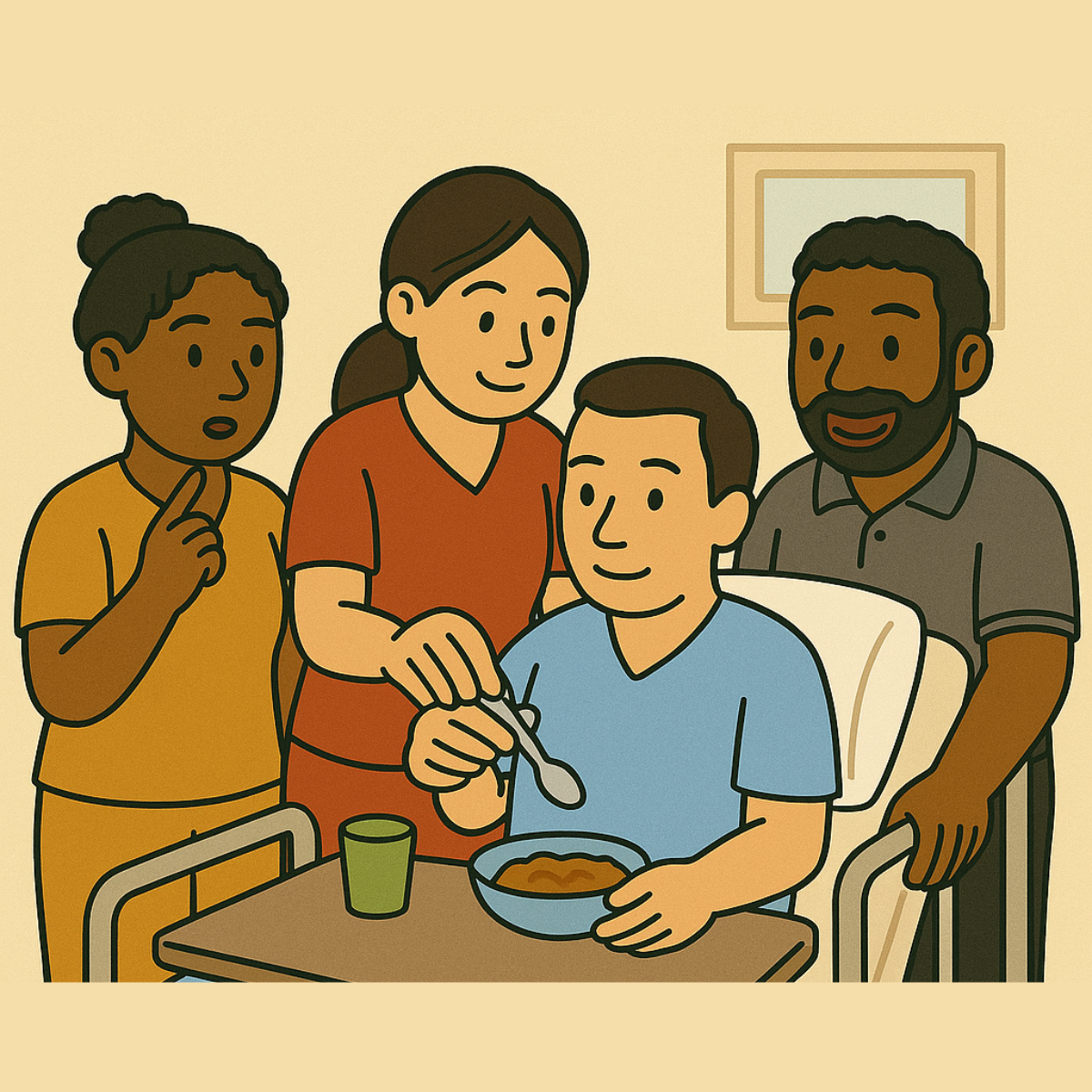
    You walk into the therapy room, spoon in one hand, visual schedule in the other—and there’s a toddler across from you turning their head, refusing every bite.

    Your first instinct? Panic.

    But here’s the truth: if you’re a new speech-language pathologist (or SLPA) stepping into feeding therapy, you’re not alone in feeling unsure.

    Feeding therapy is incredibly rewarding—but also complex. You’re not just helping a child eat. You’re supporting sensory processing, oral motor development, emotional regulation, and family dynamics.

    It can feel overwhelming at first—but with the right tools, guidance, and mindset, you will find your rhythm.

    👉 Starting your feeding therapy journey? This guide breaks down practical feeding therapy tips for SLPs so you can walk into sessions with more confidence—and less stress.


    What Feeding Therapy Really Involves (Beyond “Getting Kids to Eat”)

    Feeding therapy tools used by SLPs

    Feeding therapy goes far beyond “getting kids to eat more.”

    As an SLP, you’re addressing:

    • Oral motor strength and coordination
    • Sensory processing and food tolerance
    • Swallow safety and efficiency
    • Food variety and progression
    • Caregiver education and carryover

    Across settings—NICU follow-ups, early intervention, outpatient—the goal stays the same:

    ➡️ Safe intake
    ➡️ Skill development
    ➡️ Family involvement

    📚 External Resource:

    For a foundational overview, explore ASHA’s Pediatric Feeding and Swallowing Guidelines


    Feeding Therapy Tools Every SLP Should Start With

    Beginner feeding therapy tools for pediatric SLPs.

    The good news? You don’t need a full clinic closet to get started.

    Here are beginner-friendly essentials:

    These tools help:

    • Improve oral awareness
    • Build jaw strength
    • Reduce sensory defensiveness
    • Support developmental feeding skills

    You’re mid-session, the child is refusing the spoon, gagging—and you’re internally thinking: “Am I doing this wrong?”

    Instead of pushing bites, you shift.

    You introduce something for exploration instead of intake.

    👉 Tools like the ARK Z-Vibe or Chewy Tubes can reduce defensiveness and help the child tolerate input before expecting them to eat.


    Understand Oral Motor & Sensory Foundations First

    SLP guiding oral motor development using therapy tools, as part of sensory feeding strategies

    Before focusing on what a child eats, focus on how they process food.

    Common underlying issues:

    • Weak jaw or tongue strength
    • Hypersensitive gag reflex
    • Texture aversions
    • Limited oral exploration

    Your role is to make feeding:

    ✔️ Play-based
    ✔️ Low pressure
    ✔️ Exploratory

    📚 External Resource:

    Curious about integrating sensory strategies? Check out the SOS Approach to Feeding


    You’re trying to introduce new textures—but every attempt ends in refusal or meltdown.

    Instead of jumping textures, you scale back.

    👉 Using tools like Maroon Spoons or silicone training spoons can reduce gag triggers and help build tolerance gradually.


    Create a Consistent Mealtime Setup (Reduce Chaos, Increase Participation)

    Structured mealtime setup in pediatric feeding therapy with feeding therapy tips for SLPs

    Structure matters more than we think.

    Simple adjustments can change everything:

    • Use visual schedules
    • Keep the same chair and setup
    • Limit distractions
    • Separate textures visually

    👉 Tools like the ezpz Mini Mat can help visually organize meals and reduce sensory overload.

    Consistency reduces anxiety → increases engagement.


    You notice the child does better some days—but worse others.

    What changed?

    The environment.

    Same food. Same therapist. Same goal.

    But one small difference:
    ➡️ the setup

    👉 Using something like the ezpz Mini Mat can help separate textures, reduce overwhelm, and make mealtimes feel more predictable.

    Sometimes it’s not the intervention—it’s the environment.


    Coach Caregivers Without Overwhelming Them

    Speech therapist coaching parent on home feeding strategies and educating on oral motor feeding therapy

    Feeding therapy is emotional for families.

    Your job isn’t just intervention—it’s support.

    Teach caregivers to:

    • Recognize subtle refusal cues
    • Avoid pressure-based language
    • Accept non-linear progress

    A simple shift from:

    ❌ “You need to eat this”
    ➡️ ✅ “Let’s try one small bite”

    If caregivers are struggling with carryover at home, a resource like Helping Your Child with Extreme Picky Eating can reinforce strategies in a way that feels practical—not overwhelming.


    You give great strategies—but nothing carries over at home.

    Caregivers feel overwhelmed.

    👉 Simple structured resources and guides (like quick sheets or structured books)

    Sometimes simplicity—not complexity—is what sticks.


    Know When to Refer (Strong Clinicians Collaborate)

    Collaborative team discussion for feeding therapy referrals

    Feeding therapy is team-based.

    Refer when needed:

    • OTs → posture, sensory processing, self-feeding skills
    • Registered Dietitians → nutritional intake, growth, and feeding plans
    • GI/ENT → underlying medical, reflux, or structural concerns

    📚 See interdisciplinary model:

     Stanford Children’s Interdisciplinary Feeding Program


    Your Confidence Will Grow With Every Bite

    Feeding therapy is:

    • Messy
    • Creative
    • Non-linear
    • Deeply rewarding

    You don’t need to know everything right away.

    Start with:

    ✔️ One child
    ✔️ One tool
    ✔️ One goal


    🛒 Affiliate Picks for Busy Therapy Days

    Documentation & Workflow


    Treatment Tools


    Productivity

    • Session planners
    • Timers

    Comfort / Lifestyle

    • Water bottles
    • Supportive footwear

    💡 What I Actually Recommend

    If you’re trying to stay on top of productivity without burning out, a few small tools can make a big difference. I’ve linked a couple of things throughout this post that I personally think are worth having—especially on busy days.


    🗣️ ST Month Feature — A Small Thank You

    Before anything else—this month is for you.

    To the SLPs and SLPAs showing up every day…
    navigating complex cases, adapting on the fly, managing behaviors, documentation, caregiver expectations—and still finding a way to make sessions meaningful…

    We see it.

    We see the patience.
    The creativity.
    The problem-solving that happens in real time.

    And the effort it takes to keep going—even on the days that don’t go as planned.

    So this is a small thank you.


    🗣️ Built With Real SLP Input — Not Guesswork

    I also want to be transparent for a second.

    I’m not an SLP.

    But this guide—and especially the ST Pocket Guide—wasn’t created in isolation.

    I took the time to:

    • Learn directly from SLP peers
    • Observe real workflows across settings
    • Pay attention to what actually slows sessions down
    • Identify what clinicians wish they had in the moment

    This wasn’t guesswork—it was built from real-world input.

    And honestly—that’s exactly why I’m sharing it during ST Month.

    👉 Not as something “perfect”
    👉 But as something practical

    Something you can actually reach for mid-session—when time is tight and your brain is juggling ten things at once.


    📘 About the ST Pocket Guide

    This guide was created to be:

    • Quick to reference during sessions
    • Easy to navigate under pressure
    • Focused on what actually matters clinically

    👉 ST POCKET GUIDE (PAPERBACK)


    💬 And I Mean This Genuinely…

    If you pick it up and think:

    “Something’s missing”
    “This could be better”
    “This isn’t how we do it in my setting”

    I want to hear that.

    Because this isn’t just a product—it’s something I want to build with the field.

    I’m not an SLP.

    But this guide—and especially the ST Pocket Guide—wasn’t created in isolation.

    I took the time to:

    • Learn directly from SLP peers
    • Observe real workflows across settings
    • Pay attention to what actually slows sessions down
    • Identify what clinicians wish they had in the moment

    This wasn’t guesswork—it was built from real-world input.

    And honestly?

    That’s exactly why I’m putting it out there during ST Month.

    👉 Not as something “perfect”
    👉 But as something practical

    Something you can actually use in a session when time is tight and your brain is juggling 10 things at once.


    📥 Therapy Support You Can Use Right Now

    If you want something free to start with:

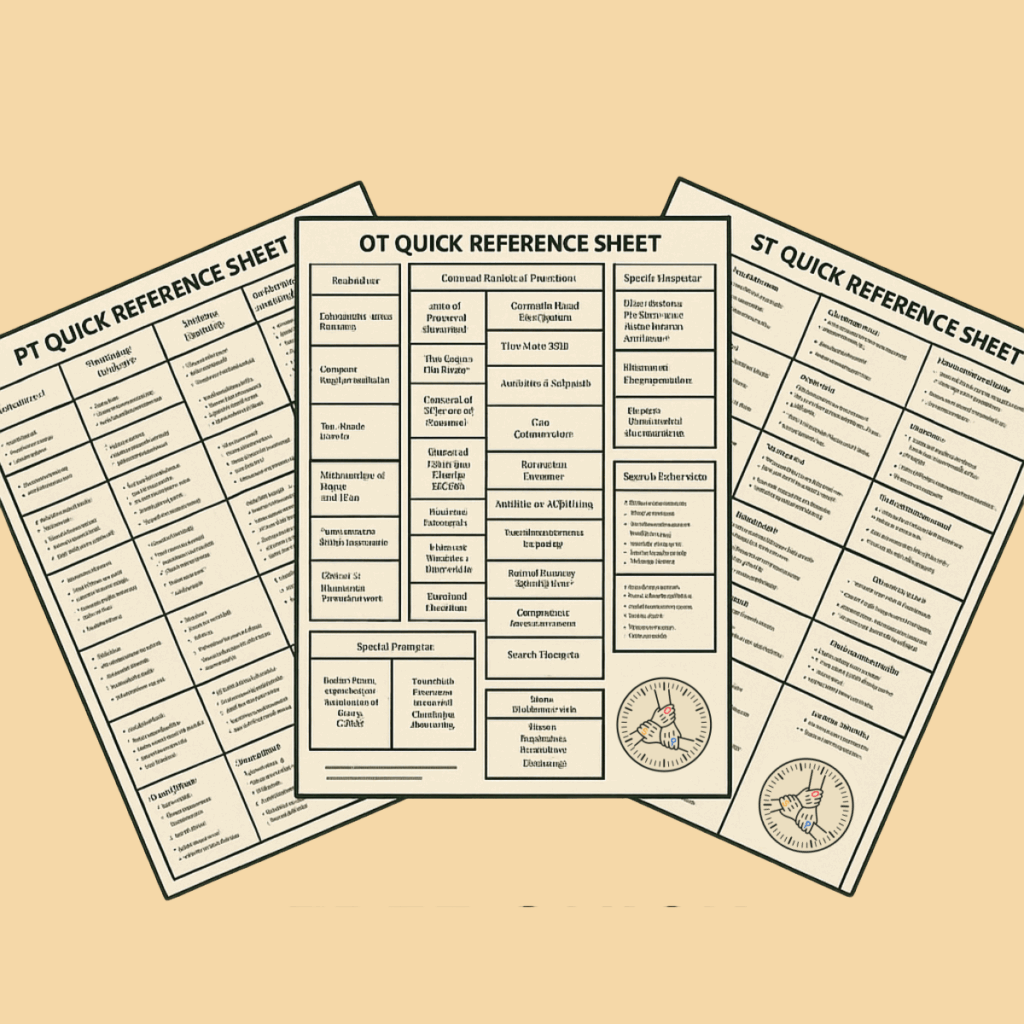
    👉 Download your OT/PT/ST Quick Reference Sheets

    These are designed for:

    • Quick session support
    • Easy carryover
    • Real clinical use

    ⚠️ Disclaimers

    Affiliate Disclosure:
    This post contains affiliate links. If you choose to purchase through them, I may earn a small commission at no extra cost to you. I only recommend tools that support real therapy practice.

    Medical Disclaimer:
    This content is for educational purposes only and does not replace clinical judgment or individualized patient care. Always assess and treat based on each patient’s needs and collaborate with appropriate professionals when necessary.


    💬 Let’s Learn From Each Other

    What’s one feeding therapy strategy or tool that helped you feel more confident early on?

    Or—if you’ve worked in feeding—what’s something you wish someone told you when you were just starting out?

    Drop it below 👇

    Originally posted 2025-05-21 04:00:54.

  • 17. Minority Mental Health Awareness: Why Rehab Therapists Are Essential Allies

    17. Minority Mental Health Awareness: Why Rehab Therapists Are Essential Allies

    The Story Behind the Stats — & Why It Matters

    You’ve just finished a productive home-visit. Your client—a Latina grandmother recovering from a hip fracture—quietly mentions how anxious she’s felt since surgery. She hasn’t told her primary doctor yet; the last time she tried, “they just gave me another pill.” Stories like hers are common: mental-health needs are spoken, yet unmet, across many minority communities.

    July is Minority Mental Health Awareness Month, and the numbers remain sobering. In 2023, serious psychological distress touched 11.4 % of Black adults, 13.8 % of Hispanic adults, and a striking 15.4 % of American Indian/Alaska Native adults.Bay Area Clinical Associates Yet people of color are still less likely to receive culturally responsive mental-health care—and more likely to hit barriers when they try. Only 36 % of Hispanic and 39 % of Black adults who reported fair or poor mental health received services in the prior three years, compared with 50 % of White adults.KFF


    How Barriers Widen the Mental-Health Gap

    • Structural hurdles: insurance coverage, high out-of-pocket costs, and limited clinicians of similar background.
    • Stigma & mistrust: past negative encounters make it harder to seek help.KFF
    • Language & cultural mismatch: assessments and education materials often ignore linguistic nuance or cultural beliefs.

    Where Rehab Therapy Fits In

    Rehab clinicians already address cognition, daily routines, and quality of life—touchpoints that naturally overlap with mental-health goals:

    • OT, PT & ST interventions reduce psych distress. An updated 2024 meta-analysis confirmed that cognitive rehabilitation significantly improved depressive symptoms and executive function in adults with depression.PubMed
    • Culturally tailored OT services matter. A 2025 qualitative study found that perinatal OT practitioners identified stigma, fear, and language as primary barriers for ethnic-minority mothers—yet also uncovered enablers such as peer support and community partnerships.PubMed
    • Digital therapeutics expand reach. In 2024 the FDA cleared Rejoyn, the first app-based depression treatment, illustrating how tech can supplement care when clinician access is limited.TIME


    Building Culturally Competent Care (OT | PT | ST)

    Action ideas:

    1. Screen & listen
      Use brief, validated tools in the client’s preferred language and follow up with open-ended questions.
    2. Co-create goals
      Embed cultural values (e.g., faith practices, multigenerational caregiving) into your functional objectives.
    3. Leverage interdisciplinary teamwork
      Pair mobility sessions with mindfulness coaching, or embed communication strategies into ADL training.

    Affiliate Disclosure

    Some links below are affiliate links. If you choose to purchase, I may earn a small commission—at no extra cost to you. Your support helps me create free quick-reference sheets, blog posts, and upcoming pocket guides.


    Empower Clients With At-Home Mental-Health Tools

    Speech-language pathologist shares a bilingual visual schedule with an Indigenous father and son, both wearing braids. They sit in a modest living room decorated with cultural textiles, pottery, and a lit candle, with a family photo on the wall.

    Recommend evidence-informed, budget-friendly items your readers can find via the blog’s affiliate shop:

    NeedTry ThisWhy It Helps
    Daily reflectionGuided mental-health journalPrompts normalize emotional check-ins.
    Track moods & triggersAnxiety/depression plannerVisual patterns make symptom trends obvious.
    In-session groundingGrounding card deckQuick 5-4-3-2-1 cues to re-center.
    Label feelingsPocket emotion wheelSupports emotional literacy across ages.

    Pro-tip: Encourage clients to bring these tools to therapy so you can practice using them together.


    Stock Your Therapist DEI Toolkit

    Flat-lay image showing a folded weighted blanket, a BIPOC affirmation card deck, lavender essential oil roller, an open journal reading ‘Today, I showed up for myself,’ and a white diffuser on a light wood surface.

    DEI stands for Diversity, Equity, and Inclusion—a framework aimed at ensuring fair representation, opportunity, and a sense of belonging for individuals from historically underrepresented or marginalized groups.(en.wikipedia.org)

    Invest in resources that strengthen culturally responsive care:


    Inclusive Communication & Sensory Aids

    Occupational Therapist in red scrubs sits at eye level with a young Black boy on a colorful therapy mat. They use a feelings chart and fidget tools during the session, while the child’s mother, wearing jeans and an orange shirt, watches nearby with a smile.

    Sometimes the simplest low-tech tool removes the biggest barrier:

    Pair these with tactile items like therapy putty or a sensory kit to weave regulation into movement or speech practice.


    Final Thoughts & Next Steps

    Speech Therapy Assistant sits at a desk with diversity therapy cards, a ‘Health Disparities Manual,’ and a checklist labeled ‘Inclusive Goals This Week.’ A framed quote on the wall reads ‘Representation Heals,’ while a speech therapist stands blurred in the background reviewing paperwork.

    Rehab therapists sit at a powerful intersection of physical function, communication, and mental well-being. By merging culturally competent practice with evidence-based self-care tools, we can shrink the mental-health gap for BIPOC clients—one therapy session at a time.

    👉 Grab Your Free Quick Reference Sheets

    Need fast clinical tips? Download my OT, PT & ST quick sheets and check out the published Occupational Therapy Pocket Guide—now on Amazon! The Speech Therapy Pocket Guide drops later this month, and the Physical Therapy edition arrives in October.

    Question for you: What’s one culturally responsive strategy you’ve added to your rehab sessions? Share in the comments so we can learn together!

    Originally posted 2025-07-22 02:47:54.

  • 8. Aphasia After Stroke: A Guide for Therapists and Caregivers

    8. Aphasia After Stroke: A Guide for Therapists and Caregivers

    6-minute read

    Affiliate Disclosure: This post contains affiliate links. As an Amazon Associate, I earn from qualifying purchases—at no extra cost to you. I only recommend products I trust and believe can truly help.


    When Words Get Stuck: Understanding Stroke and Aphasia

    A stroke happens when blood flow to a part of the brain is blocked or disrupted, which deprives brain cells of oxygen and nutrients. When brain cells die—often within minutes—it can affect everything from movement to memory to speech.

    There are three main types of strokes:

    • Ischemic Stroke – The most common, caused by a blocked artery.
    • Hemorrhagic Stroke – Caused by a blood vessel rupture that leads to bleeding in the brain.
    • Transient Ischemic Attack (TIA) – A “mini-stroke” with temporary symptoms due to a brief blockage.

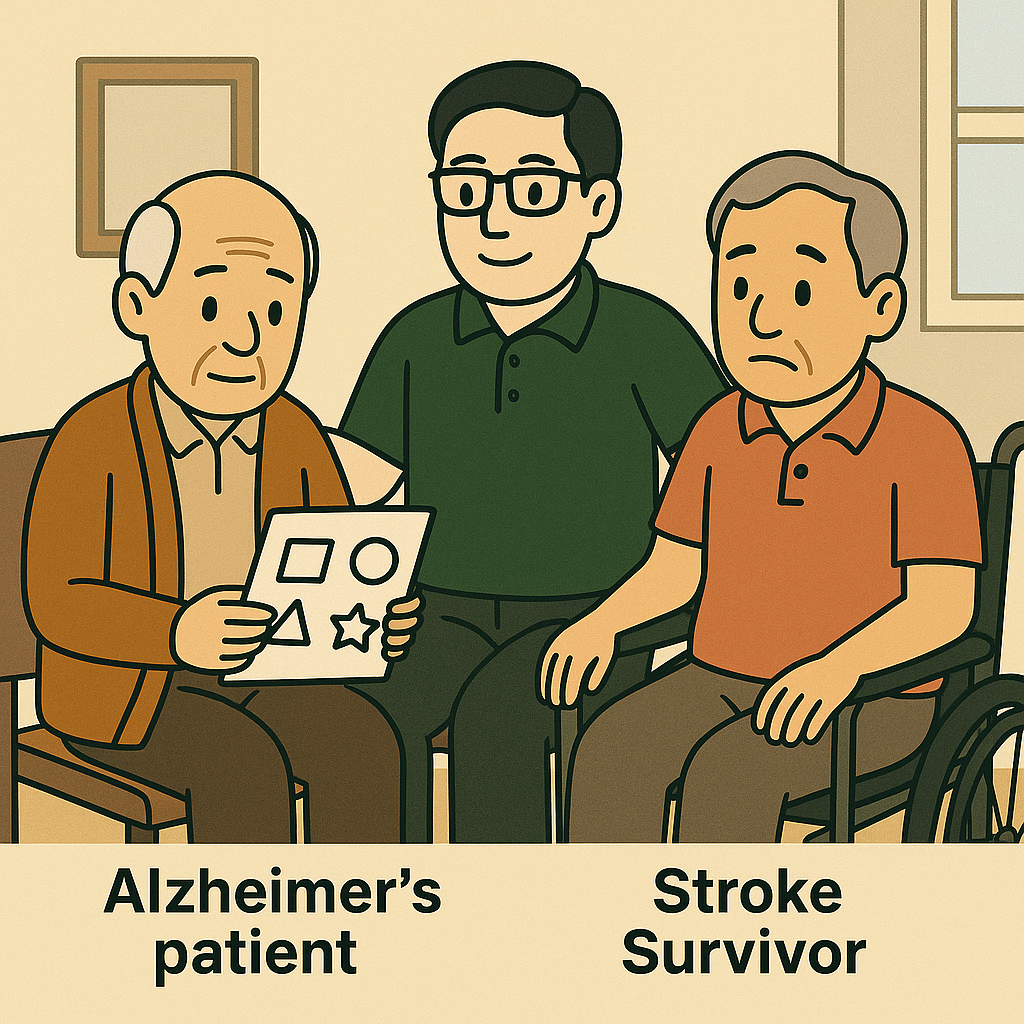
    When a stroke affects the left side of the brain—especially areas like Broca’s or Wernicke’s, which control language—it can lead to aphasia: a communication disorder that disrupts the ability to speak, understand, read, or write.

    And that’s what we’ll focus on today: how therapists and caregivers can support someone with aphasia after stroke using practical tools, strategies, and empathy.


    Aphasia Isn’t About Intelligence—It’s About Connection Loss

    Diagram of different types of aphasia and their communication effects

    Aphasia can be confusing—especially when the person still “knows” what they want to say but just can’t get the words out. Here’s a breakdown of common types of aphasia in everyday terms:

    • Broca’s Aphasia (Expressive): You know what you want to say, but can’t find the words. Speech is slow and effortful.
    • Wernicke’s Aphasia (Receptive): Words flow easily, but they may not make sense—and it’s hard to understand others.
    • Global Aphasia: Severe difficulties with both speech and comprehension.
    • Anomic Aphasia: Trouble naming objects or finding the right word.

    Understanding what type of aphasia someone has helps guide therapy and communication strategies.

    Learn more about aphasia types – National Aphasia Association
    Affiliate Link: EZ Speech Communication Board – Easy-to-use board to support basic needs and emotions.


    Therapy That Works: Rebuilding Language, One Word at a Time

    Speech-language pathologist using visual aids with aphasia patient

    Supporting someone with aphasia means engaging the brain in communication—over and over again. Repetition, cues, and functional practice are key.

    Therapists may use:

    • Script training with short, everyday phrases
    • Picture-based communication aids
    • Singing or rhythm-based speaking (melodic intonation therapy)
    • AAC devices for those with more severe needs

    Helpful Tools to Try:


    Caregivers Make a Big Difference—Here’s How

    Caregiver helping stroke survivor with visual communication aid

    If you’re supporting someone at home, know this: your patience and presence matter just as much as therapy.

    Try these communication-friendly habits:

    • Speak slowly and clearly
    • Use simple, direct phrases
    • Ask yes/no questions when possible
    • Use written words, gestures, or images
    • Be patient—let them finish their thought

    Tools That Help at Home:


    Assistive Tech That Supports Speech Recovery

    Tablet with AAC app used for aphasia communication

    Modern tools can offer a lifeline when words are hard to come by. These devices can be used both in therapy sessions and at home.

    Recommended tools include:

    • Tablets with AAC apps (like Speech Assistant or Proloquo2Go)
    • Voice recorders to practice speech or capture reminders
    • Adaptive tools to support independence in daily living

    Recommended Products:


    Where to Turn for Trusted Information and Help

    Collection of books and therapy resources for aphasia support

    There are excellent organizations that offer ongoing support, education, and free resources for both professionals and families:

    Book Highlight:


    You Don’t Have to Do This Alone

    Aphasia may feel like a loss of connection—but it doesn’t have to be permanent. Through therapy, daily practice, and support from those who care, recovery is always possible. Even small gains in communication can make a big difference in quality of life.


    Download Your Free Quick Reference Sheets

    3 Quick Sheet References

    Stay prepared in the clinic or at home with printable cheat sheets for OT, ST, and PT.


    Need More Than a Quick Sheet?

    The Occupational Therapy Pocket Guide is now available!

    Coming soon:

    • Speech Therapy Pocket Guide – May
    • Physical Therapy Pocket Guide – October

    These guides go deeper than a handout and are built for real-world therapy.


    We Want to Hear From You

    Have you ever worked with or cared for someone with aphasia?
    What communication strategy helped the most? Share your story in the comments—we learn best when we learn together.

    Speech therapist, caregiver, and patient sharing communication strategies in a relaxed, supportive conversation setting.

    Originally posted 2025-05-15 12:44:59.

  • 7. How Rehab Therapists Can Promote Mental Health: 7 Practical Tips

    7. How Rehab Therapists Can Promote Mental Health: 7 Practical Tips

    7-minute read

    Affiliate Disclosure:

    As an Amazon Associate, I earn from qualifying purchases. This means if you click a product link and make a purchase, I may receive a small commission—at no extra cost to you. I only recommend products I personally use or believe are helpful in therapy.


    Introduction: It’s Not Just the Body We’re Treating

    If you’ve been in the therapy world long enough, you’ve probably had that moment: your client breaks down mid-session, shares something heavy, or just zones out with that distant look. And suddenly, the exercise or language drill you were working on doesn’t feel like the real priority anymore.

    As rehab therapists, we aren’t mental health providers—but we are people who spend a lot of time with our clients. We notice changes. We build trust. We often see sides of people that others don’t. And yes, we can absolutely play a role in supporting their mental health.

    Here are seven approachable, research-backed ways to do just that.


    1. Make Trauma-Informed Care Your Default

    You may not always know your client’s history—but chances are, many of them have faced trauma. Whether it’s a stroke survivor coping with a sudden loss of independence or a child with complex medical trauma, our clients bring invisible wounds into the therapy space.

    A trauma-informed approach means offering consistent routines, choices, and clear explanations. Even small gestures—like giving a client control over the order of activities—can make therapy feel safer.

    Try This: A simple visual support tool like a feelings flip chart can give clients a way to express emotions they may not have words for.

    Learn more about trauma-informed care from NCTSN.


    2. Create a Calm Space That Invites Regulation

    Think of your therapy space: does it promote calm—or chaos? A sensory-friendly environment can make a huge difference, especially for clients dealing with anxiety, ADHD, or overstimulation.

    That doesn’t mean a full makeover. A few thoughtful additions—like a small aromatherapy diffuser, a decluttered workspace, or natural light—can help regulate emotions. A weighted lap pad works wonders for grounding, especially in pediatric or neurodivergent sessions.

    Bonus: A calm environment benefits you, too.


    3. Sprinkle in Mindfulness and Grounding Tools

    Mindfulness isn’t just yoga and silence. In rehab, it might look like a guided deep breath, a pause between transitions, or a grounding activity before a challenging task.

    Quick mindfulness cards like these are perfect for adding a reflective moment between tasks. They work across age groups, especially when adapted into visuals or movement.

    You can even build these into treatment goals: sustained attention, emotional regulation, and even functional communication.

    Explore more mindfulness practices from Greater Good Science Center.


    4. Build Trust Through Compassionate Communication

    Therapeutic rapport isn’t fluff—it’s the foundation of everything we do. Our clients need to feel heard, understood, and safe, especially when they’re working through something hard.

    Try weaving in open-ended questions, reflective statements, and emotion-based vocabulary. A visual reminder like the “How Are You Feeling Today?” chart on your wall can help both kids and adults express themselves during sessions.

    This is where our skillset overlaps with mental health—through empathy, clarity, and patience.


    5. Use Activity as a Safe Outlet for Emotions

    Rehab therapy can be deeply emotional, whether it’s frustration over slow progress, grief from a new diagnosis, or the joy of regained independence.

    Build in ways for clients to release or express what they’re feeling. Use creative outlets like journaling, drawing, or storytelling during sessions. For pediatric clients, this could be puppet play or pretend scenarios. For adults, it might be reflective prompts or role-play.

    Keeping your own self-care journal on hand also models emotional processing in a subtle, powerful way.


    6. Be Aware of Burnout—In Clients and Yourself

    Clients with chronic or long-term rehab needs often show signs of burnout: loss of motivation, irritability, even hopelessness. We can help by adjusting expectations, validating their experiences, and celebrating small wins.

    But therapist burnout is real, too. We give a lot, emotionally and physically. Add in productivity pressures, and it’s no wonder burnout rates are rising.

    Build small moments of care into your day—a mindful pause, a short walk, even a faux plant on your desk to brighten your view. It’s okay to protect your energy. Your clients will benefit from it.


    7. Normalize Help and Know When to Refer

    Mental health doesn’t have to be taboo in rehab settings. Normalize talking about feelings, struggles, and resources. When you spot red flags, don’t ignore them—refer.

    You don’t have to do it all. Just be someone who notices.

    Create a simple resource list with local therapists, support groups, or mental health hotlines. Sites like MentalHealth.gov and Psychology Today are great starting points for finding professional support.


    Conclusion: A Little Goes a Long Way

    We may not be mental health professionals—but as rehab therapists, we’re often a trusted presence during tough times. The way we speak, listen, and show up matters. Sometimes just being there—consistently and compassionately—is the best support we can offer.

    Let’s keep showing up for our clients—not just as clinicians, but as humans.


    Grab Your Free Quick Reference Sheets

    Designed for OT, PT, and STs who want smart tools, not more paperwork.
    Subscribe to the newsletter to get your free Quick Reference Sheets—perfect to keep by your side during sessions.


    Looking for More Clinical Tools?

    Explore the Productive Rehab Therapist Pocket Guide Series for expanded tools and structured quick references:

    • OT Pocket Guide – Out now! Available on Amazon, in
    • ST Pocket Guide – Launching this month!
    • PT Pocket Guide – Releasing October 2025

    Stay organized, empowered, and confident—whether you’re new to the field or a seasoned therapist.


    Originally posted 2025-05-13 03:00:00.

  • 6. Helping Patients with ALS Communicate: 6 Tips from a Rehab Therapist

    6. Helping Patients with ALS Communicate: 6 Tips from a Rehab Therapist

    7-minute read

    This post contains affiliate links. If you purchase through these links, I may earn a small commission—at no extra cost to you. I only recommend tools I believe are helpful and relevant for patients, therapists, and caregivers.

    Introduction: When Words Become a Lifeline

    Losing the ability to speak is one of the most painful changes that can come with ALS. But communication doesn’t have to stop there—and it shouldn’t. For people living with ALS, being able to express themselves means holding onto their voice, their choices, and their identity.

    As a rehab therapist, I’ve seen firsthand how the right support can open doors to connection, even as speech becomes more difficult. Whether you’re a caregiver, therapist, or loved one, these six communication tips can help you support someone with ALS in ways that are both practical and deeply meaningful.


    Fast Facts About ALS

    ALS symptoms and age chart infographic

    Before we jump into the tools and strategies, let’s cover the basics:

    • What is ALS?
      ALS (amyotrophic lateral sclerosis) is a progressive neurodegenerative disease that affects nerve cells in the brain and spinal cord. It weakens voluntary muscles, including those needed for talking, eating, and moving.
    • Who gets ALS?
      Most people are diagnosed between ages 40 and 70, with the average age around 55. It’s rare, but can also affect younger or older individuals.
    • Is ALS always genetic?
      No. About 90–95% of cases are sporadic, meaning no known family history.
    • Does ALS affect the mind?
      In most cases, cognition is preserved—even as speech and mobility decline.
    • Does everyone with ALS lose their voice?
      Many do over time, especially with bulbar-onset ALS. But with tools and planning, communication can continue in different forms.

    Source: CDC ALS Facts

    Stages of ALS and Communication Changes

    Understanding where someone is in the ALS journey can help tailor communication support. Here’s a simplified breakdown:

    StageCommon SignsCommunication Support
    EarlyMild slurring, some limb weaknessWriting tools, letter boards, voice banking
    MiddleNoticeable speech and hand weaknessAAC devices, voice amplifiers
    LateSevere speech and mobility lossEye gaze systems, pre-programmed AAC tools

    1. Start Simple: Use Writing Tools and Communication Boards

    ALS patient using letter board to communicate

    In the early stages, speech may be slurred or tiring, but hand control is usually still intact. That makes low-tech tools like:

    a great place to start.

    Why it helps: These tools are quick, reliable, and allow people to express needs without complicated setup.

    Recommended Products:


    2. Make Their Voice Louder: Try a Voice Amplifier

    Voice amplifier being used to support ALS communication

    If someone’s voice becomes soft but still functional, a portable voice amplifier can help. It’s especially useful during family gatherings or doctor visits.

    Recommended Product:

    Therapist Tip: Test out different microphone positions and volumes to prevent feedback and make conversations easier for everyone.


    3. Use AAC Devices for Ongoing Communication

    AAC device being used by ALS patient with therapist support

    As ALS progresses, speech may become hard to understand—or disappear completely. That’s when AAC (Augmentative and Alternative Communication) steps in.

    AAC devices can include:

    Recommended Products:

    Need to Know: These tools work best when set up before communication becomes too limited. An SLP (speech-language pathologist) can guide the process.


    4. Go Hands-Free: Try Eye-Gaze or Head-Control Technology

    ALS patient using eye gaze to type message on screen

    When hand movement is no longer possible, tech doesn’t give up—it adapts.

    Eye-gaze systems and head-controlled mice let users move a cursor with their eyes or head and click to speak, type, or control their environment.

    Recommended Product (Head-controlled alternative):

    These systems can take some setup and training, but once in place, they empower full communication—even in advanced stages.


    5. Keep Using Devices with Adaptive Styluses

    Mouth stylus used to navigate communication app on tablet

    If a person can’t use their fingers but still has some upper body or head movement, adaptive styluses can help them use tablets and phones.

    Options include:

    • Mouth stick styluses
    • Head-mounted or hand-mounted styluses
    • No-touch capacitive styluses

    Recommended Products:


    6. Plan Ahead with Voice Banking

    ALS patient creating custom voice bank on laptop

    One of the most meaningful things a person with ALS can do early on is record their voice before it’s lost. This is called voice banking—and the recorded clips can later be used in speech-generating devices.

    Recommended Resources:

    This process lets them speak with their own voice, even when their body can’t.


    Conclusion: Your Voice Is Still Yours

    ALS takes away many things—but with planning, creativity, and care, communication doesn’t have to be one of them. Every person deserves to express who they are, what they want, and how they feel. Whether it’s a simple letter board or an eye-controlled tablet, there are always ways to stay connected.

    Download Your Free Rehab Therapy Quick Reference Sheets

    Grab our printable OT, PT, and ST cheat sheets—great for clinics, home visits, and caregivers!

    Need More Tools? Our Rehab Therapy Pocket Guides Are Here to Help

    • OT Pocket Guide – OUT NOW!
    • ST Pocket Guide – Coming This May
    • PT Pocket Guide – Coming This October

    Each guide is packed with checklists, tips, and real-world tools for therapists and caregivers.

    Originally posted 2025-05-08 12:52:33.

  • 5. #SLPTok – How Social Media Is Finally Showing What Speech Therapists Really Do

    5. #SLPTok – How Social Media Is Finally Showing What Speech Therapists Really Do

    8-minute read

    Intro: The SLP World Is Going Viral—and It’s About Time


    If you’ve ever asked, “What does a speech therapist actually do?”—you’re not alone. For years, speech-language pathologists (SLPs) have worked quietly behind the scenes, helping clients of all ages find their voice—literally and figuratively. But now, thanks to the rise of #SLPTok on TikTok and other social platforms, the mystery is fading. Social media is finally putting a spotlight on what speech therapists really do, and spoiler alert: it’s way more than just helping kids pronounce their “R’s.”


    From AAC devices to school-based therapy, medical rehab to adult swallowing therapy, #SLPTok is showcasing the real-life work of licensed SLPs. Let’s take a closer look at how these creators are reshaping public understanding—and the tools and tips commonly associated with their specialties.


    Section 1: What Is #SLPTok and Why Is It Important?

    #SLPTok is a hashtag movement where licensed speech-language pathologists share tips, debunk myths, and show what their day-to-day really looks like. In an era of short attention spans, TikTok has become a powerful educational tool. For many, it’s the first time they’re seeing the full scope of what SLPs do—from helping a child say “mama” to teaching adults how to swallow again after a stroke.


    Why it matters:

    • It raises awareness of SLP roles in schools, hospitals, homes, and online.
    • It helps families and caregivers recognize signs of communication delays.
    • It encourages future therapists to explore non-traditional SLP careers.

    Section 2: Meet the SLPs of TikTok (And the Tools They Recommend)

    This post contains affiliate links. If you click on a link and make a purchase, I may earn a small commission—at no extra cost to you. As an Amazon Associate, I earn from qualifying purchases. I only recommend tools I trust or those used by licensed SLPs.

    Here are eight standout SLPs from TikTok, each representing a unique specialty—plus affiliate-linked tools you can explore to learn more or support the journey.

    1. Ms. Rachel (@msrachelforlittles): Pediatric / Early Intervention

    Beloved by parents and toddlers alike, Ms. Rachel uses music and repetition to support language development. Her content is often recommended by early intervention SLPs.

    Tools inspired by her approach:


    2. Brenda Volk (@spillthespeech)School-Based SLP

    Brenda Volk, known as @spillthespeech on TikTok, is a seasoned school-based speech-language pathologist who shares invaluable insights into the daily life of an SLP in educational settings. Her content includes practical strategies for managing caseloads, effective therapy activities, and scheduling tips, making her a go-to resource for fellow SLPs and educators.


    Tools inspired by her approach:


    3. Chung Brewer, CCC-SLP (@adultspeechtherapy.co): Geriatric SLP

    Chung Brewer is a certified speech-language pathologist who specializes in adult and geriatric care. Through her TikTok account, @adultspeechtherapy.co, she shares valuable resources and therapy ideas tailored for older adults. Her content includes accessible visual aids, cognitive-communication strategies, and swallowing therapy techniques aimed at enhancing the quality of life for seniors.


    Geriatric SLP aids:


    4. Beth Riehle (@beth_riehle): Medical SLP / Cancer Recovery

    Beth documents her powerful journey of relearning to speak after tongue cancer. Her recovery highlights the critical role SLPs play in medical rehab.


    Therapy resources:


    5. Elena (@peds_slp): Early Intervention SLP

    Elena is a certified speech-language pathologist specializing in early intervention for toddlers. Through her TikTok account, @peds_slp, she shares valuable resources and therapy ideas tailored for young children. Her content includes accessible visual aids, play-based strategies, and parent coaching techniques aimed at enhancing communication skills in toddlers.


    Early Intervention SLP aids:


    6. Chris Wenger (@speechdude): AAC & Neurodiversity

    A champion of neurodiverse learnersChris focuses on AAC and accessible education for students with complex needs.


    AAC device suggestions:


    7. Maurice Goodwin (@maurice_goodwin): Non-Traditional Career Path

    Maurice speaks candidly about transitioning from traditional SLP work to new ventures. His journey is a breath of fresh air for SLPs seeking alternative routes.


    Suggested resources:


    8. Carrie Clark (@carrie_clark_slp): AAC Specialist / Child Communication

    Carrie provides tutorials for AAC implementation at home or in therapy, demystifying complex communication tools for parents and teachers.

    Suggested tools:


    Section 3: The Bigger Picture—#SLPTok as Advocacy and Education

    Social media is more than just entertainment. For the speech community, it’s:

    • Representation: Clients see themselves reflected.
    • Education: Parents, caregivers, and future therapists learn what SLPs really do.
    • Connection: Professionals build community, reduce burnout, and promote clinical best practices.


    Credible External Resources:


    Conclusion: Give Voice to the Work That Matters

    Social media is giving SLPs the mic—and they’re using it to amplify the truth: Speech therapists do so much more than people think. Whether it’s teaching a child to ask for help, helping a stroke survivor speak again, or guiding a family through AAC options, their work changes lives.


    Want a deeper dive into practical tools and strategies SLPs use every day?


    Get Your Free Quick Reference Sheets


    Keep high-impact clinical tools at your fingertips. Perfect for students, therapists, and caregivers.


    Now Available: OT Pocket Guide

    Your go-to reference for evaluations, interventions, documentation, and more.


    Coming Soon:

    • ST Pocket Guide – May 2025
    • PT Pocket Guide – October 2025

    Each guide expands on the cheat sheets with actionable clinical strategies, simplified charts, and quick-access formats.

    Originally posted 2025-05-06 03:00:00.

  • 4. Voices Heard, Lives Changed: The Power of Speech Therapy

    4. Voices Heard, Lives Changed: The Power of Speech Therapy

    6-minute read

    As an Amazon Associate, I earn from qualifying purchases. I recommend products based on their use in speech therapy practice, industry trust, and educational value.


    Introduction: The Unsung Heroes of Communication

    Have you ever stopped to think about the power of communication? For many people—children, adults, and families—finding their voice is a challenge. That’s where Speech-Language Pathologists (SLPs) come in. These professionals help individuals speak, understand, and swallow—giving people back one of the most essential parts of life: connection.

    As we celebrate Better Speech and Hearing Month this May, let’s take a closer look at the world of speech therapy—how it works, who it helps, and how we can all support the incredible work of SLPs.


    1: What is Speech Therapy?

    Speech therapy is more than correcting a lisp or saying “r” correctly. It encompasses evaluation and treatment for:

    SLPs work in schools, hospitals, clinics, and homes—and support everyone from toddlers with speech delays to adults recovering from strokes or living with ALS.

    🔗 Learn more at ASHA: What Do Speech-Language Pathologists Do?

    💡 SLP Tool Highlight:
    Try this GoTalk 9+ Lite Touch AAC Device for clients who need a low-tech, reliable communication option.


    2: Why Better Speech and Hearing Month Matters

    May is Better Speech and Hearing Month, a time to raise awareness about communication disorders and the professionals who treat them.

    This month emphasizes:

    • Early identification of speech, language, and hearing issues
    • Accessible care for all age groups
    • Appreciation for SLPs who change lives every day

    Whether you’re a caregiver, client, student, or therapist—this month is your opportunity to speak up about the value of communication.

    🔗 Visit ASHA: Better Hearing and Speech Month to explore campaigns and resources.


    3: The Life-Changing Work of SLPs

    SLPs support people through every stage of life. Their work is diverse, impactful, and often life-altering.

    In Early Intervention and Schools:

    • Helping children meet speech and language milestones
    • Supporting IEP goals and academic success
    • Providing visuals, social stories, and play-based therapy

    🎒 Must-Have:
    For SLPs seeking a versatile and engaging tool for articulation therapy, the Say & Play Mini Objects Set offers over 300 miniature items categorized by speech sounds. This comprehensive kit supports various therapeutic activities, from sound production to language expansion.

    In Medical and Adult Rehab:

    • Assisting stroke survivors and TBI patients regain speech
    • Providing strategies and support for swallowing safety
    • Using tools like tongue depressors or FEES studies to evaluate function

    In All Settings:

    • Empowering voices through connection, advocacy, and individualized care

    4: How You Can Support SLPs This Month

    Want to join the celebration? Here’s how:

    ✅ Thank an SLP — A kind word or social media shoutout goes a long way.
    ✅ Share success stories — Celebrate clients and families who’ve overcome communication barriers.
    ✅ Donate — Support nonprofits that provide speech therapy services to underserved populations.
    ✅ Wear Awareness Gear — Pins, posters, and shirts show your support.
    ✅ Talk About It — Spread the word about early intervention and hearing protection.

    🎧 Working with sensory-sensitive clients? Try Loop Quiet Earplugs or Kids Earmuffs to reduce auditory distractions.


    5: Tools & Resources for SLPs and Caregivers

    Whether you’re a therapist or caregiver, the right tools make all the difference.

    🗂 Top Tools I Recommend:


    🎁 Free Quick Reference Sheets

    Print-friendly, intervention-based cheat sheets for busy rehab therapists.
    Designed for SLPs, OTs, and PTs.


    📘 More Resources from Our Therapy Library:

    • OT Pocket Guide: Available now as eBook and Paperback
      (Packed with functional tools, checklists, and tips—perfect for daily clinical use.)
    • SLP Pocket Guide: Coming May 2025
    • PT Pocket Guide: Launching October 2025

    Conclusion: Let’s Give a Voice to Those Who Need It Most

    Whether it’s a toddler speaking their first words, a stroke survivor finding confidence again, or a nonverbal child learning to communicate, SLPs make it possible. Their work is not just professional—it’s personal, transformational, and deeply impactful.

    This Better Speech and Hearing Month, join us in celebrating the life-changing power of speech therapy. Download your tools, thank a therapist, and support better communication for everyone.


    Get Your Free Tools

    Download our FREE Quick Reference Sheets for OT, PT, and ST.
    Stay organized, confident, and ready for any session.

    Originally posted 2025-05-01 03:00:00.

  • 3. Your First OT Job? Here Are the Tools You’ll Actually Use

    3. Your First OT Job? Here Are the Tools You’ll Actually Use

    8-minute read

    Let’s get technical here—your first job as an OT or OTA is likely your fieldwork, which (surprise!) is typically unpaid. But whether you’re gearing up for fieldwork or just signed your first contract as a new grad, one thing’s for sure: having the right tools makes all the difference.


    This guide cuts through the clutter and gives you the actual must-haves—whether you’re stuffing your first rolling tote or looking for a thoughtful OT Month gift or starter kit. And although this list is focused on the occupational therapy fieldwork experience, physical therapists and students may find many of these tools equally helpful.

    Heads up! This post may include affiliate links, which means I might earn a small commission (at no extra cost to you) if you decide to make a purchase. I only share things I truly find helpful—thanks for supporting the blog!

    10 Amazon Must-Haves for New Grad Occupational Therapists

    Each item listed is practical, therapist-approved, and ready to support your success from your very first day.


    1. OT Pocket Reference Guide


    A quick-access, pocket-sized tool packed with evaluations, precautions, treatment ideas, and documentation tips.


    Why it’s a must: You’ll want this for those moments you blank on standard assessments or need a CPT code on the fly. Whether you’re a fieldwork student or full-time therapist, the right reference saves time, improves accuracy, and boosts your confidence when charting or brainstorming interventions.


    Recommended resource: Our very own OT Pocket Guide—created by a working therapist, designed specifically to support you during evaluations, interventions, and documentation. It’s like a clinical cheat sheet in your pocket—and it’s already helping therapists nationwide.


    Suggestion: Productive Rehab Therapist Pocket Guide for Occupational Therapy


    2. Gait Belt with Metal Buckle

    This is a non-negotiable in nearly every adult-based setting.


    Why it’s a must: You’ll need it for transfers, bed mobility, and any functional mobility training session. But more importantly—it’s essential for safety and liability protection. If a patient were to fall under your watch, a facility or supervisor will always ask: “Were you using a gait belt?” Having one is often the make-or-break factor in preventing injury (or lawsuit).


    Suggestion: Secure Transfer Gait Belt with Metal Buckle


    3. Comfortable, Slip-Resistant Footwear

    Forget fashion—go for comfort and traction.


    Why it’s a must: You’re on your feet all day, often lifting, guarding, and demonstrating movement techniques. And let’s face it—spilled drinks, recently mopped floors, or slick surfaces are very real hazards. Slip-resistant shoes help you stay upright and avoid workplace injuries, all while keeping you supported through 8+ hour shifts.

    One of my personal favorites? Slip-on, slip-resistant Skechers—easy to wear, supportive, and perfect for busy therapy days. I highly recommend giving them a try.

    Suggestion: Skechers Work Slip-On Slip-Resistant Shoes

    HOKA Bondi SR or Dansko Professional Clogs for more options.


    4. Rolling Therapy Tote or Backpack

    A game-changer for students and therapists on the move.


    Why it’s a must: Keeps your hands free while organizing everything from paperwork to sensory tools. Neatness matters—especially when you’re traveling between clinics, schools, or homes. A good rolling tote or therapist backpack helps you look prepared, professional, and efficient.


    Suggestion: Rolling Utility Tote or Therapist Laptop Backpack


    5. Blood Pressure Device (Wrist or Arm Cuff)

    Because vital signs aren’t optional.

    Why it’s a must: Blood pressure monitoring is essential during evaluations, ADL assessments, and documenting status changes. It’s smart to have your own, even if your facility supplies one—especially in busy settings where equipment isn’t always readily available.

    Whether you go the traditional route with a manual cuff and stethoscope, prefer the accuracy of an upper arm digital monitor, or need the convenience of a wrist cuff, having your own device ensures you’re always prepared.

    Suggestions:

    Two-in-one tools are fieldwork gold.

    Why it’s a must: You’ll use a pulse ox to monitor oxygen levels, especially with patients on O2 or those with respiratory issues. It’s also great for pursed lip breathing education and activity tolerance tracking. Pair it with a stopwatch to time walking tests, exercises, or ADLs—and you’ve got a power combo for cardiopulmonary care.


    Suggestion: Zacurate Pulse Oximeter + Stopwatch Combo


    7. Scrubs with Stretch & Pockets

    Comfort and function in one.


    Why it’s a must: Scrubs are basically professional pajamas—but finding the right fit with stretch and pockets will take you far. They should move with you through lifts, squats, kneels, and transitions, all while keeping you looking clean and put-together. Choose quality over quantity here!

    Suggestion: Figs Scrubs or Cherokee Workwear Stretch Scrubs


    8. HIPAA-Compliant Clipboard

    It’s more than just a writing surface—it’s privacy protection on the go.


    Why it’s a must: Store paperwork, pens, and small tools while keeping sensitive client information secure. It doubles as a mobile workstation—keep your schedule, eval templates, SOAP note prompts, or quick references inside. It also shows patients and staff that you’re organized and professional from day one.

    Suggestion: Saunders HIPAA Privacy Clipboard (aluminum) or Sooez HIPPA Privacy Clipboard (plastic)


    9. Mini Dry-Erase Board with Markers

    The underrated therapy essential.


    Why it’s a must: Useful for visual schedules, multi-step instructions, and especially helpful with patients who are hard of hearing, non-verbal, or just need a visual cue to stay on task. It’s also more eco-friendly than paper handouts and comes in clutch when you’re doing group therapy or redirecting cognitively impaired clients.


    Suggestion: 8.5×11 Magnetic Dry Erase Board

    10. Durable Goniometer Set

    If you’re in outpatient, ortho, or rehab, this is a must.

    Why it’s a must: Accurate range of motion (ROM) measurements are a staple in OT practice—from baseline assessments to progress notes and discharge planning. Having your own set means you’re never scrambling to borrow, and it’s a great tool to lend to a coworker—just make sure they give it back!

    I recommend the ASA TECHMED Goniometer Complete Set—it includes 6 pieces plus a body measuring tape, with protractors in various sizes (12″, 8″, 6″) for flexibility in different clinical situations.


    Suggestion: ASA TECHMED Goniometer Complete Set


    Conclusion: Tools Make the Therapist


    You’re stepping into a hands-on career where preparedness meets compassion. Whether you’re filling your backpack for fieldwork or prepping for your first full-time gig, having the right occupational therapy tools will elevate your practice and ease your learning curve.


    Don’t forget to grab our free quick reference sheets—built for busy therapists like you.


    And there’s more on the way—our Speech Therapy Pocket Guide drops in May, and the PT Pocket Guide is set for October, just in time for PT Month. Stay tuned for more quick-reference tools designed to support you across every stage of your therapy journey.

    Download Your Free Quick Reference Sheets

    Originally posted 2025-04-29 03:00:00.

  • 20. The Hidden Effects Of 2025’s New Professional Degree Rule

    20. The Hidden Effects Of 2025’s New Professional Degree Rule

    It hit like a bombshell on social media: “Nursing isn’t a professional degree anymore.” For many therapists — PTs, OTs, SLPs — and nurses hoping to advance their training, that message sparked fear. Would your DPT, MOT/OTD, or MSN stop counting? Would student loans dry up? As someone working in rehab (and planning content around PT/OT/SLP), I knew I had to dig deeper. Let’s walk through what’s really happening — the policy, the politics, and what it means for you, as of December 1, 2025.

    TL;DR — What You Need to Know

    In 2025, the U.S. Department of Education proposed narrowing the definition of “professional degrees” for federal loan purposes, not for licensure. Degrees in Nursing, PT, OT, SLP, PA, Public Health, Social Work, and more would be categorized as graduate degrees, losing access to the highest federal borrowing limits.

    What this does not change:
    – Your degree title
    – Your license or scope of practice
    – Accreditation of PT/OT/SLP/Nursing programs
    – Existing loan forgiveness already granted

    What it does change:
    – Reduces federal borrowing caps for many healthcare graduate programs
    – Pushes more students toward private loans, scholarships, or out-of-pocket funding
    – Raises concerns about workforce shortages and equity

    These are the verified facts as of December 1, 2025. This summary will not reflect future updates until official rulings are finalized in 2026.

    ⚠️ Medical Disclaimer: This post is meant to be educational and informational — and maybe even a little fun. If you want real answers, talk to a real person (a licensed healthcare provider or financial aid advisor) — this post can’t evaluate, diagnose, or treat.

    Calendar highlighting July 2024 beside a laptop displaying the U.S. Department of Education announcement.

    What Changed in 2025 — and Why It’s Getting So Much Attention

    In late 2025, the U.S. Department of Education (ED) — under the recently passed One Big Beautiful Bill Act (OBBBA) — proposed a sweeping redefinition of what counts as a “professional degree.” NBC4 Washington+2U.S. Department of Education+2

    Under this new classification, many graduate-level degrees — including those for nursing, physical therapy, occupational therapy, speech-language pathology, physician assistants, and others — would no longer be labeled “professional degree programs.” NBC4 Washington+2Spectrum News 1+2

    Why? According to the Department, the redefinition is tied to new limits on federal student borrowing. Only “professional program” students — e.g. medicine, law, pharmacy, dentistry — get the highest borrowing cap. Other graduate-level students (in excluded fields) face stricter limits. U.S. Department of Education+2Statesman+2

    The official regulatory shift comes as part of broader efforts under OBBBA and the associated Financial Value Transparency and Gainful Employment regulations, which began implementation July 1, 2024. FSA Partner Connect+1


    Visual representation of rising healthcare student debt compared to stable income levels.

    What “Professional Degree” Meant — and What It Means Now

    Historically, a “professional degree” under ED’s guidelines referred to degrees preparing individuals for licensure-based, often independent-practice professions — medicine (M.D.), dentistry (D.D.S./D.M.D.), law (J.D.), pharmacy, etc. U.S. Department of Education+2Nurse.com+2

    With the new rule, ED narrowed that list dramatically. The degrees still included as “professional”: medicine, pharmacy, dentistry, optometry, law, veterinary medicine, osteopathic medicine, podiatry, chiropractic, theology, and clinical psychology. NBC4 Washington+2Yahoo+2

    Excluded from the list are nursing (MSN, DNP, NP), physical therapy (DPT), occupational therapy (MOT/OTD), speech-language pathology, physician assistant, public health — and several non-health fields like social work, education, architecture, etc. NBC4 Washington+2Newsweek+2

    Important: This redefinition is for federal loan eligibility and borrowing limits. It is not a professional licensure or accreditation decision. ED clearly states that excluding a program from “professional degree” status in loan rules is not a value judgment on its legitimacy or importance. U.S. Department of Education+1
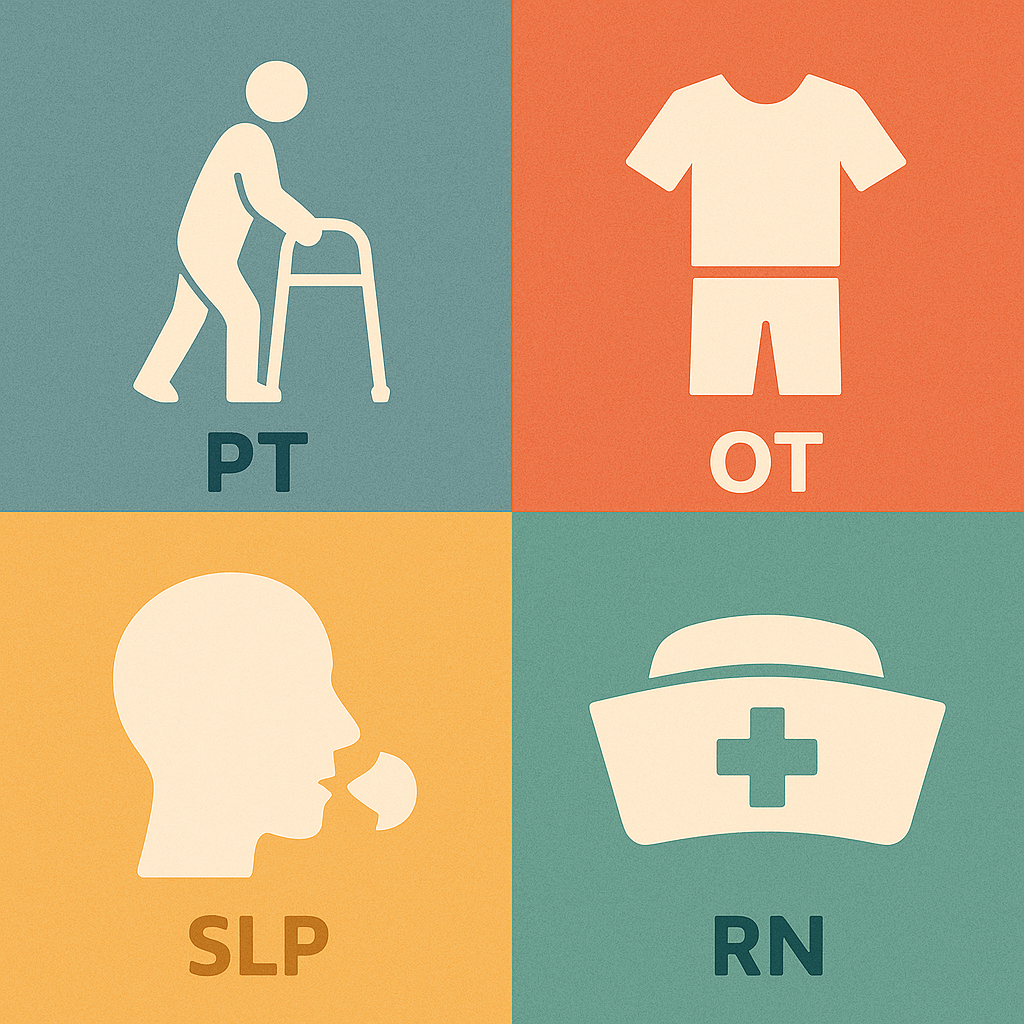

    Icons representing PT, OT, SLP, and nursing to show which professions are impacted by federal classification changes.

    Who This Affects — PT, OT, SLP, Nursing, and More

    • Graduate students (current & future) in PT, OT, SLP, nursing (MSN / DNP / NP), physician assistant, public health, social work, etc. The reclassification affects their eligibility for high-limit federal loans. NBC4 Washington+2WPR+2
    • New applicants (2026 onward) — under the soon-to-be effective loan caps and redefinition — are most vulnerable to reduced federal borrowing power. Spectrum News 1+1
    • Current students Who’ve Already Borrowed — their existing degrees remain valid; licensure and accreditation are unaffected. The change does not retroactively strip credentials.

    According to the American Physical Therapy Association (APTA), the proposed redefinition of DPT (and other health-care degrees) as merely “graduate,” not “professional,” threatens physical therapy’s recognition as a doctoring profession — potentially harming future workforce supply. American Physical Therapy Association

    Similarly, the American Nurses Association (ANA) has publicly condemned the move, warning that cutting access to robust federal loan support will worsen nursing shortages — especially in underserved communities. ANA+2The Independent+2


    Side-by-side silhouettes of healthcare students and a working clinician to show the difference in who is affected.

    What It Means for Student Loans & Financing Your Degree

    Under the new rules:

    • Graduate students in excluded programs (nursing, PT, OT, etc.) would qualify for a lower borrowing cap: $20,500 per year, with a $100,000 lifetime capNBC4 Washington+2Campus Reform+2
    • “Professional degree” students — those in ED’s narrow list — remain eligible for higher borrowing limits: up to $50,000 per year, and a $200,000 aggregate capCBS News+2U.S. Department of Education+2
    • This dramatically reduces the amount of guaranteed federal funding for many prospective therapists, nurses, and related professionals.

    Implications:

    • Students may need more out-of-pocket fundsprivate loans, or scholarships to afford grad school.
    • Higher debt burden may discourage people from entering these fields — potentially worsening workforce shortages.
    • Schools may feel pressure to lower tuition or rework funding models — but these are long-term effects, not guaranteed solutions.

    It’s important to note: the change doesn’t impact undergraduate degrees (BSN, BSc-OT, etc.). Those remain unaffected under current guidance. U.S. Department of Education+1


    What This Doesn’t Change — Licensure, Accreditation & Professional Identity

    • If you already have a DPT, MOT/OTD, MS-SLP, MSN, or similar degree, your license, credentials, and right to practice remain valid.
    • Accreditation bodies for PT, OT, SLP, Nursing, etc., are unaffected by ED’s financial-aid classification.
    • The clinical scope of practice, state licensure boards, and employer credentialing are not governed by ED’s loan-classification rules.

    So while the new classification is financially significant, especially for future students, it does not mean these professions are no longer “real” or “legitimate.”


    a person reviewing federal student loan repayment options on a laptop.

    Different Viewpoints & Controversy Around the Change

    Some people argue the new definition is just bureaucratic housekeeping — meant to curb excessive student borrowing and hold programs accountable. Indeed, ED claims that the “professional degree” label was always meant for a narrow set of high-cost, high-return vocations. U.S. Department of Education+1

    But many in the healthcare community see it differently:

    • Nursing associations warn this move could widen existing workforce shortages, especially in rural and underserved areas. ANA+2WPR+2
    • The APTA says it undermines the recognition of physical therapy as a “doctoring profession” — which could reduce interest in PT graduate education. American Physical Therapy Association
    • Some critics frame the change as a gender-biased decision, given many excluded professions are female-dominated, which may disproportionately impact women and further reduce diversity in healthcare. World Socialist Web Site+2WPR+2

    Although ED says the change is neutral, the ripple effects in education access, diversity, and workforce capacity are likely to be substantial.
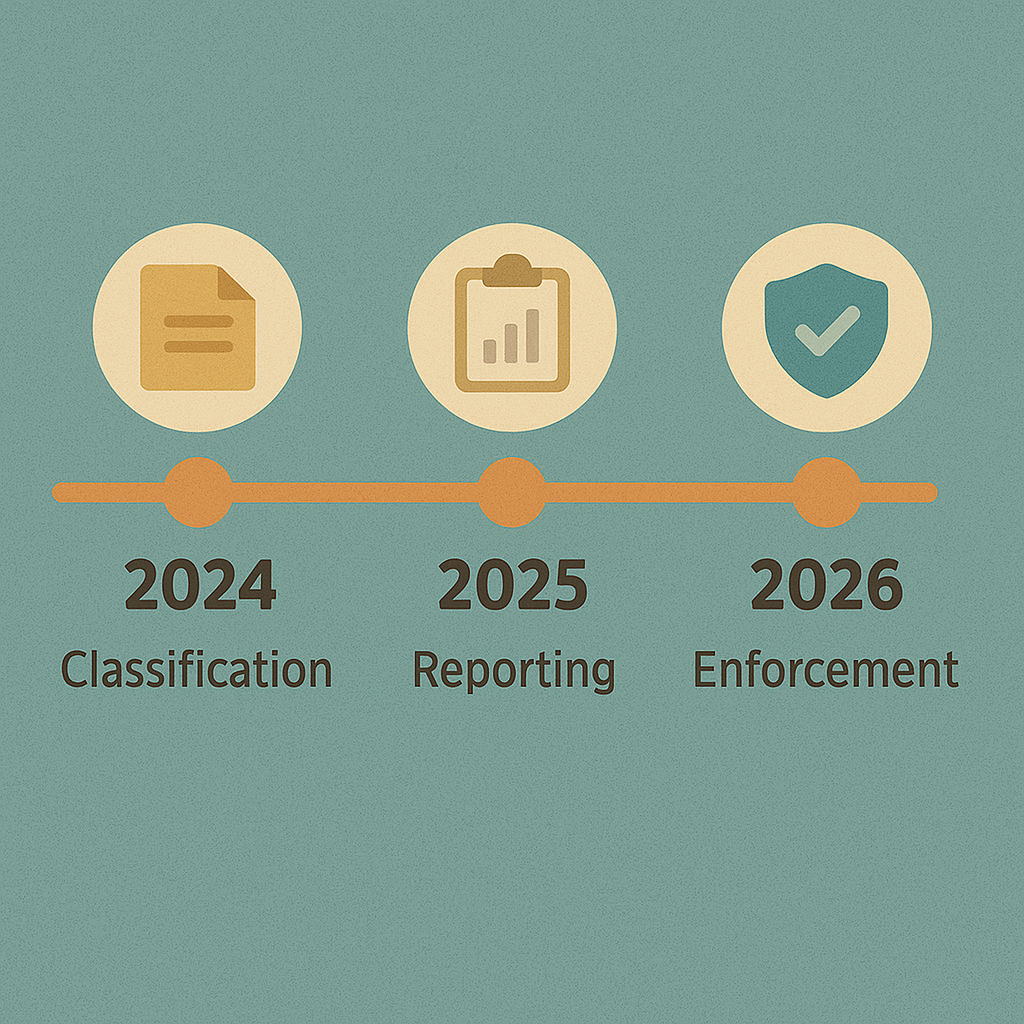

    Timeline graphic showing implementation phases from classification to reporting to enforcement between 2024 and 2026.

    What You Should Do (If You’re a Student, Pre-PT/OT/SLP, or Future Clinician)

    • Reassess your financing plan — don’t assume Graduate PLUS or large federal loan packages will be available.
    • Consider supplemental funding: scholarships, grants, part-time work, private loans, or employer-sponsored loan support.
    • Track ED’s rulemaking timeline — final rules expected by mid-2026. ASPPH+2FSA Partner Connect+2
    • Advocate — if you care, reach out to professional associations (e.g. APTA, ANA) to support voices urging preservation of fair loan access.

    Helpful Resources for Navigating the 2025 Degree & Loan Changes

    Because these federal updates affect how future PT, OT, SLP, and Nursing students access funding, many applicants and current students are looking for ways to study effectively, stay organized, and financially prepare for graduate school. Below are several resources that align with the theme of this post — focusing on smart planning, efficient studying, and financial readiness during a time of stricter lending rules.

    📘 Academic & Exam Prep Support (Non-Affiliate)

    If you’re aiming to strengthen your academic foundation before taking on additional debt, certain study platforms can reduce stress and improve board-prep efficiency.
    One of the most helpful tools for me personally was PassTheOT.com, which supported me through my OTA/COTA exam preparation. (I’m not affiliated with them at the time of writing — just sharing what genuinely helped me succeed.)

    For PT and SLP students, I recommend checking reputable exam-prep sites, updated NPTE and Praxis-SLP review platforms, and APTA’s official guidance to ensure your study material reflects the newest exam standards.

    These aren’t affiliate links — just practical supports for students who want to maximize success without unnecessary spending.


    💰 Financial Tools to Stay Ahead of New Loan Limits

    With federal borrowing caps tightening, understanding your finances is more important than ever. A good budgeting planner can help track tuition payments, deadlines, and living expenses as you balance reduced loan availability
    — you can explore one here:
    Budgeting Planner.

    If you’re new to understanding federal loans, interest, repayment plans, or private alternatives, reading solid financial-literacy books specifically geared toward student loans can make the entire process less stressful:
    Financial Literacy Books.


    🎓 Grad School Essentials for Better Focus & Organization

    For many students, particularly in rehab therapy and nursing, time management becomes crucial when balancing classes, labs, clinicals, and part-time work (which may be more common due to lower loan caps). A high-quality academic planner can help you stay structured and intentional with your schedule.

    If you tend to study in busy environments (shared housing, cafeterias, hospital lounges), noise-canceling headphones can make a huge difference in your focus:
    Noise-Canceling Headphones.


    🩺 Clinical Tools to Support Efficiency in Rotations & Early Practice

    Once you reach the clinical phase of your program, the right gear becomes essential. Long hours on your feet — especially in PT, OT, SLP, and Nursing — require reliable footwear. Students consistently recommend supportive brands like HokaOn Cloud, and Brooks, which you can explore here:

    If your program requires on-the-go documentation or bedside note-taking, a HIPAA-compliant storage clipboard can help keep papers secure while making evaluations easier:
    Storage Clipboard.

    Clinical measurement tools (like goniometers, pulse oximeters, or stopwatches) are also worth considering if your program encourages you to build your own practical toolkit.


    Graduation cap and stethoscope resting on a wooden table with a softly blurred bookshelf in the background.

    Final Thoughts

    This redefinition by the Department of Education is a big deal for future students — particularly those entering PT, OT, SLP, nursing, and similar fields. But it’s also a bureaucratic/financial shift — not a professional downgrade.

    If you already have your license or are currently practicing, nothing about your professional identity changes. But if you’re thinking about going back to school, now’s the time to re-examine your financing plan, consider scholarships or alternate funding, and be prepared for tighter borrowing limits.

    I’ll continue tracking developments as the final rules roll out (expected mid-2026). In the meantime, sign up for my free quick-reference sheets and guidebooks — and stay on top of changes that could affect your future as a clinician.

    Question for the readers:
    If you were planning to go back for an advanced degree in PT, OT, SLP, or Nursing — would this change make you hesitate? Or would you still apply and find alternate funding? Drop your thoughts in the comments — I’m curious what others are thinking.

    Originally posted 2025-12-01 20:52:34.

  • 1. Overview of Rehab Therapy: OT, PT, ST—What’s the Difference?
    1. Overview of Rehab Therapy: OT, PT, ST—What’s the Difference?

    7-minute read

    Heads up! This post may include affiliate links, which means I might earn a small commission (at no extra cost to you) if you decide to make a purchase. I only share things I truly find helpful—thanks for supporting the blog!

    Most people have heard of physical therapy (PT)—it’s the go-to after surgeries, sprains, or sports injuries. But what about speech therapy (ST) or occupational therapy (OT)? Speech therapy sounds fairly self-explanatory. Occupational therapy, however, often stumps people—it has nothing to do with finding a job. Instead, it’s one of the most essential and versatile forms of rehabilitation therapy, helping people reclaim their independence in daily life.

    In this blog post, we’ll break down the definitions of rehabilitation, dive into each therapy discipline, explore how they differ, and explain how they often work together to help people heal and thrive. Whether you’re a patient, caregiver, student, or professional, this guide will give you a clear overview—and help you choose the right therapy for your or your loved one’s needs.


    🔍 What Is Rehabilitation Therapy?

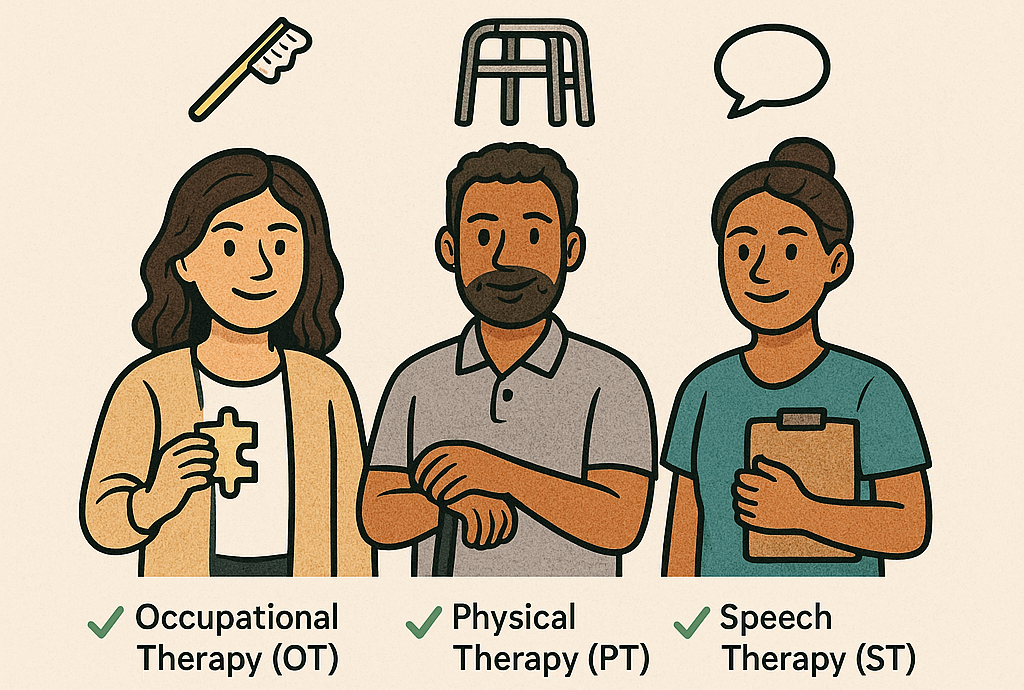
    Image displaying OT holding a clipboard with a toothbrush overhead, PT holding a cane with a walker overhead, and ST holding a clipboard with a speech bubble overhead.

    Rehabilitation therapy refers to a broad spectrum of services designed to help individuals recover or improve their physical, cognitive, or communicative abilities after injury, illness, surgery, or developmental delays. The goal is to enhance function and promote independence.

    There are three core types of rehabilitation therapy:

    • Occupational Therapy (OT)
    • Physical Therapy (PT)
    • Speech Therapy (ST)

    Each plays a vital, distinct role in helping patients rehabilitate and regain their quality of life.


    ✋ Occupational Therapy (OT)

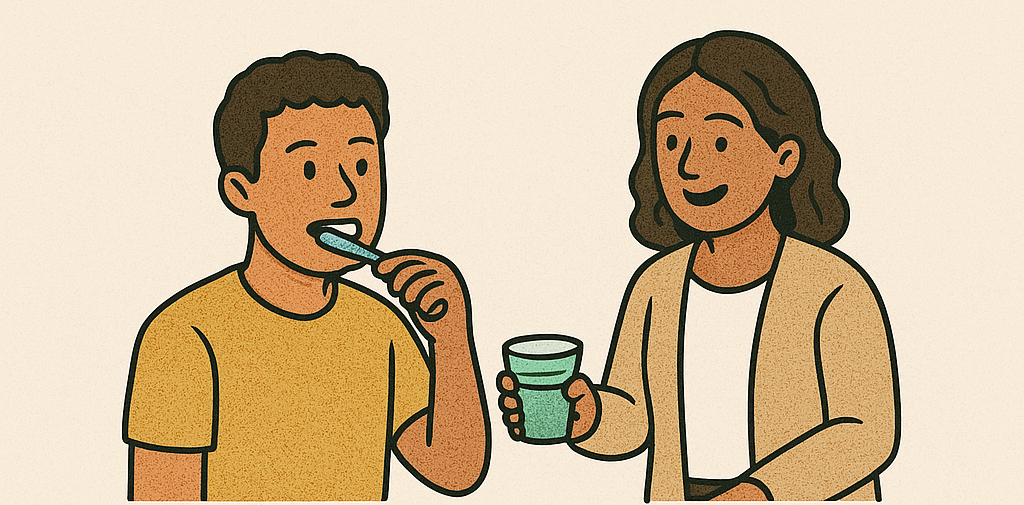
    OT working with patient brushing teeth, and handing patient a cup of water.

    What Is Occupational Therapy?

    Occupational therapy helps individuals develop, recover, or maintain the skills needed for daily living and working. This may include anything from getting dressed, cooking, and driving to using adaptive equipment or managing sensory input.

    Despite its name, “occupational” therapy is not job coaching—“occupations” in OT refer to meaningful everyday activities.

    Scope of OT

    Occupational therapists focus on:

    • Activities of daily living (ADLs)
    • Fine motor coordination
    • Sensory processing
    • Cognitive rehab
    • Assistive technology & adaptive equipment
    • Environmental modifications
    • Return-to-work or school programs

    Conditions Treated by OT

    • Stroke and brain injury
    • Autism spectrum disorder
    • Arthritis
    • Hand and upper extremity injuries
    • Developmental delays
    • Mental health challenges
    • Dementia
    • Sensory integration dysfunction

    ➡️ American Occupational Therapy Association (AOTA) Resource


    🏃 Physical Therapy (PT)

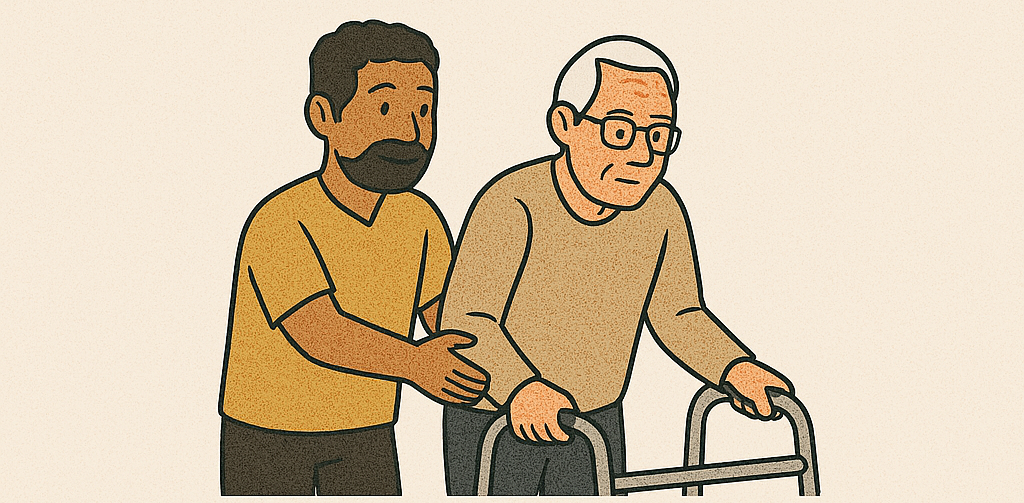
    PT assisting patient in walking using a walker.

    What Is Physical Therapy?

    Physical therapy addresses movement impairments, helping people improve mobility, reduce pain, and restore physical function. PTs use targeted exercise, manual therapy, and modalities like electrical stimulation or ultrasound.

    Scope of PT

    • Mobility training
    • Strength and endurance rehab
    • Balance and fall prevention
    • Pain management
    • Post-surgical rehabilitation
    • Neuromuscular re-education

    Conditions Treated by PT

    • Orthopedic injuries (e.g., ACL tears, fractures)
    • Post-operative rehab (joint replacements)
    • Stroke and neurological disorders
    • Chronic pain (e.g., fibromyalgia)
    • Sports injuries
    • Vestibular and balance disorders

    ➡️ American Physical Therapy Association (APTA) Resource

    📘 Coming October (just in time for PT Month): Our PT Pocket Guide—a practical, intervention-focused quick reference for PTs on the go.


    🗣️ Speech Therapy (ST)

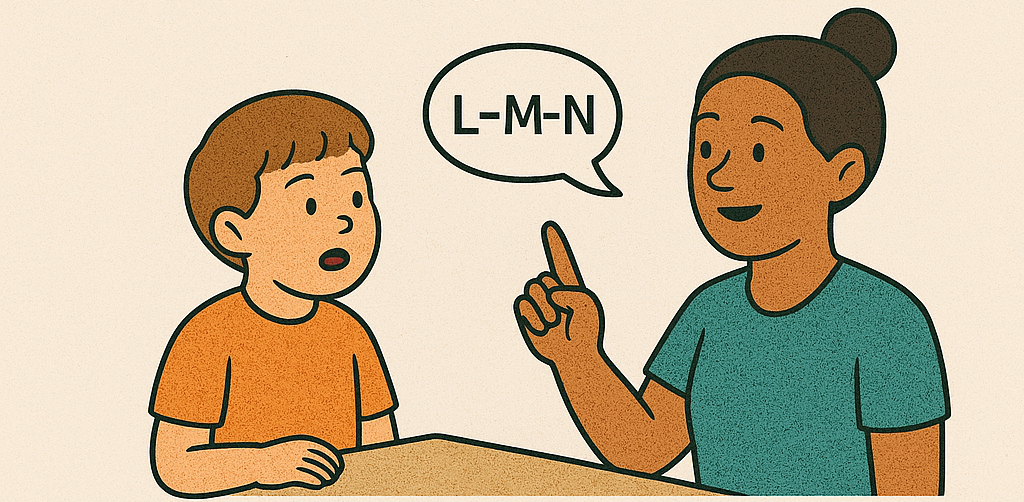
    ST working with patient on communication.

    What Is Speech Therapy?

    Speech therapy (also called speech-language pathology or SLP) targets communication and swallowing disorders. It helps individuals of all ages speak more clearly, understand and express language, and eat and swallow safely.

    Scope of ST

    • Speech sound production
    • Language comprehension and expression
    • Social communication
    • Voice therapy
    • Fluency (e.g., stuttering)
    • Swallowing and feeding
    • Cognitive communication skills

    Conditions Treated by ST

    • Stroke, TBI, and neurological conditions
    • Autism spectrum disorder
    • Developmental delays
    • Parkinson’s disease
    • Aphasia
    • Dysphagia (swallowing disorders)

    ➡️ American Speech-Language-Hearing Association (ASHA) Resource

    📘 Launching in May for Better Hearing and Speech Month: Our ST Pocket Guide—a portable clinical reference for speech therapists in any setting.


    🤝 How OT, PT, and ST Work Together

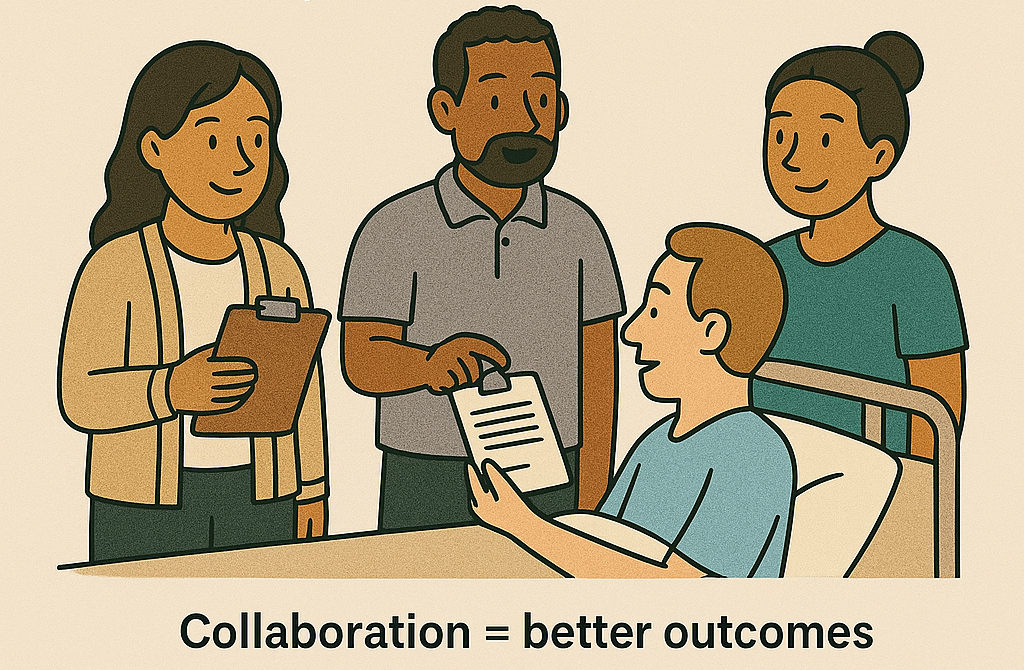
    Therapy team discussing care plan with a patient.

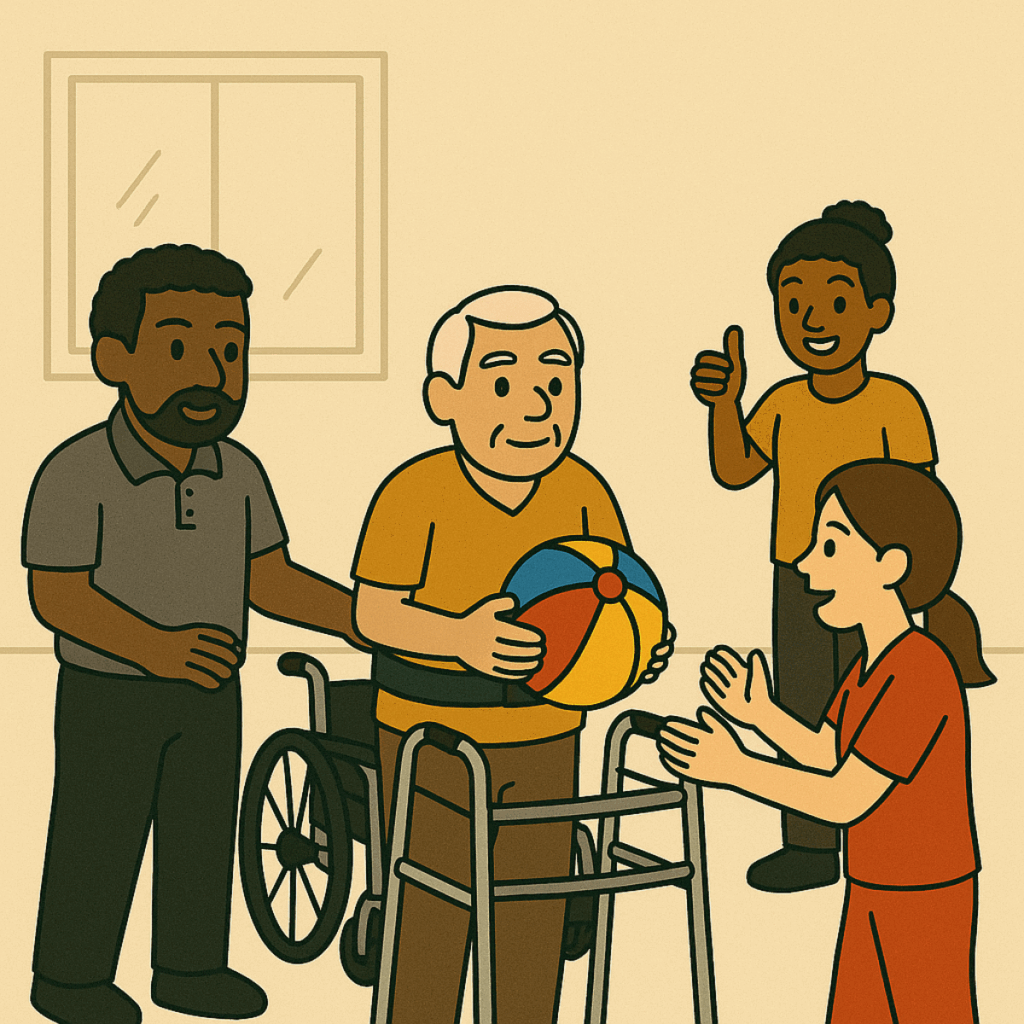
    While each therapy discipline has its own specialty, rehabilitation works best as a team. Many patients—especially those recovering from strokes, brain injuries, or surgeries—receive all three services in a coordinated plan.

    This interdisciplinary approach ensures that each aspect of recovery is addressed:

    • PT restores strength and movement.
    • OT helps patients function in everyday life.
    • ST ensures they can communicate and eat safely.

    Therapists frequently collaborate, update one another, and co-treat when appropriate to deliver holistic, patient-centered care.


    🧭 Choosing the Right Therapy for You

    Not sure which therapy you need? Here’s a quick guide:

    Your GoalBest Fit
    Regain movement and strength?PT
    Improve daily living or fine motor skills?OT
    Work on speech, communication, or swallowing?ST

    In many cases, a combination of therapies may be most effective. If you’re unsure, speak with your physician or request an evaluation from a rehab therapist—they’ll guide you to the right service(s) for your goals.


    📘 Conclusion & Free Download

    Therapy team waving good-bye.

    Rehabilitation therapy is a powerful tool for healing, restoring function, and regaining independence. While PT, OT, and ST each serve different roles, they often work best when combined—providing a full-spectrum approach to recovery.

    Whether you’re new to the world of rehab or already working in the field, understanding these differences is key to getting the right help.

    ✨ Want a quick reference sheet you can print or keep on hand? 

    Subscribe and Download our free Rehab Therapy Quick Reference Sheets

    Be sure to subscribe to our newsletter and keep an eye out for our OT Pocket Guide (April)ST Pocket Guide (May), and PT Pocket Guide (October)—each packed with clinical tools, checklists, and intervention-based tips for everyday use.

    Originally posted 2025-04-21 03:34:13.